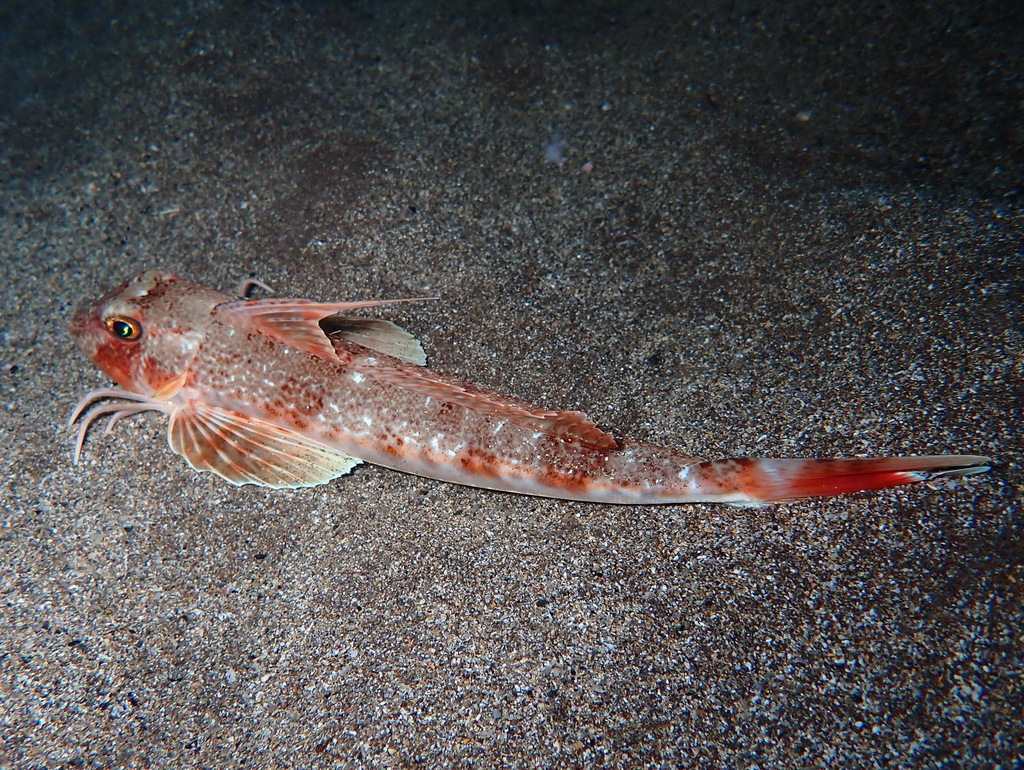
The Longfin gurnard (Chelidonichthys obscurus) is a saltwater fish of the family Triglidae that grows up to 51 cm.
Description
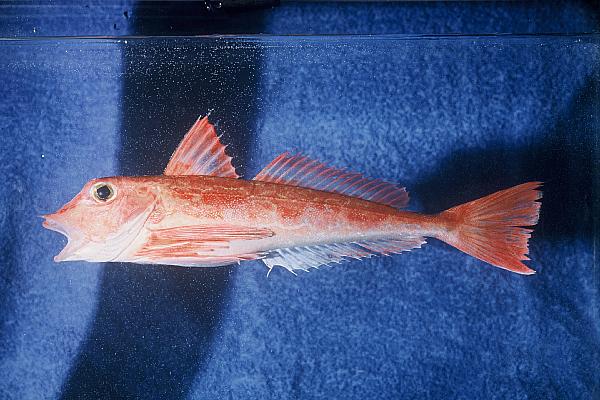
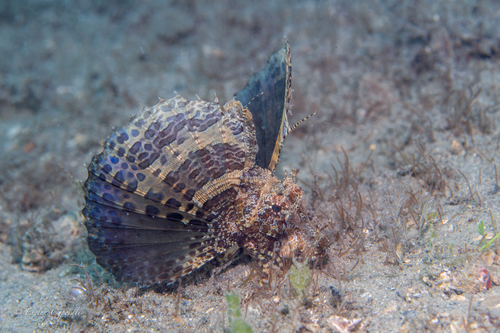
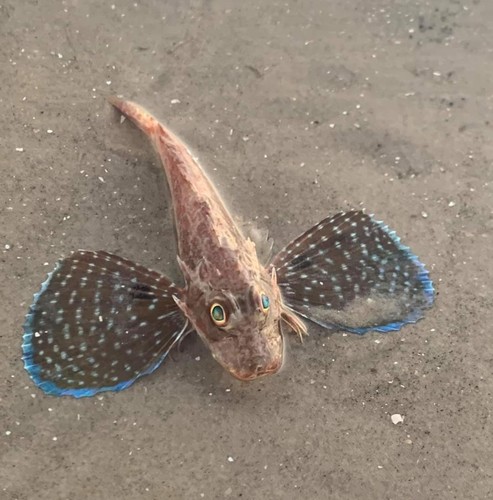
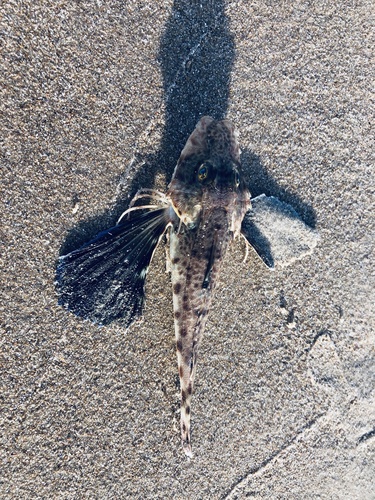
The longfin gurnard is a gurnard of the family Triglidae reaching about 50 cm. The elongate body is reddish with an armoured, angular head and large, fan-shaped pectoral fins. Characteristic are the three separate, finger-like lower pectoral rays on each side, with which the fish 'walks' over the bottom as if on legs and feels for prey in the sand. With a drumming swim-bladder muscle it can, like other gurnards, make growling sounds. The species lives on sand and mud bottoms of the eastern Atlantic and the Mediterranean. It hunts shrimps, small crustaceans and small fish. The longfin gurnard is a much-caught bycatch and food fish with firm white flesh.
Frequently asked questions
How do you recognise the Longfin gurnard?
The Longfin gurnard has a torpedo-shaped body, is mainly red-orange and shows a plain pattern.
Where does the Longfin gurnard live?
The Longfin gurnard lives in the sea (marine waters) and is mostly found around sand or mud bottom.
How big does the Longfin gurnard get?
The Longfin gurnard grows to a maximum of about 51 cm.
Is the Longfin gurnard dangerous to humans?
No, the Longfin gurnard is harmless to humans.
Is the Longfin gurnard edible?
Yes, the Longfin gurnard is commonly eaten.
Download Fin's Fish Guide
Identify fish in seconds, log your catches and dives. Join the TestFlight beta.
All data
Identification
Appearance
Habitat & distribution
Behaviour & biology
For anglers
Safety
Status & sources
Same genus Chelidonichthys
More from the family Triglidae


Download Fin's Fish Guide
Identify fish in seconds, log your catches and dives. Join the TestFlight beta.