Home · Triglidae · Tub gurnard
Tub gurnard (Chelidonichthys lucerna) — Triglidae

Tub gurnard

Chelidonichthys lucerna
Family: Triglidae
LC · Least Concern

The Tub gurnard (Chelidonichthys lucerna) is a saltwater fish of the family Triglidae that grows up to 83 cm.

Length
82.8 cm
Water
Saltwater
Depth
20–318 m
Diet
Carnivore
Behaviour
Solitary
Activity
Diurnal
Body shape
Elongated (eel-like)
Substrate
Sand / mud bottom
Danger
Harmless
Range
Eastern Atlantic from Norway to Cape Blanco, including the North Sea, the Mediterranean Sea and the Black Sea.
Edibility
Commonly eaten

Want the complete picture on the Tub gurnard?

Description

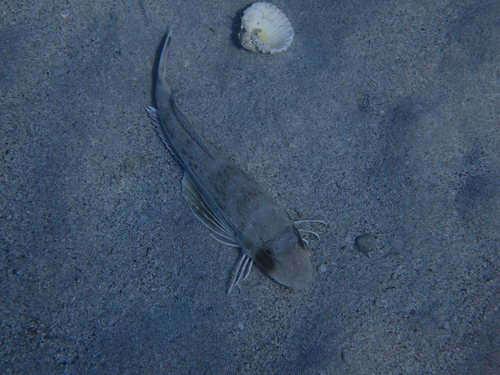
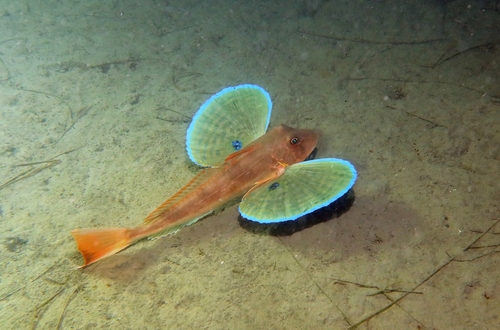
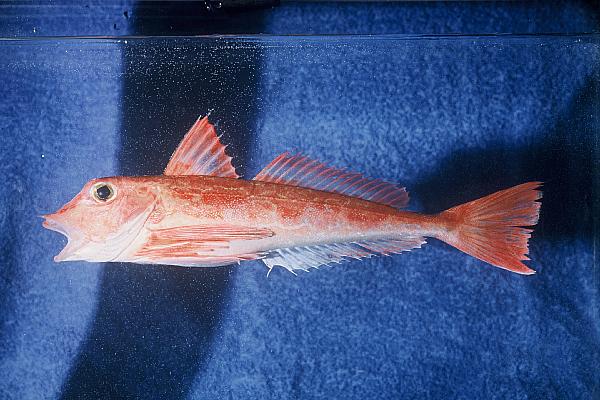
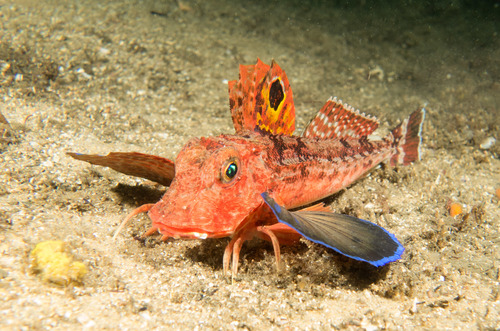
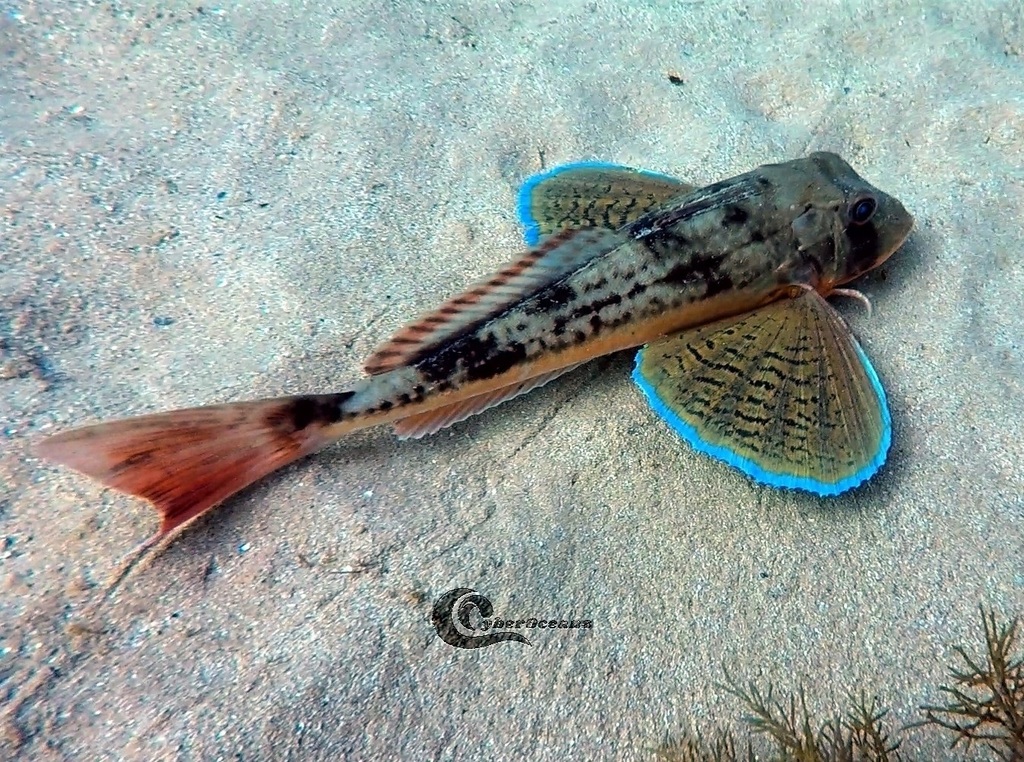
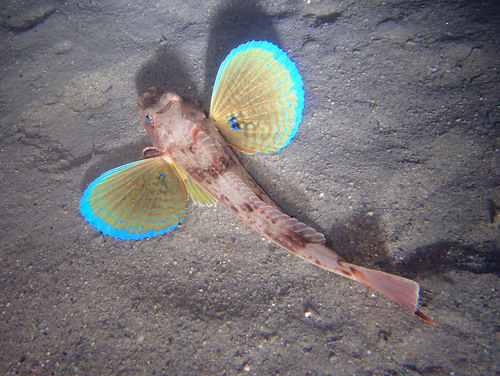
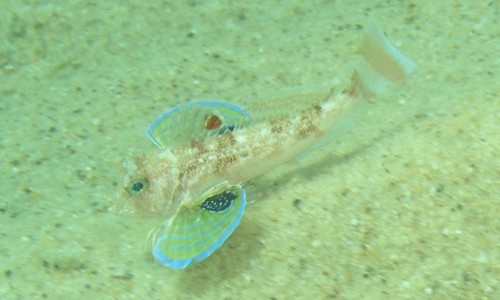
The tub gurnard is a bottom fish of the family Triglidae that can exceed 80 cm but usually stays around 30 cm. The body is reddish with large pectoral fins that are conspicuously edged in blue. The lower three pectoral rays are free and used like legs to walk over sand and mud bottoms and detect food. Using its swim bladder, the fish can produce grunting sounds. The species occurs in the eastern Atlantic, the North Sea and the Mediterranean at depths of 20 to over 300 m, feeding on fish, crustaceans and molluscs. The tub gurnard is a valued food fish.

Frequently asked questions

How do you recognise the Tub gurnard?

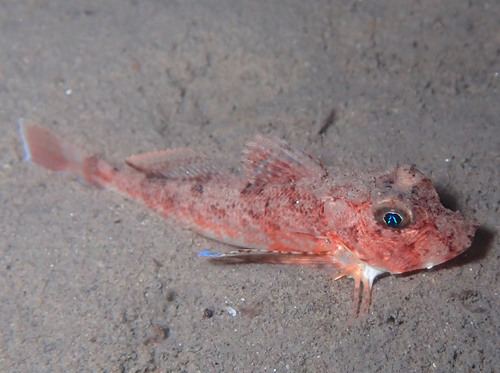
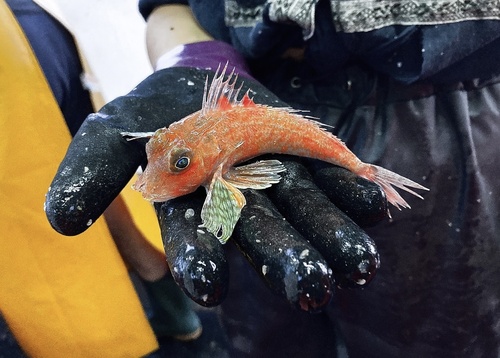
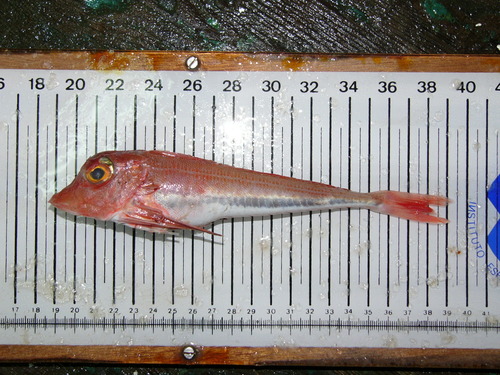
The Tub gurnard has an elongate, eel-like body, is mainly red-orange and shows a plain pattern. Red bottom fish with large, blue-edged pectoral fins; the three lowest pectoral fin rays are separate and are used as 'legs' to feel the bottom.

Where does the Tub gurnard live?

The Tub gurnard lives in the sea (marine waters) and is mostly found around sand or mud bottom. Eastern Atlantic from Norway to Cape Blanco, including the North Sea, the Mediterranean Sea and the Black Sea.

How big does the Tub gurnard get?

The Tub gurnard grows to a maximum of about 83 cm. On average the species is around 30 cm.

Is the Tub gurnard dangerous to humans?

No, the Tub gurnard is harmless to humans. None required: this species is harmless to humans.

Is the Tub gurnard edible?

Yes, the Tub gurnard is commonly eaten.

More photos
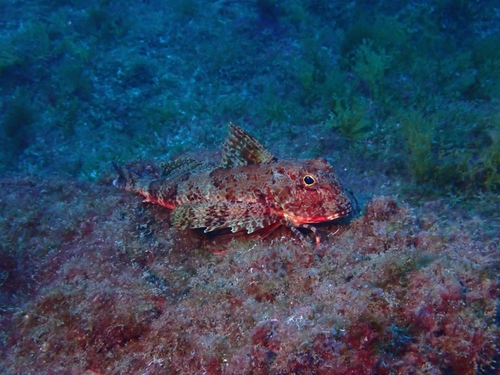
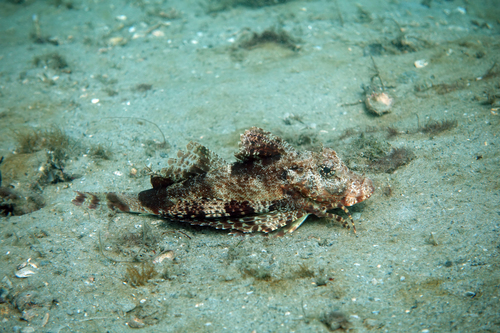
Tub gurnard (Chelidonichthys lucerna) — Triglidae — 2
iNaturalist ((c) Sylvain Le Bris, some rights reserved (CC BY-NC))
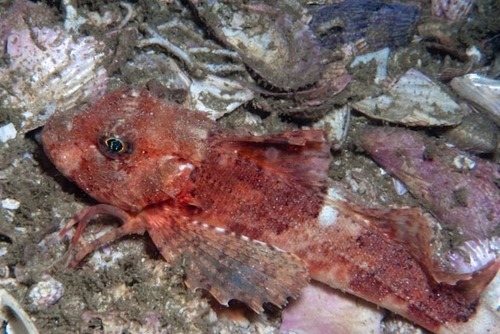
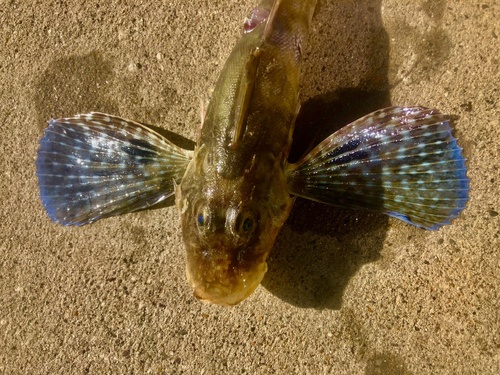
Tub gurnard (Chelidonichthys lucerna) — Triglidae — 3
iNaturalist ((c) kontra, some rights reserved (CC BY-NC))
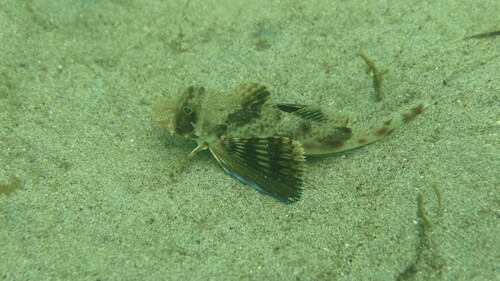
Tub gurnard (Chelidonichthys lucerna) — Triglidae — 4
iNaturalist ((c) Xavier Rufray, some rights reserved (CC BY-NC))

Easily confused with

These species look like the Tub gurnard and live in the same waters.
Want the complete picture on the Tub gurnard?

Point your camera at the fish and Fin names the species in seconds. Free, and the Tub gurnard is one of 12,519 species in the app.

All data

Identification

English name
Tub gurnard verified
Scientific name
Chelidonichthys lucerna
Family
Triglidae
Other names
Sapphirine gurnard; Searobin; tub; Tub gurnard; Tube-fish; Tubfish; Yellow gurnard; Yellow-gurnard verified

Appearance

Size class
Extra large verified
Max length (cm)
82.8 verified
Average length (cm)
30 verified
Body shape
Elongated (eel-like) sourced
Dominant colour
Red / orange sourced
Pattern
Plain sourced
Tail shape
Straight sourced
Mouth position
Terminal
Lips
Thin
Barbels
No verified
Dorsal fins
Two separate sourced
Dorsal spines
Yes verified

Habitat & distribution

Water type
Saltwater sourced
Substrate
Sand / mud bottom sourced
Min depth (m)
20 verified
Max depth (m)
318 verified
Natural range
Eastern Atlantic from Norway to Cape Blanco, including the North Sea, the Mediterranean Sea and the Black Sea. verified
Origin
Native verified

Behaviour & biology

Diet
Carnivore verified
Diet (detail)
Worms, crustaceans, molluscs and benthic invertebrates
Social behaviour
Solitary verified
Territorial
No verified
Activity
Diurnal sourced
Reproduction
Separate sexes verified
Sexual dimorphism
No verified
Max. age (years)
15 verified
Seasonality
Forms pairs in the breeding season; sexually mature at around 25 cm. Makes sounds with its swim bladder. sourced
Special features
Red bottom fish with large, blue-edged pectoral fins; the three lowest pectoral fin rays are separate and are used as 'legs' to feel the bottom. sourced

For anglers

Edibility
Commonly eaten verified
Fishing method
Bottom fishing with natural bait (worm, shrimp or fish) on or just above the seabed.
Regulations source

Safety

Danger to humans
Harmless sourced
First aid
None required: this species is harmless to humans. sourced

Status & sources

Sources
FishBase via GBIF (DwC-A), CC-BY-NC 4.0

Same genus Chelidonichthys

More from the family Triglidae
Want the complete picture on the Tub gurnard?

Point your camera at the fish and Fin names the species in seconds. Free, and the Tub gurnard is one of 12,519 species in the app.

Is this the Tub gurnard?