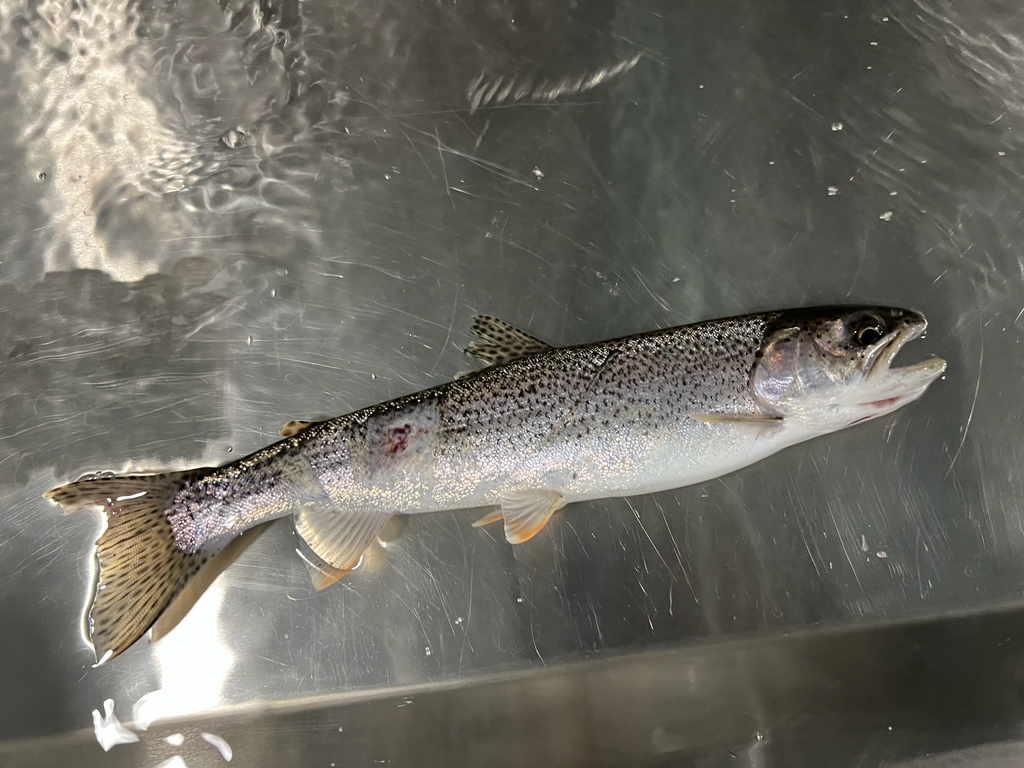
The Clark's trout (Oncorhynchus clarkii) is a fish that lives in both fresh and salt water of the family Salmonidae that grows up to 99 cm.
Description
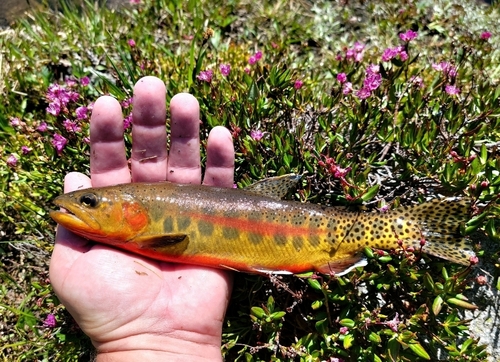
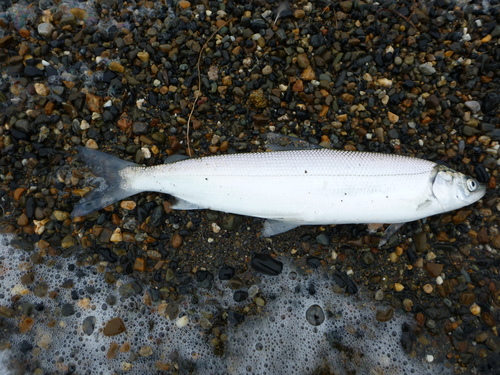
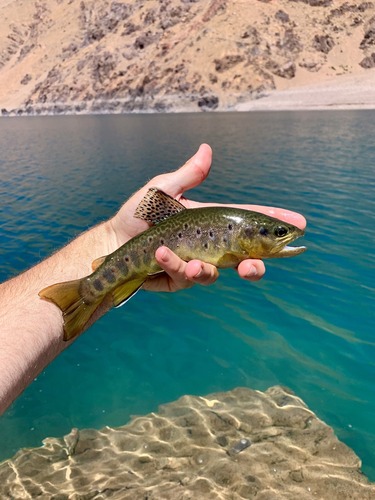
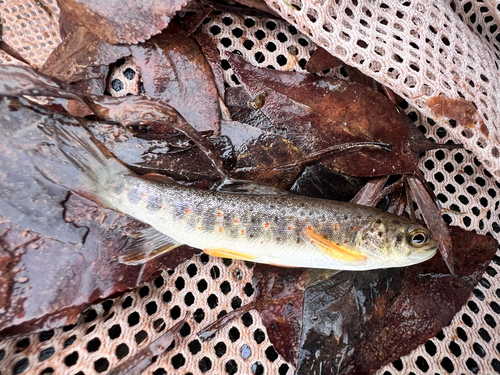
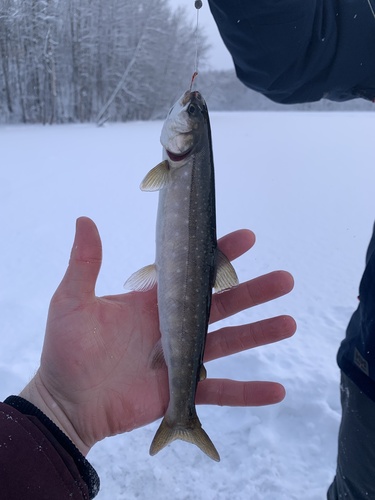
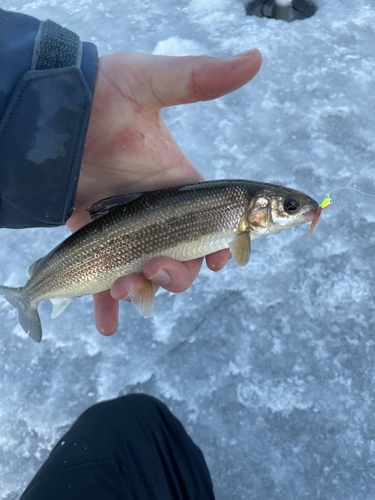
The cutthroat trout is a salmonid (family Salmonidae) of western North America. The species can grow to about a metre but usually stays much smaller, and has a streamlined, greenish to golden body with numerous dark spots and a characteristic red to orange slash under the lower jaw, which gives it its name. It prefers small streams with gravel bottoms and gentle gradients; some populations migrate from the sea into rivers to spawn, while young fish stay in the stream for a year or two. Its diet consists of insects, crustaceans and small fishes. It is a prized sport and food fish.
Frequently asked questions
How do you recognise the Clark's trout?
The Clark's trout has a torpedo-shaped body, is mainly green and shows a spots pattern.
Where does the Clark's trout live?
The Clark's trout lives in both fresh and salt water and is mostly found around sand or mud bottom.
How big does the Clark's trout get?
The Clark's trout grows to a maximum of about 99 cm.
Is the Clark's trout dangerous to humans?
No, the Clark's trout is harmless to humans.
Is the Clark's trout edible?
Yes, the Clark's trout is commonly eaten.
Download Fin's Fish Guide
Identify fish in seconds, log your catches and dives. Join the TestFlight beta.
All data
Identification
Appearance
Habitat & distribution
Behaviour & biology
For anglers
Safety
Status & sources
Same genus Oncorhynchus
More from the family Salmonidae

Download Fin's Fish Guide
Identify fish in seconds, log your catches and dives. Join the TestFlight beta.