Home · Carangidae · Greater amberjack
Greater amberjack (Seriola dumerili) — Carangidae

Greater amberjack

Seriola dumerili
Family: Carangidae
LC · Least Concern

The Greater amberjack (Seriola dumerili) is a saltwater fish of the family Carangidae that grows up to 190 cm.

Length
190 cm
Water
Saltwater
Depth
1–385 m
Diet
Carnivore
Behaviour
Small groups
Activity
Diurnal
Body shape
Torpedo-shaped
Substrate
Stone or rock
Danger
Poisonous flesh
Range
Circumglobal in tropical and warm-temperate seas: Indo-West Pacific, western Atlantic (Nova Scotia to Brazil) and eastern Atlantic to Morocco and the Mediterranean Sea.
Edibility
Highly prized

Want the complete picture on the Greater amberjack?

Description

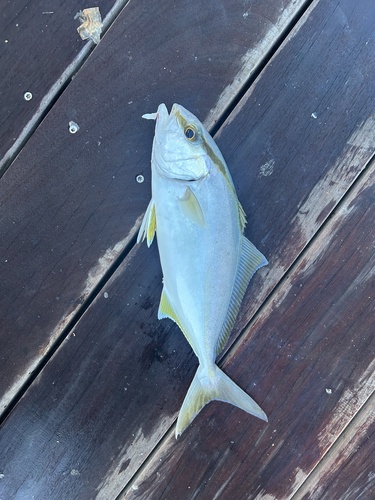
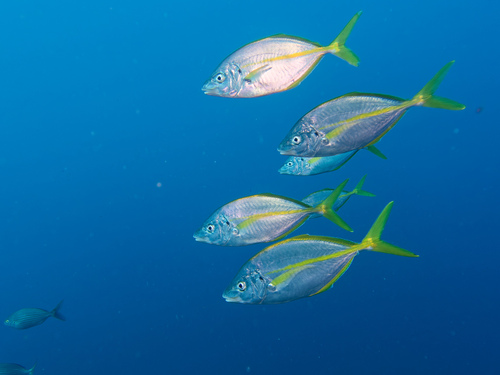
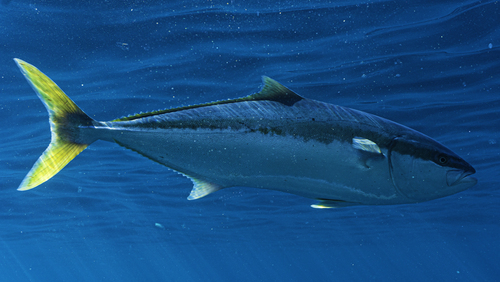
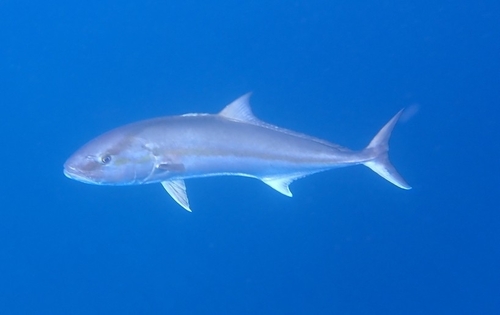
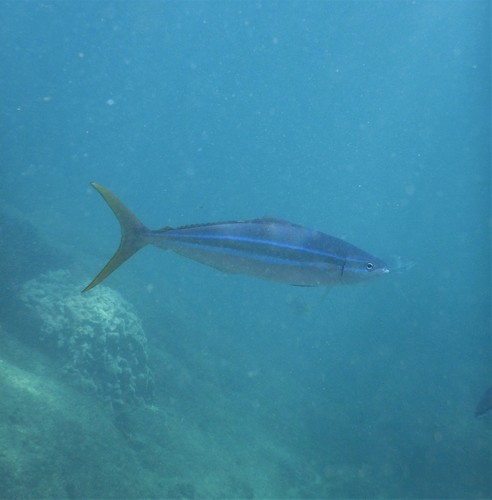
The greater amberjack is a powerful, streamlined predator of the family Carangidae reaching up to 190 cm. The body is bluish-grey to olive above and silvery-white below, with a striking amber stripe along the midside and a dark oblique band through the eye. The species occurs circumglobally in warm seas, including the Mediterranean, with juveniles schooling around floating debris and adults moving to deeper reefs. It hunts mainly fish and invertebrates. The greater amberjack is a sought-after sport and food fish, though it can locally cause ciguatera poisoning when eaten.

Frequently asked questions

How do you recognise the Greater amberjack?

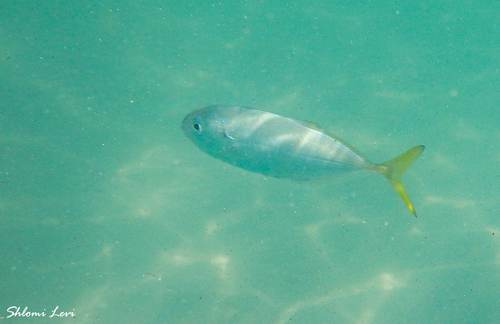
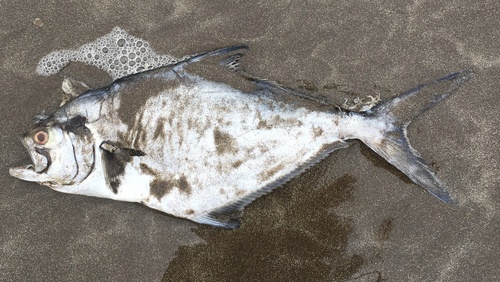
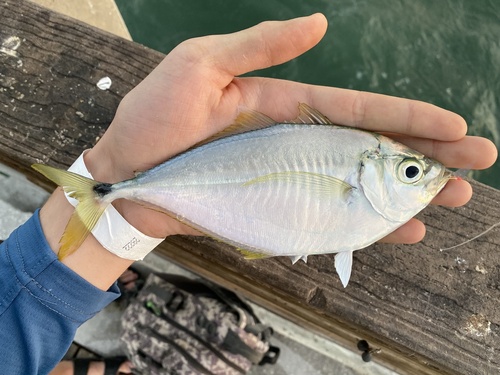
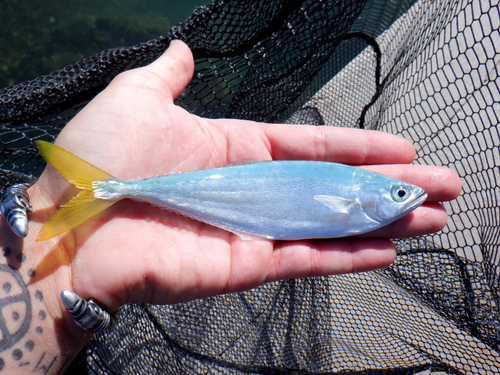
The Greater amberjack has a torpedo-shaped body, is mainly silver-grey and shows a horizontal stripes pattern. Powerful, streamlined predator with an amber longitudinal stripe along the middle of the body and a dark oblique band across the eye.

Where does the Greater amberjack live?

The Greater amberjack lives in the sea (marine waters) and is mostly found around stony or rocky ground. Circumglobal in tropical and warm-temperate seas: Indo-West Pacific, western Atlantic (Nova Scotia to Brazil) and eastern Atlantic to Morocco and the Mediterranean Sea.

How big does the Greater amberjack get?

The Greater amberjack grows to a maximum of about 190 cm. On average the species is around 100 cm.

Is the Greater amberjack dangerous to humans?

The flesh of the Greater amberjack is poisonous, so don't eat it. It has no venomous spines. Harmless to handle, but may cause ciguatera poisoning if eaten; seek medical help if symptoms such as nausea or tingling occur.

Is the Greater amberjack edible?

Yes, the Greater amberjack is a highly prized food fish.

More photos
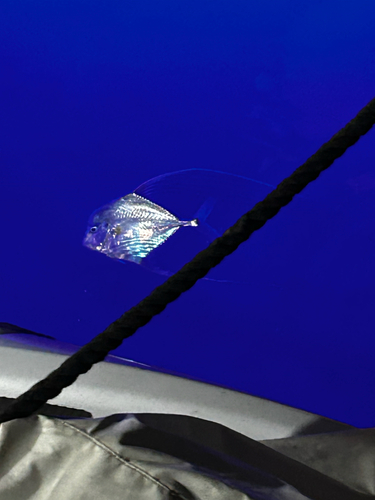
Greater amberjack (Seriola dumerili) — Carangidae — 2
iNaturalist ((c) Kenneth Manole, some rights reserved (CC BY-NC))
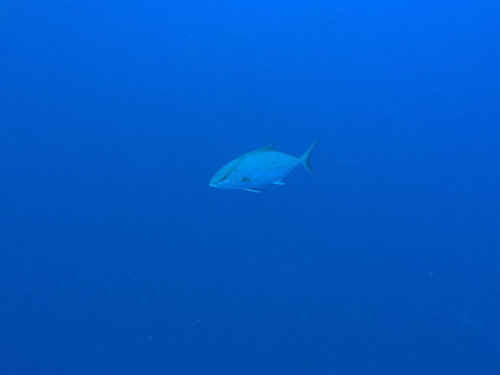
Greater amberjack (Seriola dumerili) — Carangidae — 3
iNaturalist ((c) pattonh02, some rights reserved (CC BY-NC))
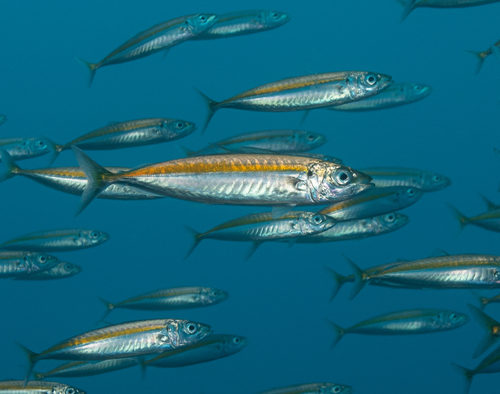
Greater amberjack (Seriola dumerili) — Carangidae — 4
Wikimedia Commons — SEFSC Pascagoula Laboratory; Collection of Brandi Noble, NOAA/NMFS/SEFSC. (Public domain)
Greater amberjack (Seriola dumerili) — Carangidae — 5
Wikimedia Commons — Jorge Alarcon or Dr. Daniel Benetti (Public domain)

Easily confused with

These species look like the Greater amberjack and live in the same waters.
Want the complete picture on the Greater amberjack?

Point your camera at the fish and Fin names the species in seconds. Free, and the Greater amberjack is one of 12,519 species in the app.

All data

Identification

English name
Greater amberjack verified
Scientific name
Seriola dumerili
Family
Carangidae
Other names
Amber jack; Amberjack; Greater amberjack; Great amberfish; Jenny lind; Rock salmon; Great yellowtail; Greater yellowtail; Purple amberjack; Purplish amberjack; Sailor's choice; Samson fish; Allied kingfish verified

Appearance

Size class
Extra large verified
Max length (cm)
190 verified
Average length (cm)
100 verified
Body shape
Torpedo-shaped sourced
Dominant colour
Silver / grey sourced
Pattern
Horizontal stripes sourced
Tail shape
Forked sourced
Mouth position
Terminal
Lips
Thin
Barbels
No verified
Dorsal fins
Two separate sourced
Dorsal spines
Yes verified

Habitat & distribution

Water type
Saltwater sourced
Substrate
Stone or rock sourced
Min depth (m)
1 verified
Max depth (m)
385 verified
Natural range
Circumglobal in tropical and warm-temperate seas: Indo-West Pacific, western Atlantic (Nova Scotia to Brazil) and eastern Atlantic to Morocco and the Mediterranean Sea. verified
Origin
Native verified

Behaviour & biology

Diet
Carnivore verified
Diet (detail)
Small fishes, crustaceans and invertebrates
Social behaviour
Small groups verified
Territorial
No verified
Activity
Diurnal sourced
Reproduction
Separate sexes verified
Sexual dimorphism
No verified
Max. age (years)
15 verified
Seasonality
Spawns in summer in coastal waters; juveniles shoal near floating material, adult fish live on deeper reefs. sourced
Special features
Powerful, streamlined predator with an amber longitudinal stripe along the middle of the body and a dark oblique band across the eye. sourced

For anglers

Edibility
Highly prized verified
Fishing method
Fishing with natural bait (fish, shrimp, worm) or lures close to reef and rock structures.
Regulations source

Safety

Danger to humans
Poisonous flesh sourced
First aid
Harmless to handle, but may cause ciguatera poisoning if eaten; seek medical help if symptoms such as nausea or tingling occur. sourced

Status & sources

Sources
FishBase via GBIF (DwC-A), CC-BY-NC 4.0

Same genus Seriola

More from the family Carangidae
Want the complete picture on the Greater amberjack?

Point your camera at the fish and Fin names the species in seconds. Free, and the Greater amberjack is one of 12,519 species in the app.

Is this the Greater amberjack?