 Fin's Fish Guide


The Dwarf knifefish (Hypopygus lepturus) is a freshwater fish of the family Hypopomidae that grows up to 10 cm.
South America; shallow sandy creeks of the Amazon and Orinoco basins and the Guianas.
Description
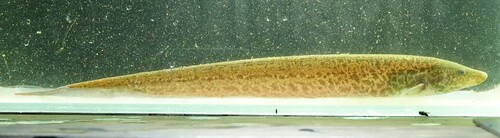
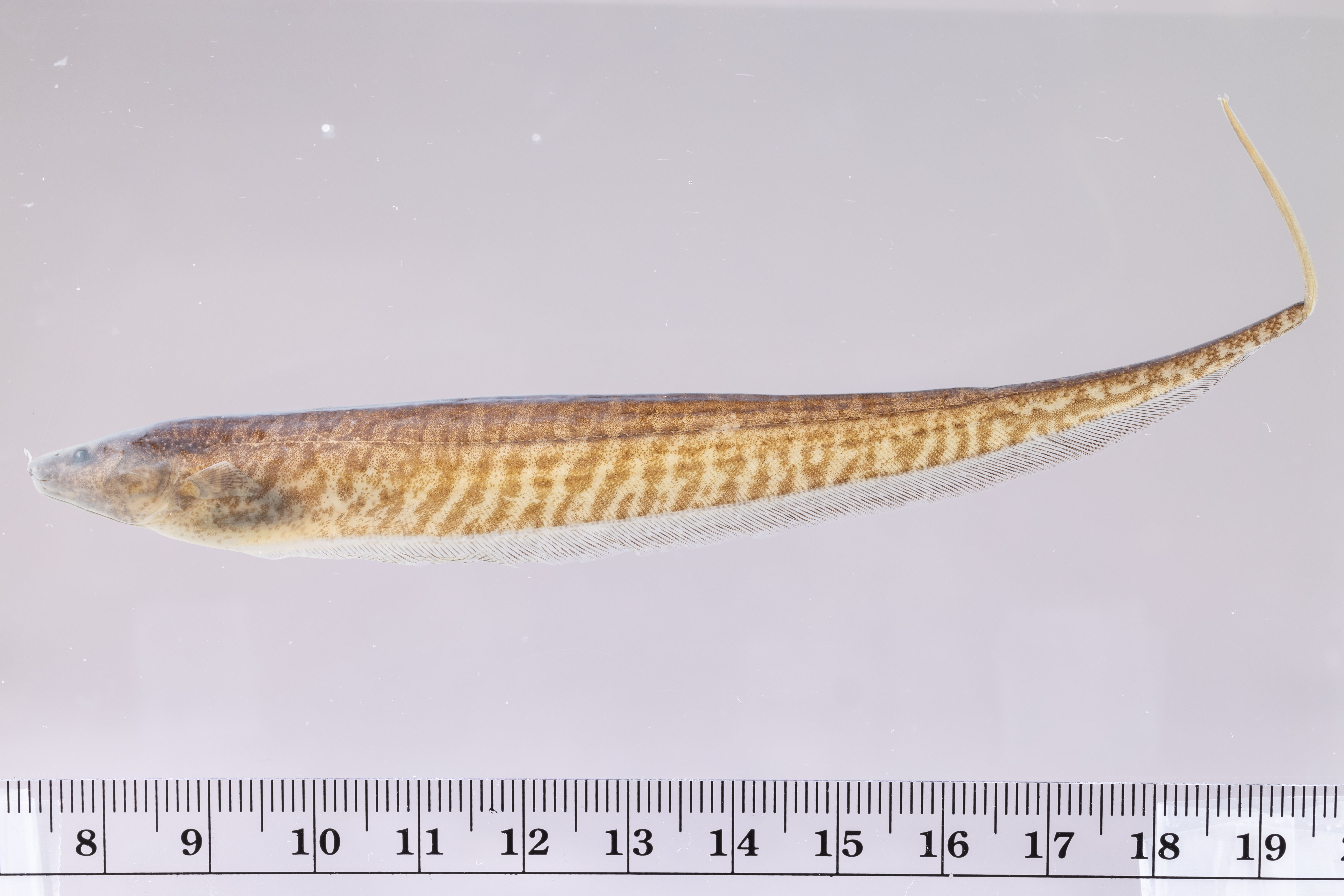
The dwarf knifefish is a small South American knifefish of the bluntnose knifefish family (Hypopomidae) from the Amazon and Orinoco basins and the Guianas. The species grows to about 10 cm and has an elongate, laterally compressed body without a dorsal fin, with a long anal fin with which it swims forward and backward in an undulating manner. It inhabits shallow creeks with a sandy bottom. Like other knifefishes it generates a weak electric field to orient itself in turbid water and the dark, find prey and communicate. As a nocturnal hunter it feeds on insect larvae and small invertebrates. The species is harmless to humans.
Frequently asked questions
How do you recognise the Dwarf knifefish?
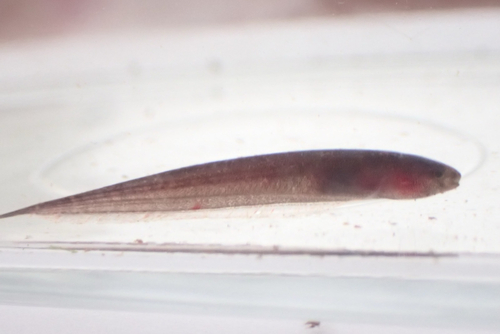
The Dwarf knifefish has an elongate, eel-like body, is mainly brown and shows a vertical stripes pattern. Lacks a dorsal fin and swims by undulating its long anal fin; weak electric organ for orientation.
Where does the Dwarf knifefish live?
The Dwarf knifefish lives in fresh water and is mostly found around mixed bottom. South America; shallow sandy creeks of the Amazon and Orinoco basins and the Guianas.
How big does the Dwarf knifefish get?
The Dwarf knifefish grows to a maximum of about 10 cm.
Is the Dwarf knifefish dangerous to humans?
No, the Dwarf knifefish is harmless to humans. None required: this species is harmless to humans.
Is the Dwarf knifefish edible?
The Dwarf knifefish is not usually eaten.
More photos

Want the complete picture on the Dwarf knifefish?
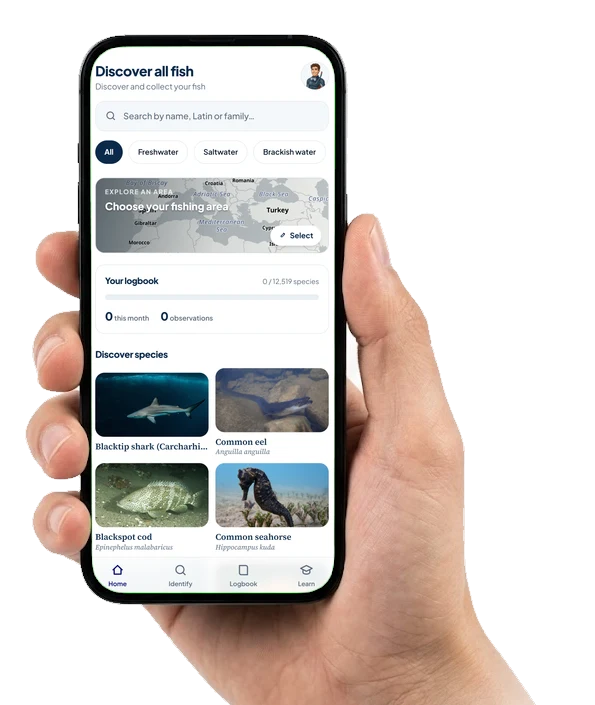
Point your camera at the fish and Fin names the species in seconds. Free, and the Dwarf knifefish is one of 12,519 species in the app.
 Or scan with your phone
All data
Identification
Appearance
Habitat & distribution
Behaviour & biology
For anglers
Safety
Status & sources
More from the family Hypopomidae



Want the complete picture on the Dwarf knifefish?
Point your camera at the fish and Fin names the species in seconds. Free, and the Dwarf knifefish is one of 12,519 species in the app.
Or scan with your phone