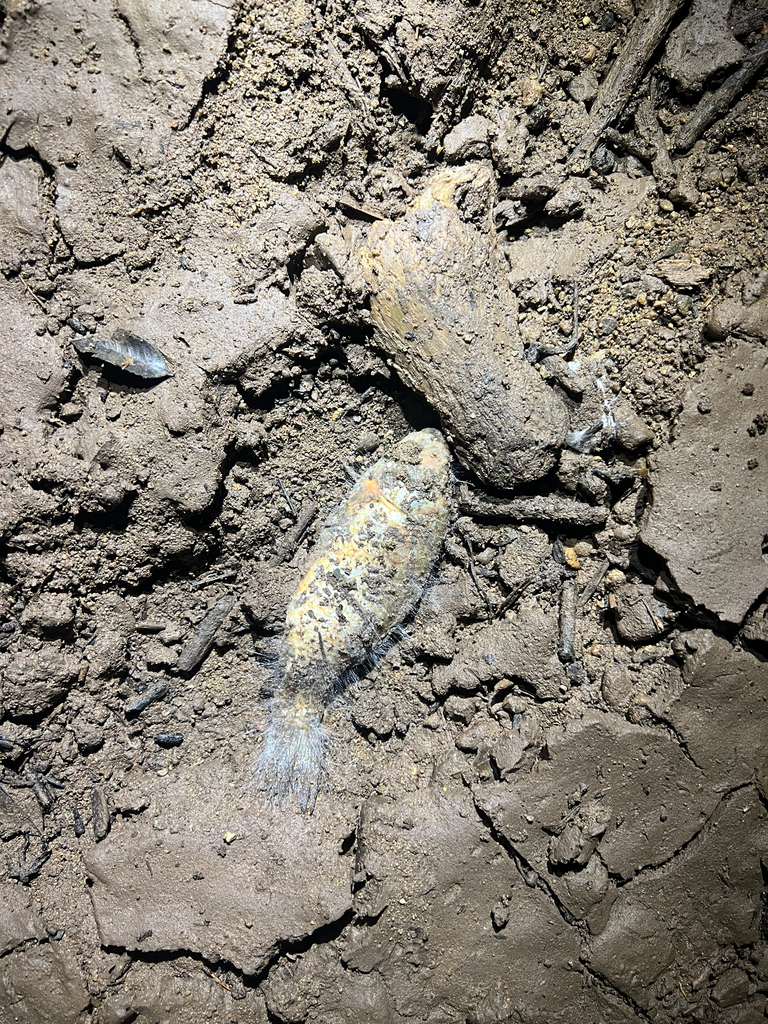
The Japanese silver crucian carp (Carassius langsdorfii) is a freshwater fish of the family Cyprinidae that grows up to 39 cm.
Description
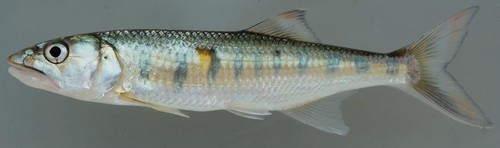
The Japanese silver crucian carp or ginbuna is a robust, silvery-grey cyprinid of the family Cyprinidae reaching about 39 cm. It closely resembles the gibel and crucian carp, with a deep body and no barbels. It is scientifically famous for its reproduction: many populations consist almost entirely of females that reproduce gynogenetically — their eggs are activated by the sperm of related cyprinids but grow into clones of the mother. The species comes from East Asia and lives in slow to still, often turbid fresh water of rivers, lakes and ponds. As an omnivore it eats zooplankton, bottom invertebrates, algae and detritus. It tolerates warm, oxygen-poor conditions and is a valued food and angling fish in Japan.
Frequently asked questions
How do you recognise the Japanese silver crucian carp?
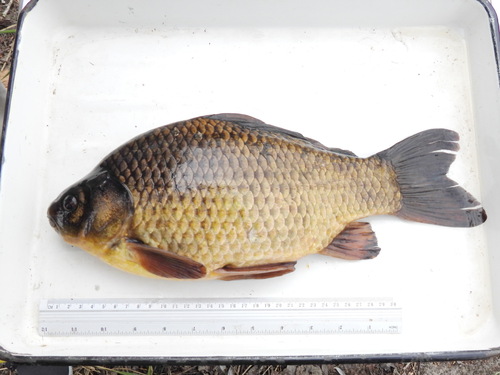
The Japanese silver crucian carp has a torpedo-shaped body, is mainly silver-grey and shows a plain pattern.
Where does the Japanese silver crucian carp live?
The Japanese silver crucian carp lives in fresh water and is mostly found around sand or mud bottom.
How big does the Japanese silver crucian carp get?
The Japanese silver crucian carp grows to a maximum of about 39 cm.
Is the Japanese silver crucian carp dangerous to humans?
No, the Japanese silver crucian carp is harmless to humans.
Is the Japanese silver crucian carp edible?
Yes, the Japanese silver crucian carp is commonly eaten.
Download Fin's Fish Guide
Identify fish in seconds, log your catches and dives. Join the TestFlight beta.
All data
Identification
Appearance
Habitat & distribution
Behaviour & biology
For anglers
Safety
Status & sources
Same genus Carassius

More from the family Cyprinidae


Download Fin's Fish Guide
Identify fish in seconds, log your catches and dives. Join the TestFlight beta.