
The Crucian carp (Carassius carassius) is a freshwater fish of the family Cyprinidae that grows up to 64 cm.
Description
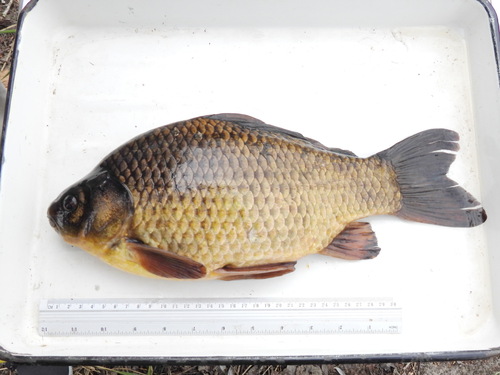
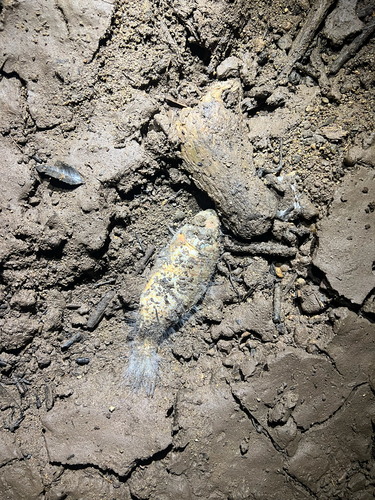
The crucian carp is a deep-bodied, stocky cyprinid of the family Cyprinidae that can reach about 50 cm but often stays small in poor waters. The copper-brown to golden body has a convex, outward-bowed dorsal fin and lacks barbels, distinguishing it from the common carp and the gibel carp. The species is extraordinarily hardy: it tolerates oxygen-poor, warm and acidic water and can even survive frozen in or buried in mud. It lives in still, vegetation-rich pools, ponds, ditches and floodplains of Europe and northern Asia. As an omnivore it eats midge larvae, snails, zooplankton, plant matter and detritus. Through its hardiness it is a typical inhabitant of isolated waters and a valued fish for angling.
Frequently asked questions
How do you recognise the Crucian carp?
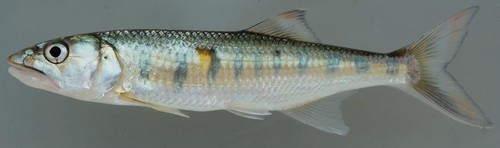
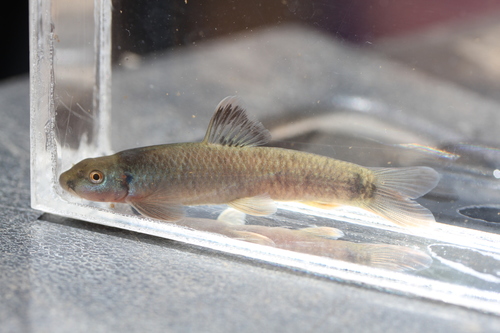
The Crucian carp has a torpedo-shaped body, is mainly yellow-gold and shows a plain pattern.
Where does the Crucian carp live?
The Crucian carp lives in fresh water and is mostly found around sand or mud bottom.
How big does the Crucian carp get?
The Crucian carp grows to a maximum of about 64 cm. On average the species is around 15 cm.
Is the Crucian carp dangerous to humans?
No, the Crucian carp is harmless to humans.
Is the Crucian carp edible?
The Crucian carp is rarely eaten.
Download Fin's Fish Guide
Identify fish in seconds, log your catches and dives. Join the TestFlight beta.
All data
Identification
Appearance
Habitat & distribution
Behaviour & biology
For anglers
Safety
Status & sources
Same genus Carassius
More from the family Cyprinidae


Download Fin's Fish Guide
Identify fish in seconds, log your catches and dives. Join the TestFlight beta.