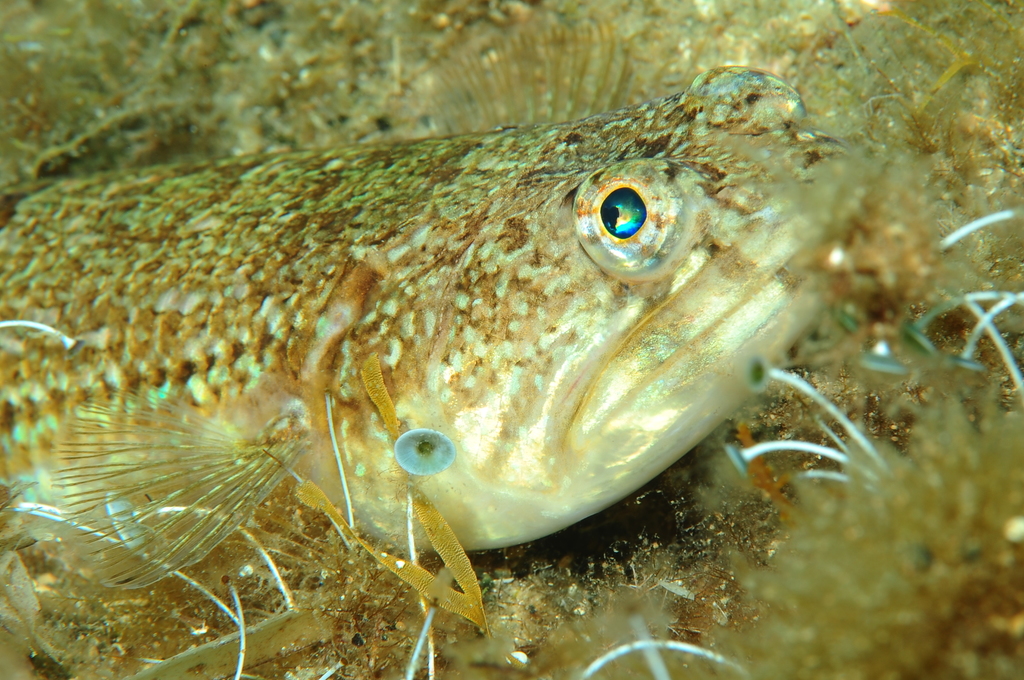

The Atlantic lizardfish (Synodus saurus) is a saltwater fish of the family Synodontidae that grows up to 40 cm.
Eastern Atlantic from Portugal to West Africa and the Mediterranean Sea, on sandy and gravel bottoms.

Want the complete picture on the Atlantic lizardfish?
Description
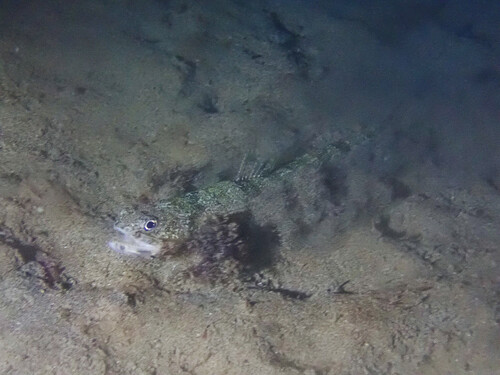
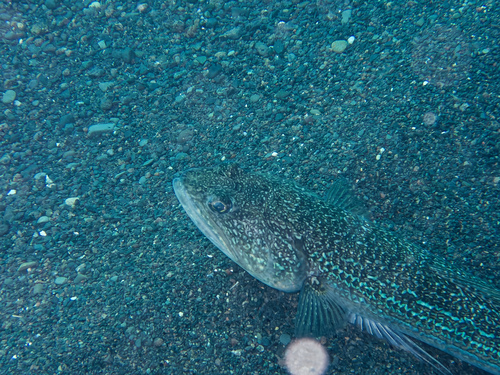
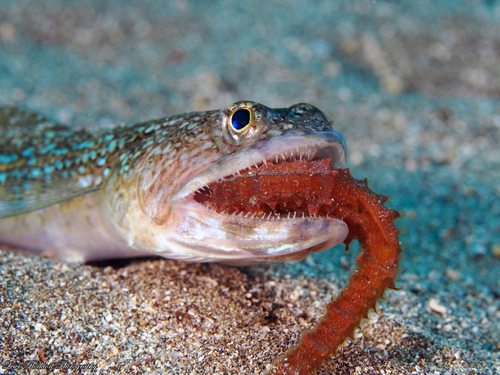
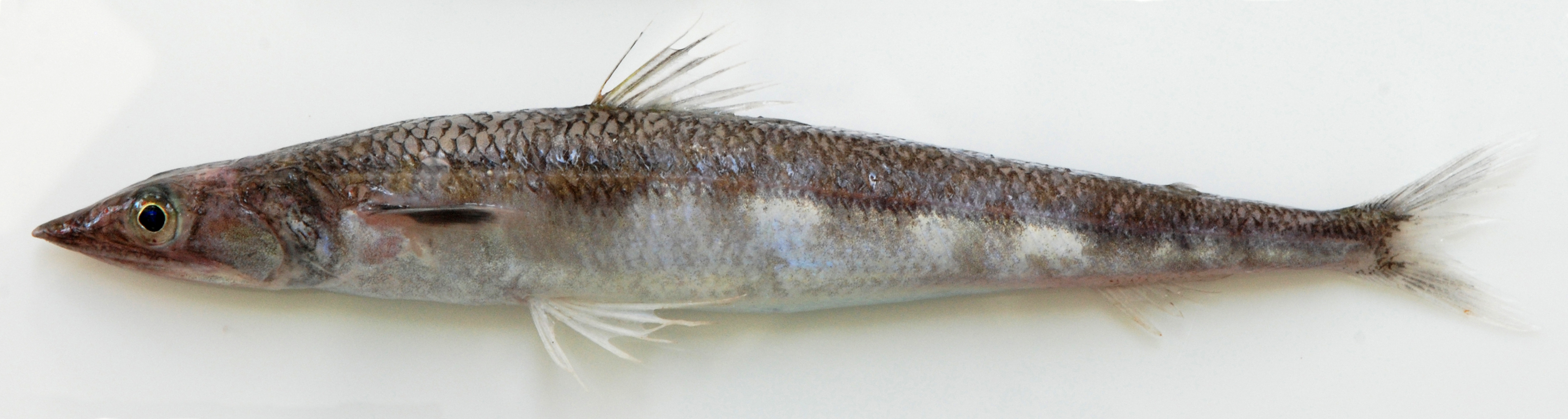
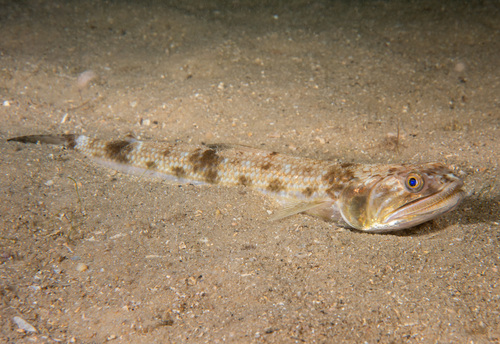
The Atlantic lizardfish is a bottom-dwelling predator of the family Synodontidae reaching about 40 cm. The species owes its name to the lizard-like head with a wide mouth full of fine, sharp teeth and to its upward-set eyes. The streamlined, brownish mottled body gives excellent camouflage on sand and gravel bottoms of the eastern Atlantic and the Mediterranean, from shallow water to several hundred metres. The lizardfish is an ambush hunter: it half-buries itself in the sand and darts upward to seize passing small fish and crustaceans. Because of its size it is sometimes eaten, but it has little commercial value.
Frequently asked questions
How do you recognise the Atlantic lizardfish?
The Atlantic lizardfish has an elongate, eel-like body, is mainly brown and shows a marbled pattern. Lizard-like bottom predator with a broad mouth full of fine teeth; burrows into the sand and darts at prey swimming past.
Where does the Atlantic lizardfish live?
The Atlantic lizardfish lives in the sea (marine waters) and is mostly found around sand or mud bottom. Eastern Atlantic from Portugal to West Africa and the Mediterranean Sea, on sandy and gravel bottoms.
How big does the Atlantic lizardfish get?
The Atlantic lizardfish grows to a maximum of about 40 cm. On average the species is around 20 cm.
Is the Atlantic lizardfish dangerous to humans?
No, the Atlantic lizardfish is harmless to humans. None required: this species is harmless to humans.
Is the Atlantic lizardfish edible?
The Atlantic lizardfish is rarely eaten.
More photos
Easily confused with
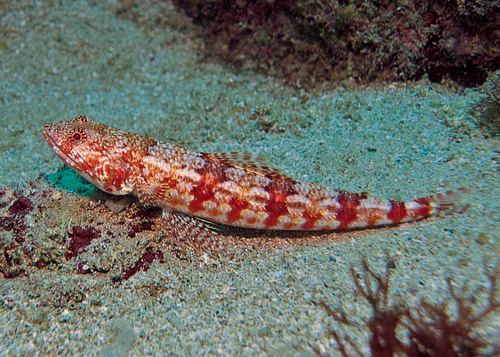
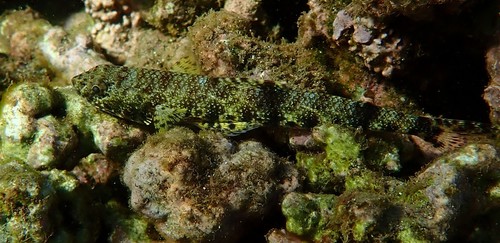
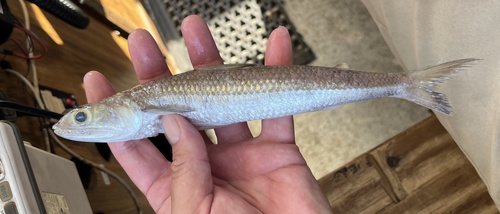
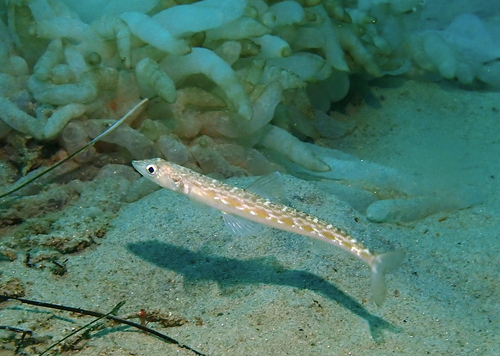
These species look like the Atlantic lizardfish and live in the same waters.
Want the complete picture on the Atlantic lizardfish?
Point your camera at the fish and Fin names the species in seconds. Free, and the Atlantic lizardfish is one of 12,519 species in the app.
 Or scan with your phone
All data
Identification
Appearance
Habitat & distribution
Behaviour & biology
For anglers
Safety
Status & sources
Same genus Synodus
More from the family Synodontidae



Want the complete picture on the Atlantic lizardfish?
Point your camera at the fish and Fin names the species in seconds. Free, and the Atlantic lizardfish is one of 12,519 species in the app.
Or scan with your phone