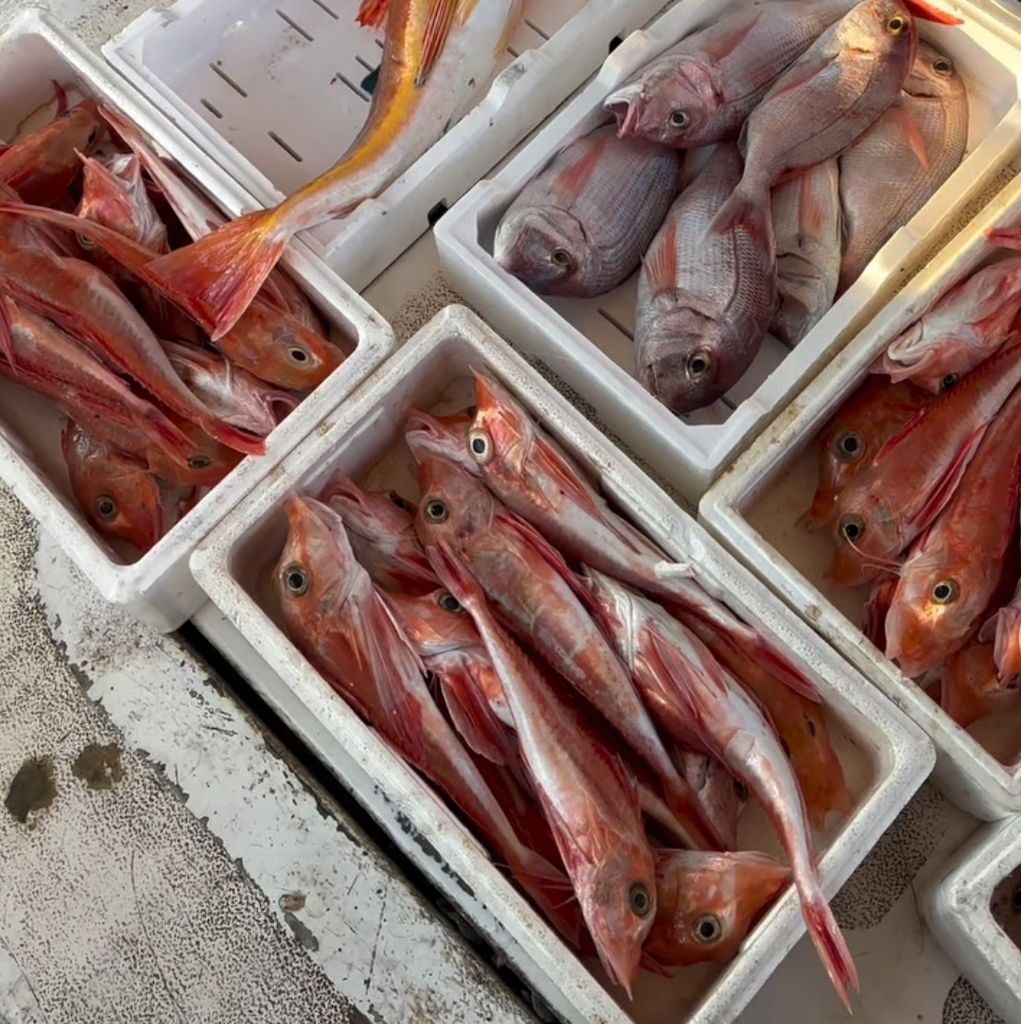
The Gurnard (Trigla lyra) is a saltwater fish of the family Triglidae that grows up to 60 cm.
Description
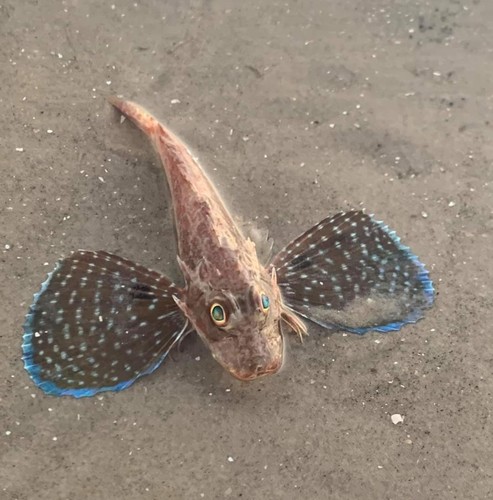
The piper gurnard is a red deep-water gurnard of the family Triglidae reaching about 60 cm. It is characterised by a deeply notched, two-pointed snout and large pectoral fins; the lower three pectoral rays are free and used as feelers to walk over sand and mud bottoms and locate food. The fish can make grunting sounds with its swim bladder. The piper gurnard lives in deeper water of the eastern Atlantic, from north of the British Isles to Namibia, and in the Mediterranean, usually between 150 and 400 m. It feeds on shrimps and crabs and has only limited commercial value.
Frequently asked questions
How do you recognise the Gurnard?
The Gurnard has a torpedo-shaped body, is mainly red-orange and shows a plain pattern.
Where does the Gurnard live?
The Gurnard lives in the sea (marine waters) and is mostly found around sand or mud bottom.
How big does the Gurnard get?
The Gurnard grows to a maximum of about 60 cm. On average the species is around 30 cm.
Is the Gurnard dangerous to humans?
No, the Gurnard is harmless to humans.
Is the Gurnard edible?
The Gurnard is rarely eaten.
Download Fin's Fish Guide
Identify fish in seconds, log your catches and dives. Join the TestFlight beta.
All data
Identification
Appearance
Habitat & distribution
Behaviour & biology
For anglers
Safety
Status & sources
More from the family Triglidae


Download Fin's Fish Guide
Identify fish in seconds, log your catches and dives. Join the TestFlight beta.