Home · Megalopidae · Tarpon
Tarpon (Megalops atlanticus) — Megalopidae

Tarpon

Megalops atlanticus
Family: Megalopidae
VU · Vulnerable

The Tarpon (Megalops atlanticus) is a fish that lives in both fresh and salt water of the family Megalopidae that grows up to 250 cm.

Length
250 cm
Water
Euryhaline
Depth
0.0–40.0 m
Diet
Carnivore
Behaviour
Schooling
Activity
Diurnal
Body shape
Torpedo-shaped
Substrate
Open water
Danger
Harmless
Range
Atlantic Ocean on both sides, in coastal waters, estuaries, lagoons and the lower reaches of rivers; strongly euryhaline.
Edibility
Rarely eaten

Want the complete picture on the Tarpon?

Get the app

Description

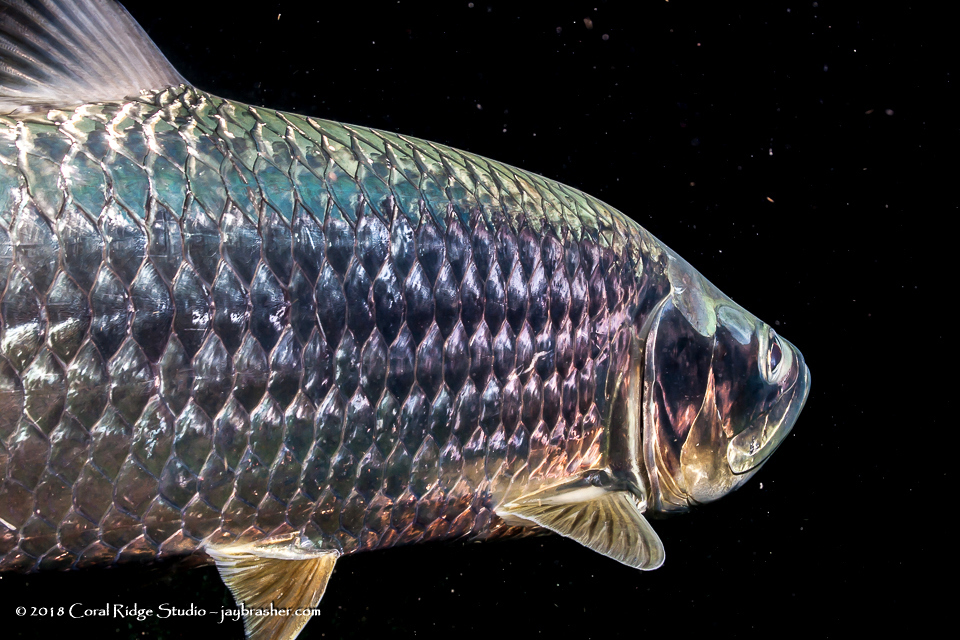
The tarpon is a large, silvery predator of the family Megalopidae reaching about 2.5 metres. The streamlined body is covered with enormous, shiny scales and has an upturned mouth with a projecting lower jaw; the last dorsal-fin ray is greatly elongated. With its muscular swim bladder it can gulp air and so survive in oxygen-poor water. The species lives in coastal water, estuaries, lagoons and the lower reaches of rivers on both sides of the Atlantic and tolerates strongly varying salinities. In schools it hunts schooling fish, shrimps and crabs. Like eels it has a transparent larval stage (leptocephalus). For its spectacular leaps the tarpon is one of the most prized sport fish worldwide; through overfishing it is assessed as Vulnerable (VU).

Frequently asked questions

How do you recognise the Tarpon?

The Tarpon has a torpedo-shaped body, is mainly silver-grey and shows a plain pattern. Large, silvery, armoured predator with enormous scales, an upturned mouth and an elongated last dorsal fin ray; can gulp air with its swim bladder. Note: in tropical areas this species can cause ciguatera poisoning when eaten; large specimens of coral reef predators can accumulate the toxin. Eat with care or avoid in risk areas.

Where does the Tarpon live?

The Tarpon lives in both fresh and salt water and is mostly found around open water. Atlantic Ocean on both sides, in coastal waters, estuaries, lagoons and the lower reaches of rivers; strongly euryhaline.

How big does the Tarpon get?

The Tarpon grows to a maximum of about 250 cm. On average the species is around 130 cm.

Is the Tarpon dangerous to humans?

No, the Tarpon is harmless to humans. None required: this species is harmless to humans.

Is the Tarpon edible?

The Tarpon is rarely eaten.

More photos
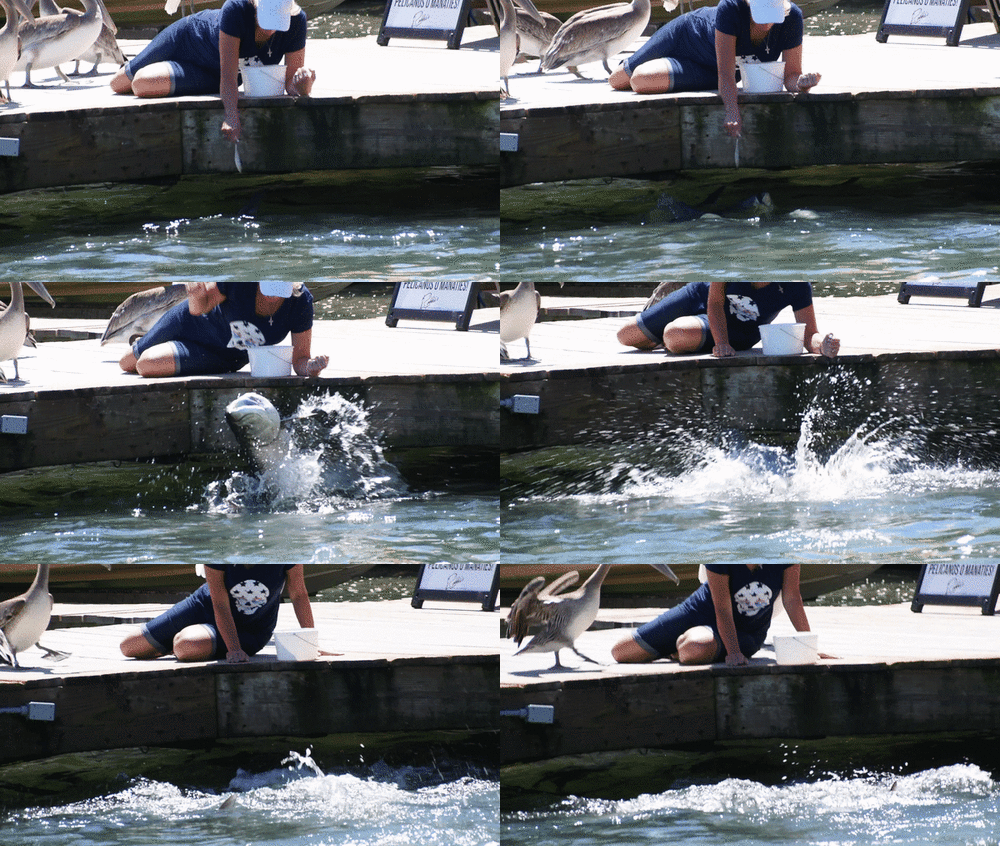
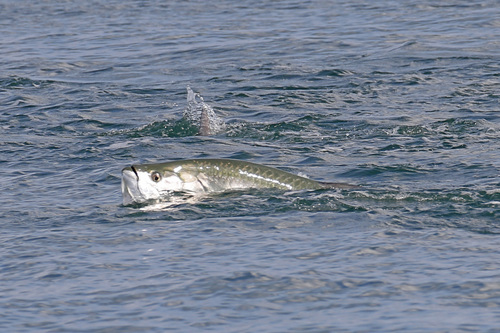
Tarpon (Megalops atlanticus) — Megalopidae — 2
iNaturalist ((c) Chalon Boesel, some rights reserved (CC BY-NC))
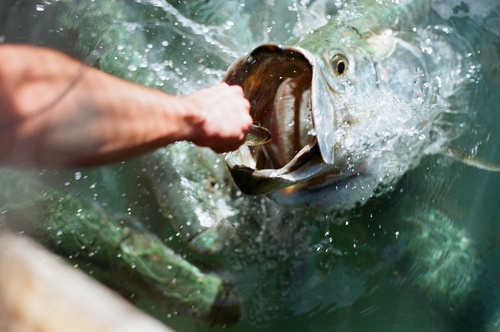
Tarpon (Megalops atlanticus) — Megalopidae — 3
iNaturalist ((c) Donna Pomeroy, some rights reserved (CC BY-NC))
Tarpon (Megalops atlanticus) — Megalopidae — 4
iNaturalist ((c) Isaac Lord, some rights reserved (CC BY-NC))
Fin

Want the complete picture on the Tarpon?

Point your camera at the fish and Fin names the species in seconds. Free, and the Tarpon is one of 12,519 species in the app.

Get the app →

All data

Identification

English name
Tarpon verified
Scientific name
Megalops atlanticus
Family
Megalopidae
Other names
Bass; Cuffum; Madzorfloe; Silverfish; Silverking; Atlantic tarpon verified

Appearance

Size class
Extra large verified
Max length (cm)
250.0 verified
Average length (cm)
130.0 verified
Body shape
Torpedo-shaped verified
Dominant colour
Silver / grey sourced
Pattern
Plain sourced
Tail shape
Forked inferred
Mouth position
Superior (upward) inferred
Lips
Thick / fleshy inferred
Barbels
No verified
Dorsal fins
One continuous sourced
Dorsal spines
No verified

Habitat & distribution

Water type
Euryhaline verified
Substrate
Open water verified
Min depth (m)
0.0 verified
Max depth (m)
40.0 verified
Natural range
Atlantic Ocean on both sides, in coastal waters, estuaries, lagoons and the lower reaches of rivers; strongly euryhaline. verified
Origin
Native verified

Behaviour & biology

Diet
Carnivore verified
Diet (detail)
Schooling fishes, shrimps and crabs sourced
Social behaviour
Schooling verified
Territorial
No verified
Activity
Diurnal inferred
Reproduction
Separate sexes verified
Sexual dimorphism
No verified
levensduur_max_jaar
55.0 verified
Seasonality
Migrates between the sea and estuaries; like the eel it has a transparent, ribbon-shaped larval stage (leptocephalus) and can gulp air in oxygen-poor water. sourced
Special features
Large, silvery, armoured predator with enormous scales, an upturned mouth and an elongated last dorsal fin ray; can gulp air with its swim bladder. Note: in tropical areas this species can cause ciguatera poisoning when eaten; large specimens of coral reef predators can accumulate the toxin. Eat with care or avoid in risk areas. verified

For anglers

Edibility
Rarely eaten verified
Fishing method
Casting with lures, fly or a baitfish in coastal water and estuaries; one of the most sought-after, spectacularly leaping sport fish in the world (usually released) sourced
Regulations source
FishBase ↗ inferred

Safety

Danger to humans
Harmless verified
First aid
None required: this species is harmless to humans. sourced

Status & sources

Sources
FishBase via GBIF (DwC-A), CC-BY-NC 4.0

Same genus Megalops

More from the family Megalopidae

Fin

Want the complete picture on the Tarpon?

Point your camera at the fish and Fin names the species in seconds. Free, and the Tarpon is one of 12,519 species in the app.

Get the app →
Is this the Tarpon? Get the app