 Fin's Fish Guide


The Tadpole madtom (Noturus gyrinus) is a freshwater fish of the family Ictaluridae that grows up to 13 cm.
Eastern and central North America, in lakes and in pools and backwaters with muddy or detritus bottoms of lowland streams and rivers.
Description
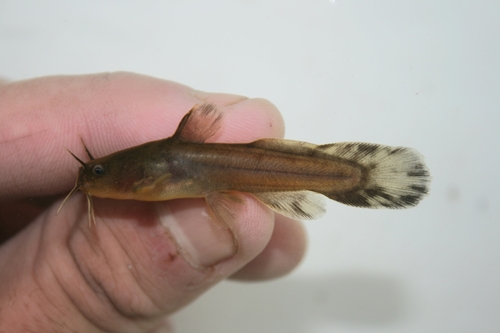
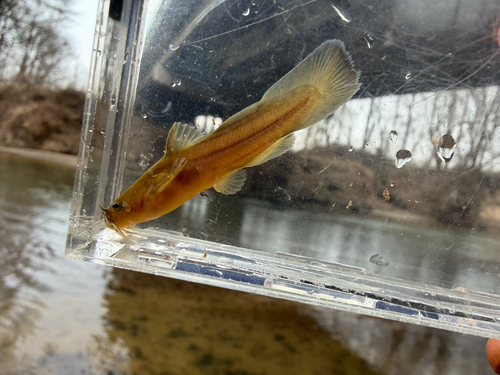
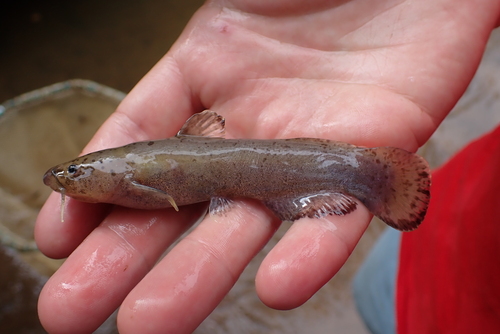
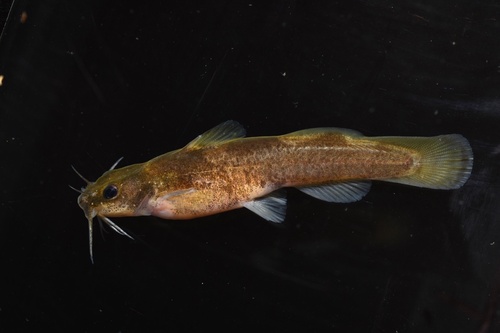
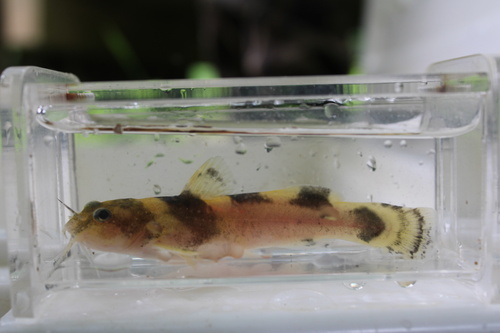
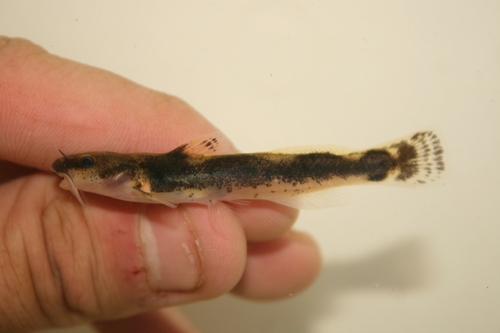
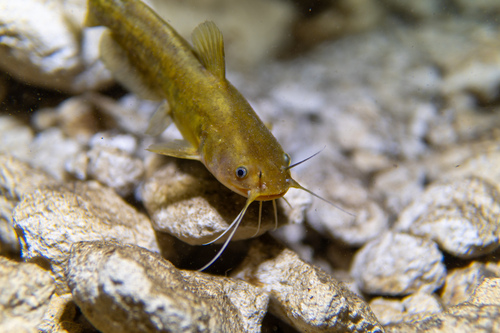
The tadpole madtom is a small North American madtom (family Ictaluridae). The species reaches about 13 cm and has a stocky, brownish body with a rounded tail, barbels and an adipose fin fused to the dorsal fin. It inhabits lakes and pools and backwaters with mud or detritus bottoms of lowland creeks and rivers. Its diet consists of midge larvae, isopods, amphipods and mayfly and caddisfly larvae. Like other madtoms it bears a venomous pectoral spine that can deliver a painful sting. The species is nocturnal and otherwise harmless to humans.
Frequently asked questions
How do you recognise the Tadpole madtom?
The Tadpole madtom has a torpedo-shaped body, is mainly brown and shows a plain pattern. Small dwarf catfish with a venomous pectoral fin spine that can give a painful sting; nocturnal.
Where does the Tadpole madtom live?
The Tadpole madtom lives in fresh water and is mostly found around sand or mud bottom. Eastern and central North America, in lakes and in pools and backwaters with muddy or detritus bottoms of lowland streams and rivers.
How big does the Tadpole madtom get?
The Tadpole madtom grows to a maximum of about 13 cm. On average the species is around 5 cm.
Is the Tadpole madtom dangerous to humans?
No, the Tadpole madtom is harmless to humans. For a sting from the venomous pectoral spine: immerse the affected area in hot water (about 45 C) for 30-90 minutes to ease pain, clean the wound, and seek medical care if symptoms are severe.
Is the Tadpole madtom edible?
The Tadpole madtom is not usually eaten.
More photos


Want the complete picture on the Tadpole madtom?
Point your camera at the fish and Fin names the species in seconds. Free, and the Tadpole madtom is one of 12,519 species in the app.
 Or scan with your phone

All data
Identification
Appearance
Habitat & distribution
Behaviour & biology
For anglers
Safety
Status & sources
Same genus Noturus
More from the family Ictaluridae


Want the complete picture on the Tadpole madtom?
Point your camera at the fish and Fin names the species in seconds. Free, and the Tadpole madtom is one of 12,519 species in the app.
Or scan with your phone