Home · Ophichthidae · Snapper Eel
Snapper Eel (Echiophis punctifer) — Ophichthidae

Snapper Eel

Echiophis punctifer
Family: Ophichthidae
LC · Least Concern

The Snapper Eel (Echiophis punctifer) is a saltwater fish of the family Ophichthidae that grows up to 180 cm.

Length
180 cm
Water
Saltwater
Depth
40–100 m
Diet
Carnivore
Behaviour
Solitary
Activity
Nocturnal
Body shape
Snake-like
Substrate
Stone or rock
Danger
Harmless
Range
Western Atlantic; sandy and muddy bottoms of shallow water.
Edibility
Rarely eaten

Want the complete picture on the Snapper Eel?

Description

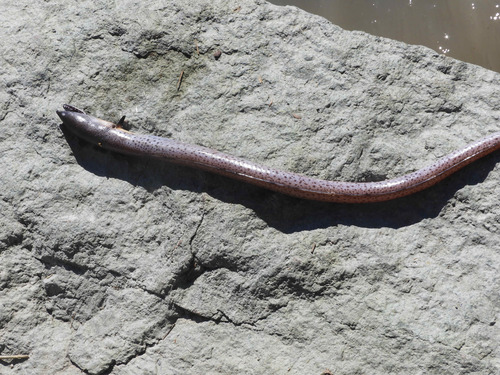
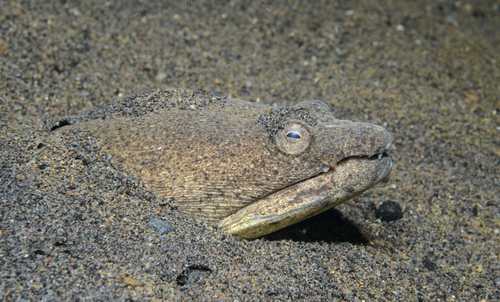
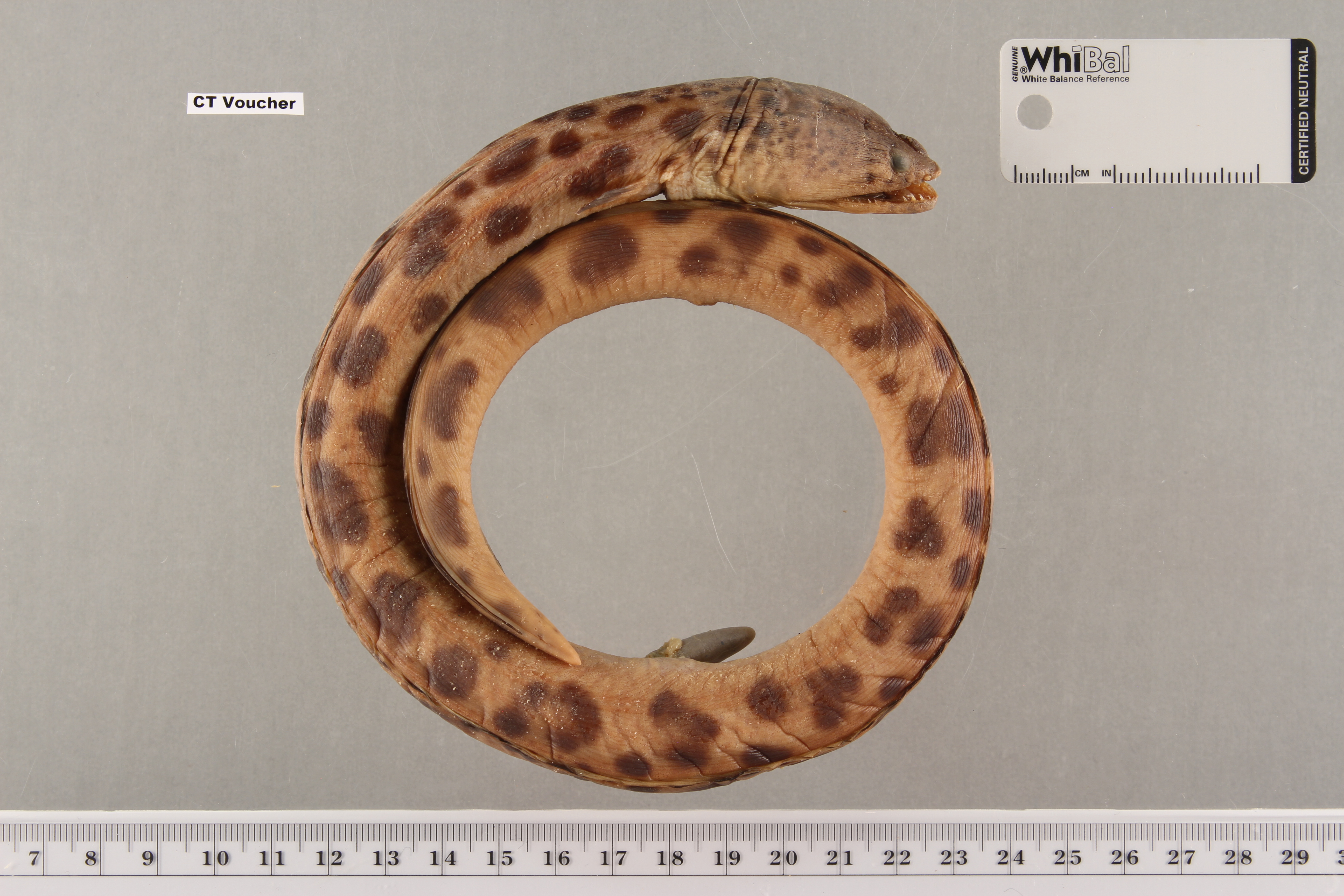
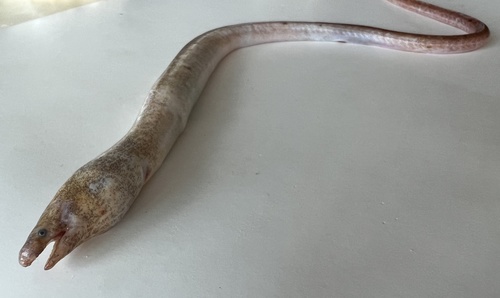
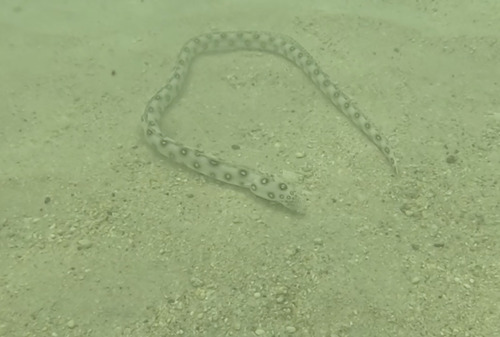
The spotted spoon-nose eel is a large snake eel (Ophichthidae) from the western Atlantic Ocean. The species can grow to over a metre and has a robust, elongate, eel-like body with numerous dark spots and a large mouth with strong, sharp teeth. It burrows in sand and mud bottoms of shallow water on the continental shelf, near bays and lagoons, often with only the head visible. As an ambush hunter it springs on fishes and crustaceans. The powerful, toothed mouth can give a nasty bite if handled; otherwise it is not venomous.

Frequently asked questions

How do you recognise the Snapper Eel?

The Snapper Eel has a snake-like body, is mainly yellow-gold and shows a spots pattern. Large, toothed mouth; buries itself in sand with only the head showing; can bite when handled.

Where does the Snapper Eel live?

The Snapper Eel lives in the sea (marine waters) and is mostly found around stony or rocky ground. Western Atlantic; sandy and muddy bottoms of shallow water.

How big does the Snapper Eel get?

The Snapper Eel grows to a maximum of about 180 cm. On average the species is around 100 cm.

Is the Snapper Eel dangerous to humans?

No, the Snapper Eel is harmless to humans. Not venomous, but the sharp teeth can give a nasty bite; handle a caught specimen with care and keep fingers away from the mouth. Clean any bite wound and seek medical care if it becomes infected.

Is the Snapper Eel edible?

The Snapper Eel is rarely eaten.

More photos

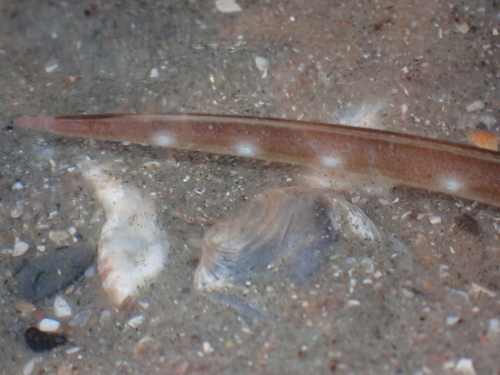
Snapper Eel (Echiophis punctifer) — Ophichthidae — 2
Wikimedia Commons — D Ross Robertson (Public domain)
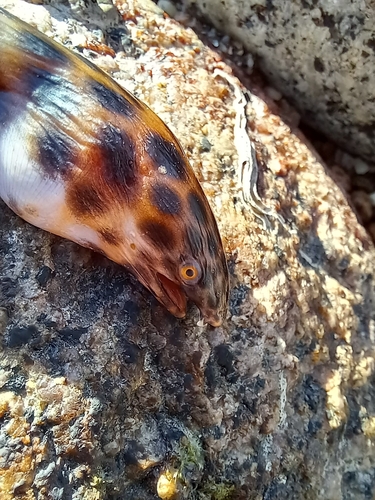
Snapper Eel (Echiophis punctifer) — Ophichthidae — 3
iNaturalist ((c) Pauline Singleton, some rights reserved (CC BY-NC))
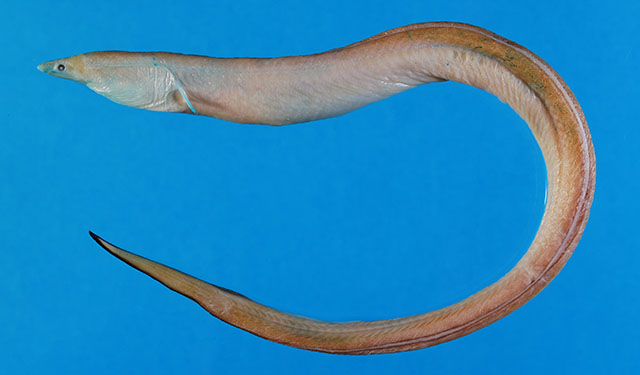
Snapper Eel (Echiophis punctifer) — Ophichthidae — 4
Wikimedia Commons — Barry Peters from Greer, SC (CC BY 2.0)
Snapper Eel (Echiophis punctifer) — Ophichthidae — 5
iNaturalist ((c) Thomas Menut, some rights reserved (CC BY-NC))

Want the complete picture on the Snapper Eel?

Point your camera at the fish and Fin names the species in seconds. Free, and the Snapper Eel is one of 12,519 species in the app.

All data

Identification

English name
Snapper Eel verified
Scientific name
Echiophis punctifer
Family
Ophichthidae
Other names
Snapper eel; Spoon-nose eel; Stippled spoon-nose eel verified

Appearance

Size class
Extra large verified
Max length (cm)
180 verified
Average length (cm)
100 verified
Body shape
Snake-like sourced
Dominant colour
Yellow / gold
Pattern
Spots
Tail shape
Rounded
Mouth position
Terminal
Lips
Thick / fleshy
Barbels
No sourced
Dorsal fins
One continuous
Dorsal spines
No sourced

Habitat & distribution

Water type
Saltwater sourced
Substrate
Stone or rock sourced
Min depth (m)
40 verified
Max depth (m)
100 verified
Natural range
Western Atlantic; sandy and muddy bottoms of shallow water.
Origin
Native sourced

Behaviour & biology

Diet
Carnivore sourced
Diet (detail)
Fishes and crustaceans sourced
Social behaviour
Solitary
Territorial
No
Activity
Nocturnal
Reproduction
Separate sexes sourced
Sexual dimorphism
No
Seasonality
Present year-round in its habitat; no pronounced seasonality known.
Special features
Large, toothed mouth; buries itself in sand with only the head showing; can bite when handled. sourced

For anglers

Edibility
Rarely eaten sourced
Fishing method
Fishing with natural bait (fish, shrimp, worm) or lures close to reef and rock structures.
Regulations source

Safety

Danger to humans
Harmless sourced
First aid
Not venomous, but the sharp teeth can give a nasty bite; handle a caught specimen with care and keep fingers away from the mouth. Clean any bite wound and seek medical care if it becomes infected. sourced

Status & sources

Sources
FishBase via GBIF (DwC-A), CC-BY-NC 4.0

Same genus Echiophis

More from the family Ophichthidae
Want the complete picture on the Snapper Eel?

Point your camera at the fish and Fin names the species in seconds. Free, and the Snapper Eel is one of 12,519 species in the app.

Is this the Snapper Eel?