

The Small-spotted catshark (Scyliorhinus canicula) is a saltwater fish of the family Scyliorhinidae that grows up to 100 cm.
North Sea, northeast Atlantic from Ireland to Portugal, the Mediterranean Sea and the northwest African coast.

Want the complete picture on the Small-spotted catshark?
Description
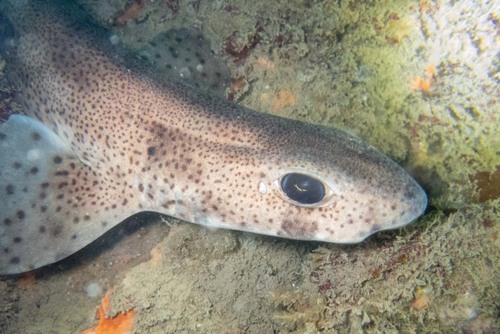
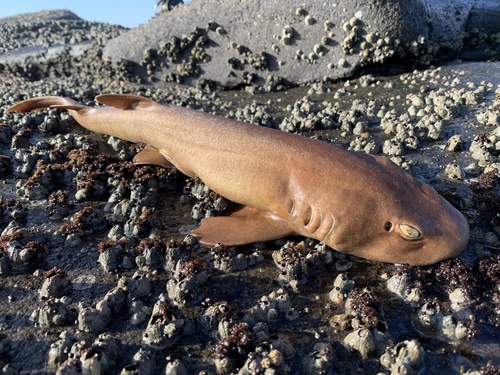
The lesser-spotted dogfish is a small, slender catshark of the family Scyliorhinidae reaching about 100 cm. The elongate, brownish body is densely covered with numerous small dark spots and sometimes a few paler flecks. The two dorsal fins are set far back. The dogfish lives on the continental shelf of the North Sea, north-eastern Atlantic and Mediterranean, usually between 80 and 100 m, and is active at night; by day it rests on the bottom or in crevices. It feeds on benthic invertebrates and small fish. The species is oviparous, laying leathery egg cases with anchoring tendrils. The dogfish is regularly eaten.
Frequently asked questions
How do you recognise the Small-spotted catshark?
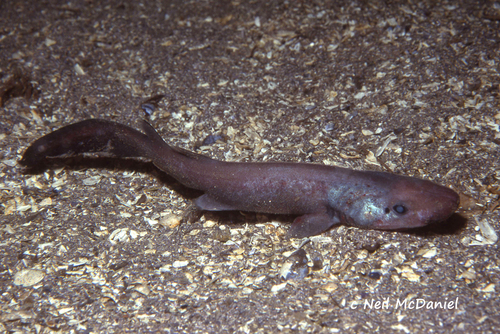
The Small-spotted catshark has an elongate, eel-like body, is mainly brown and shows a spots pattern. Small, slender catshark densely covered with many small dark spots; lays leathery egg cases with tendrils ('mermaid's purses').
Where does the Small-spotted catshark live?
The Small-spotted catshark lives in the sea (marine waters) and is mostly found around sand or mud bottom. North Sea, northeast Atlantic from Ireland to Portugal, the Mediterranean Sea and the northwest African coast.
How big does the Small-spotted catshark get?
The Small-spotted catshark grows to a maximum of about 100 cm. On average the species is around 60 cm.
Is the Small-spotted catshark dangerous to humans?
No, the Small-spotted catshark is harmless to humans. None required: this species is harmless to humans.
Is the Small-spotted catshark edible?
Yes, the Small-spotted catshark is commonly eaten.
More photos


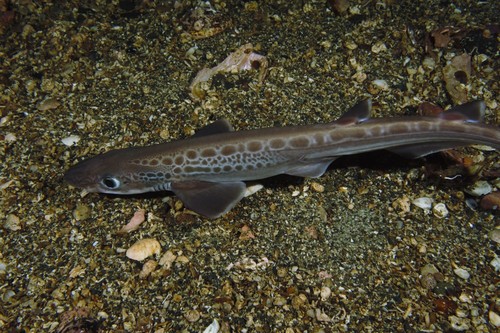
Easily confused with
These species look like the Small-spotted catshark and live in the same waters.
Want the complete picture on the Small-spotted catshark?
Point your camera at the fish and Fin names the species in seconds. Free, and the Small-spotted catshark is one of 12,519 species in the app.
 Or scan with your phone
All data
Identification
Appearance
Habitat & distribution
Behaviour & biology
For anglers
Safety
Status & sources
Same genus Scyliorhinus
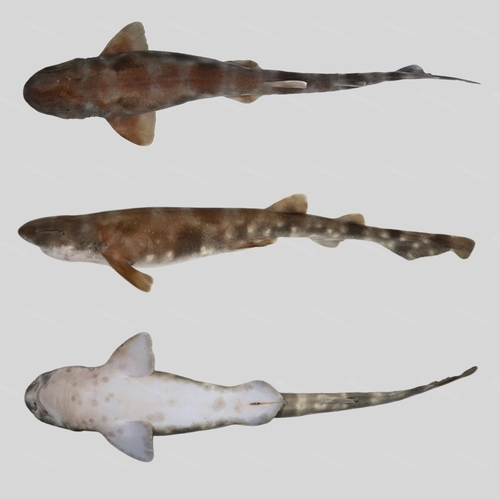
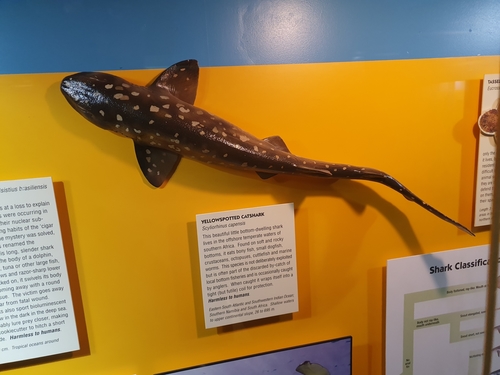

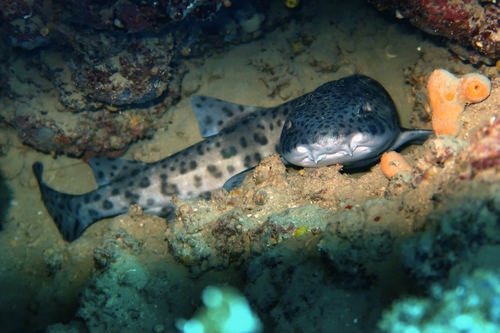
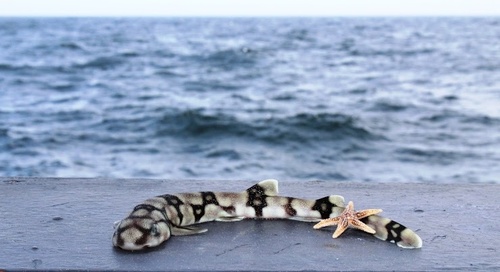

More from the family Scyliorhinidae


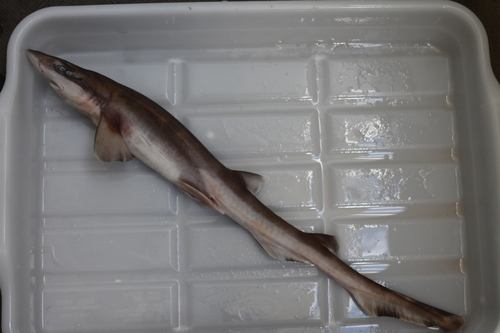

Want the complete picture on the Small-spotted catshark?
Point your camera at the fish and Fin names the species in seconds. Free, and the Small-spotted catshark is one of 12,519 species in the app.
Or scan with your phone