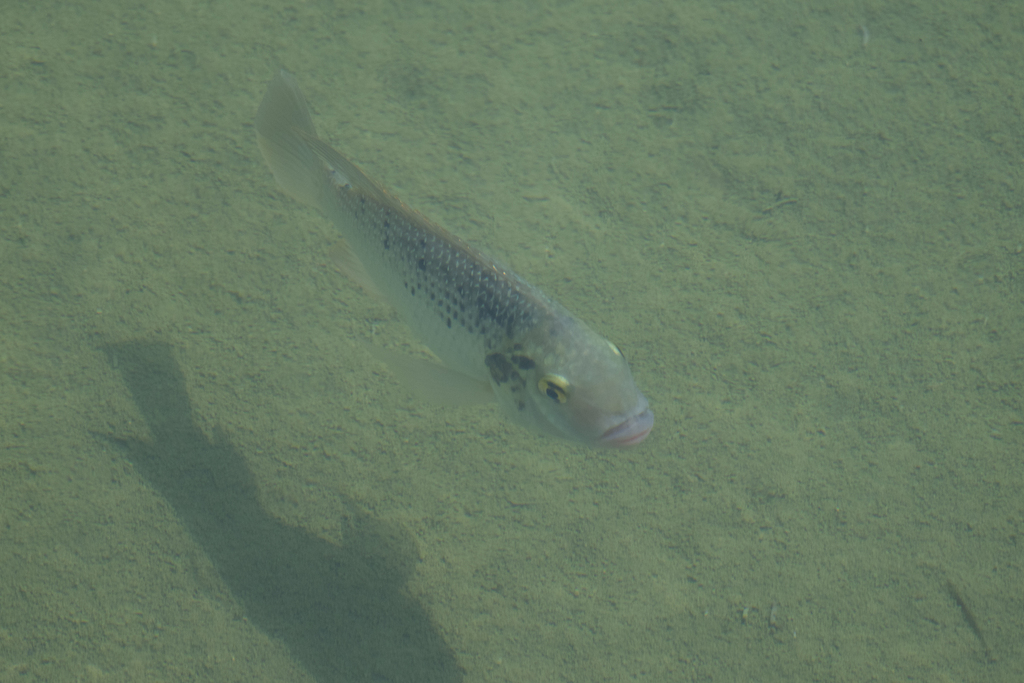
The Mango tilapia (Sarotherodon galilaeus) is a fish that lives in both fresh and salt water of the family Cichlidae that grows up to 40 cm.
Description
The mango tilapia or St. Peter's fish is a robust cichlid of the family Cichlidae reaching about 40 cm. The deep, laterally compressed, silvery-grey body has a long dorsal fin and many fine gill rakers, with which it filters phytoplankton, algae and detritus from the water as a filter feeder. Characteristic is its reproduction: it is a biparental mouthbrooder, in which both parents take turns brooding and protecting the fertilised eggs and young in the mouth. The species comes from the fresh and brackish water of Africa and the Near East and tolerates brackish water. It has been fished for thousands of years - it is the traditional 'St. Peter's fish' of the Sea of Galilee - and is an important aquaculture and food fish worldwide.
Frequently asked questions
How do you recognise the Mango tilapia?
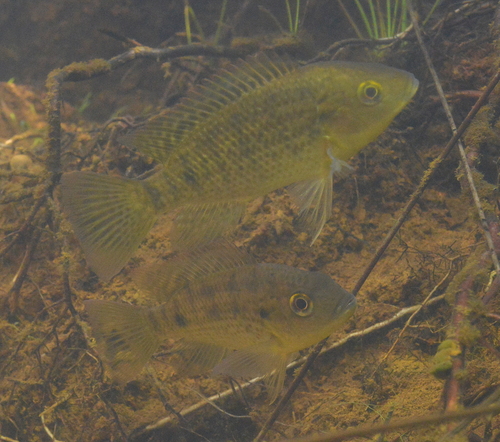
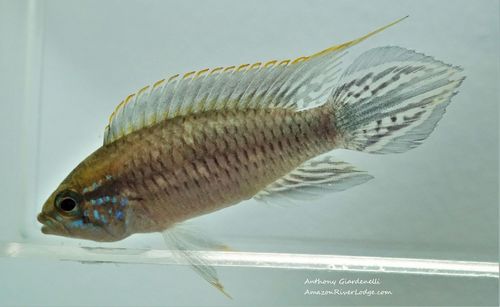
The Mango tilapia has a flattened, disc-shaped body, is mainly silver-grey and shows a plain pattern.
Where does the Mango tilapia live?
The Mango tilapia lives in both fresh and salt water and is mostly found around algae or seagrass beds.
How big does the Mango tilapia get?
The Mango tilapia grows to a maximum of about 40 cm.
Is the Mango tilapia dangerous to humans?
No, the Mango tilapia is harmless to humans.
Is the Mango tilapia edible?
Yes, the Mango tilapia is a highly prized food fish.
Download Fin's Fish Guide
Identify fish in seconds, log your catches and dives. Join the TestFlight beta.
All data
Identification
Appearance
Habitat & distribution
Behaviour & biology
For anglers
Safety
Status & sources
Same genus Sarotherodon
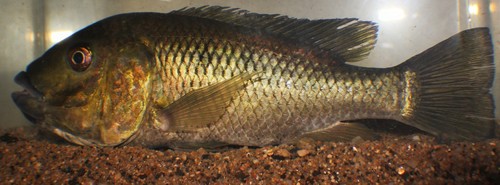

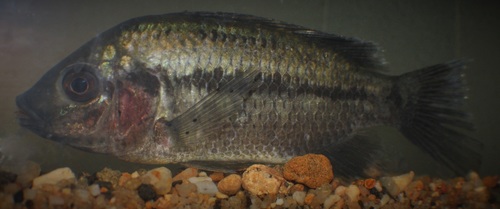

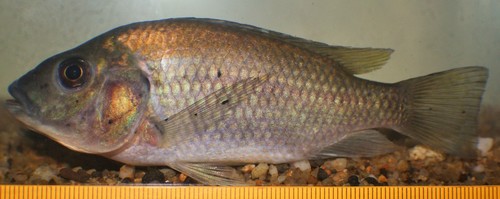
More from the family Cichlidae



Download Fin's Fish Guide
Identify fish in seconds, log your catches and dives. Join the TestFlight beta.