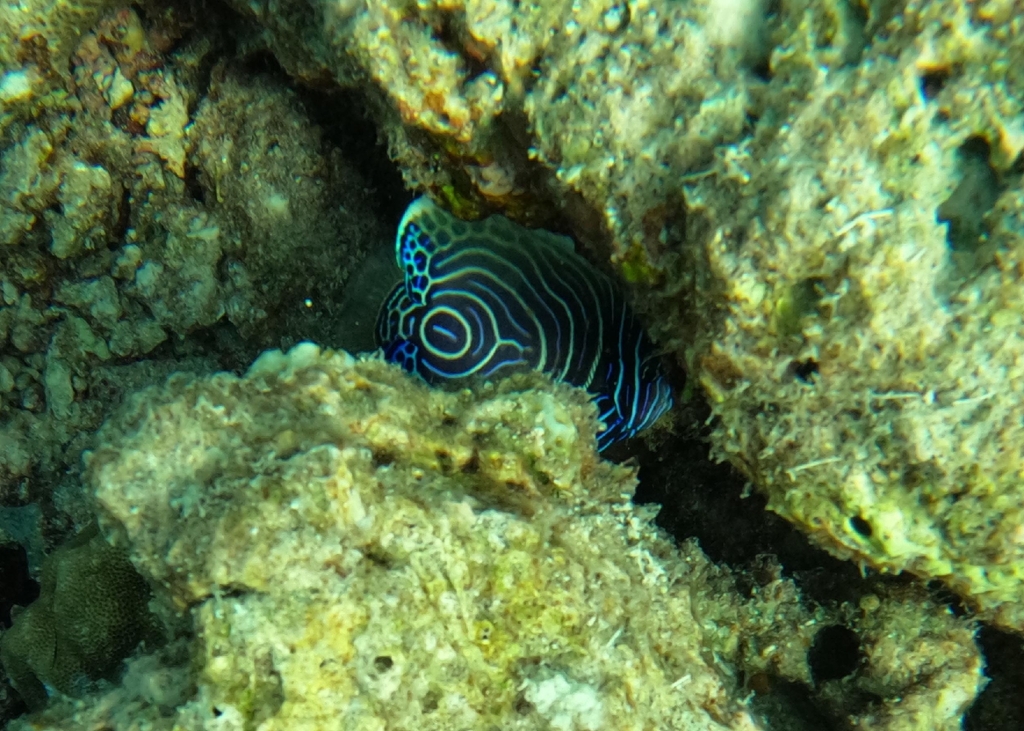
The Angel fish (Pomacanthus imperator) is a saltwater fish of the family Pomacanthidae that grows up to 40 cm.
Description
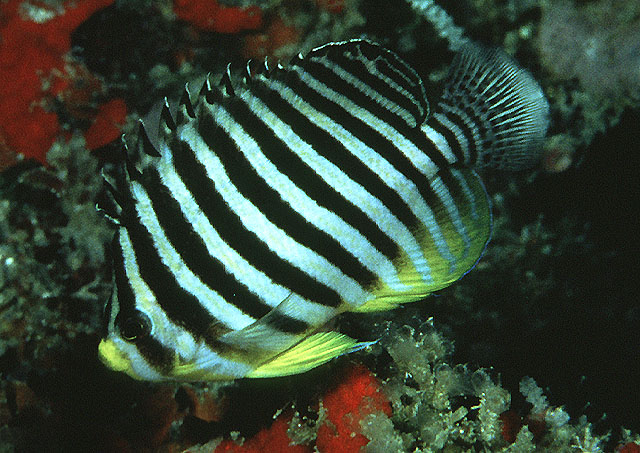
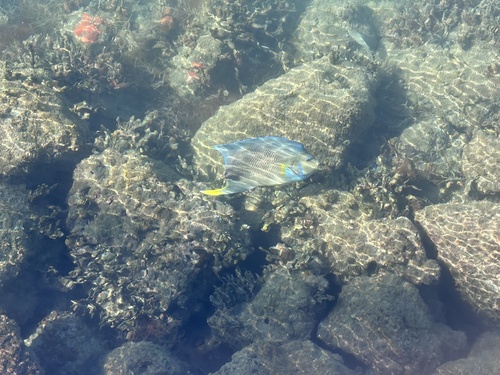
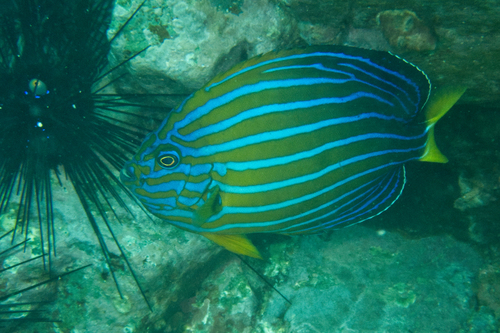
The emperor angelfish is a large, beautifully marked angelfish of the family Pomacanthidae from the Indo-Pacific. The species grows to about 40 cm; adults have a blue body with numerous yellow horizontal stripes and a blue-black eye mask, while juveniles are deep blue with concentric white and light-blue rings - a pattern so different that juvenile and adult were long regarded as separate species. Juveniles shelter under ledges and in holes of outer lagoons. As an omnivore it feeds mainly on sponges and tunicates. The emperor angelfish is a popular reef dweller and is harmless to humans.
Frequently asked questions
How do you recognise the Angel fish?
The Angel fish has a flattened, disc-shaped body, is mainly blue and shows a horizontal stripes pattern.
Where does the Angel fish live?
The Angel fish lives in the sea (marine waters) and is mostly found around stony or rocky ground.
How big does the Angel fish get?
The Angel fish grows to a maximum of about 40 cm.
Is the Angel fish dangerous to humans?
No, the Angel fish is harmless to humans.
Is the Angel fish edible?
The Angel fish is not usually eaten.
Download Fin's Fish Guide
Identify fish in seconds, log your catches and dives. Join the TestFlight beta.
All data
Identification
Appearance
Habitat & distribution
Behaviour & biology
For anglers
Safety
Status & sources
Same genus Pomacanthus
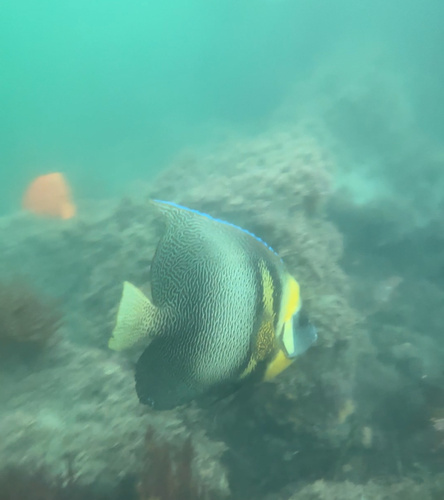
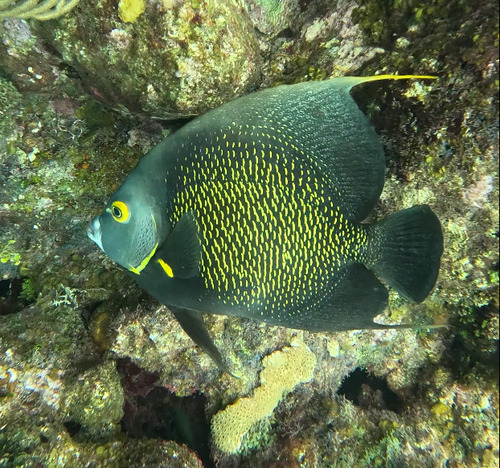
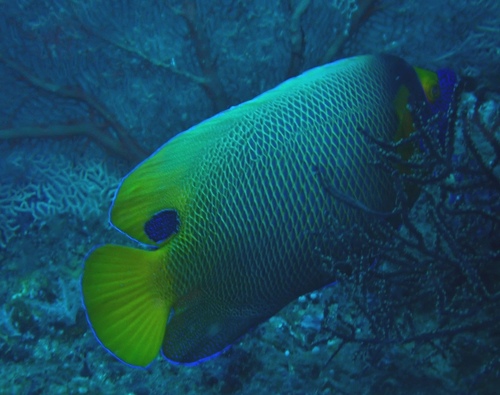
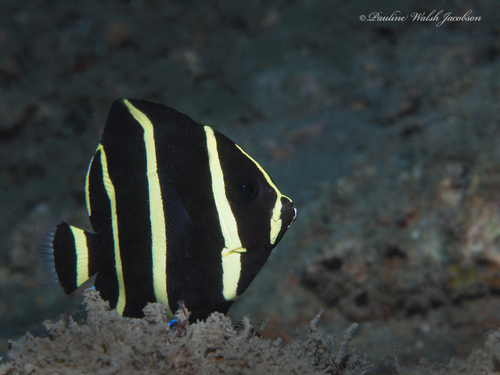
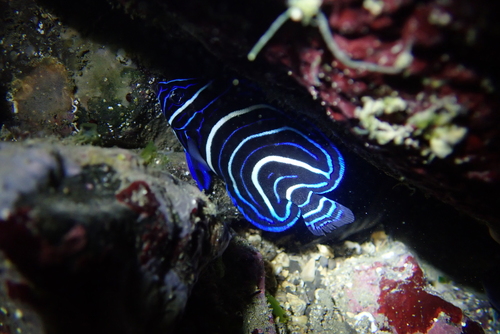
More from the family Pomacanthidae
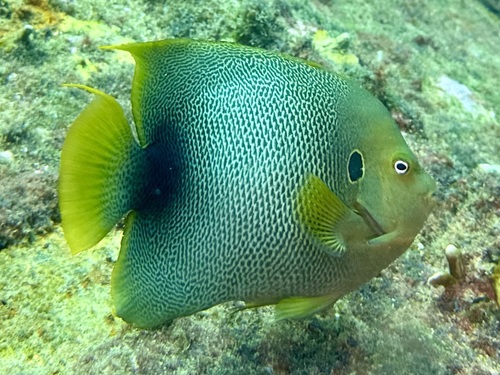
Download Fin's Fish Guide
Identify fish in seconds, log your catches and dives. Join the TestFlight beta.