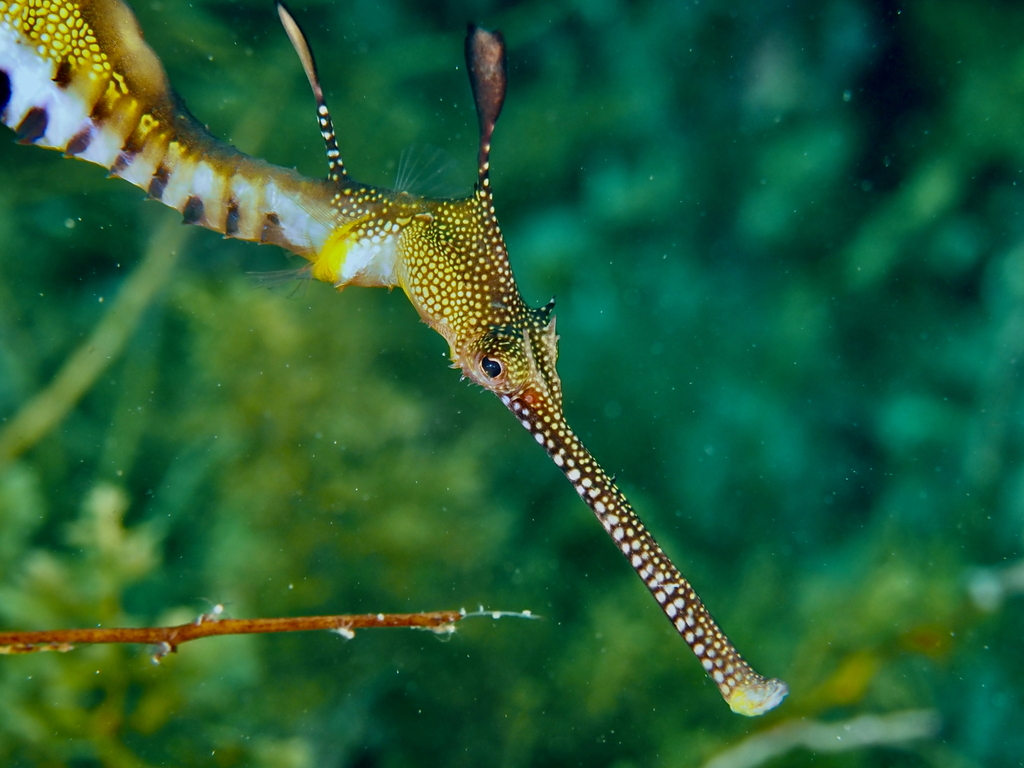
The Common seadragon (Phyllopteryx taeniolatus) is a saltwater fish of the family Syngnathidae that grows up to 46 cm.
Description
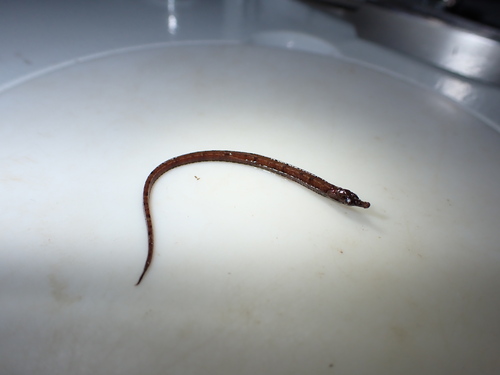
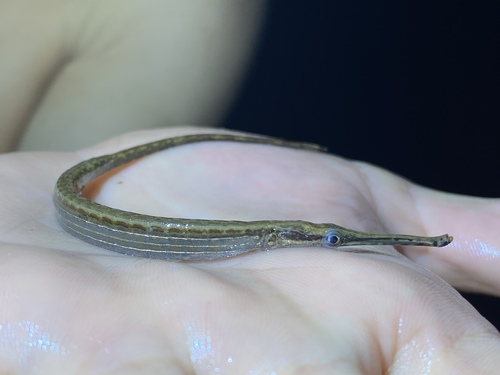
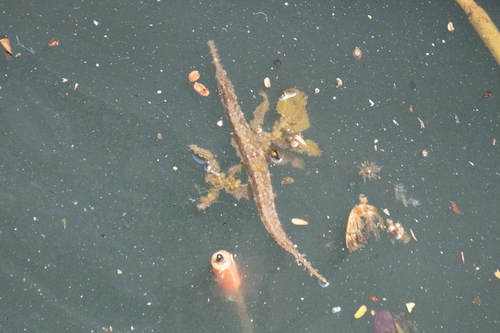
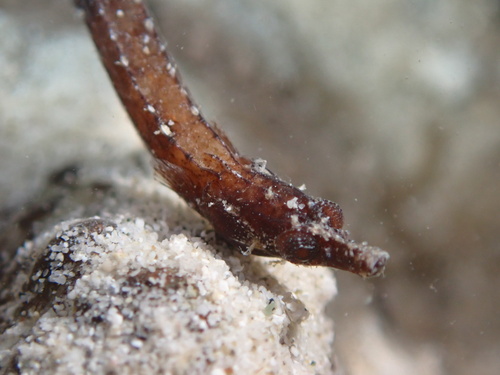
The common seadragon, also called the weedy seadragon, is a remarkable relative of the seahorses (Syngnathidae) and is endemic to the cool coastal waters of southern Australia. The species reaches about 46 cm and has an elongate, reddish body with yellow spots and purple-blue bands, and bears leaf-like appendages that camouflage it superbly among seaweeds and kelp. With a long, tubular snout it sucks up small crustacean plankton. The species has no prehensile tail. As in seahorses the male carries the eggs, here on the underside of the tail.
Frequently asked questions
How do you recognise the Common seadragon?
The Common seadragon has an irregular in shape body, is mainly red-orange and shows a spots pattern.
Where does the Common seadragon live?
The Common seadragon lives in the sea (marine waters) and is mostly found around stony or rocky ground.
How big does the Common seadragon get?
The Common seadragon grows to a maximum of about 46 cm. On average the species is around 30 cm.
Is the Common seadragon dangerous to humans?
No, the Common seadragon is harmless to humans.
Is the Common seadragon edible?
The Common seadragon is not usually eaten.
Download Fin's Fish Guide
Identify fish in seconds, log your catches and dives. Join the TestFlight beta.
All data
Identification
Appearance
Habitat & distribution
Behaviour & biology
For anglers
Safety
Status & sources
More from the family Syngnathidae
Download Fin's Fish Guide
Identify fish in seconds, log your catches and dives. Join the TestFlight beta.