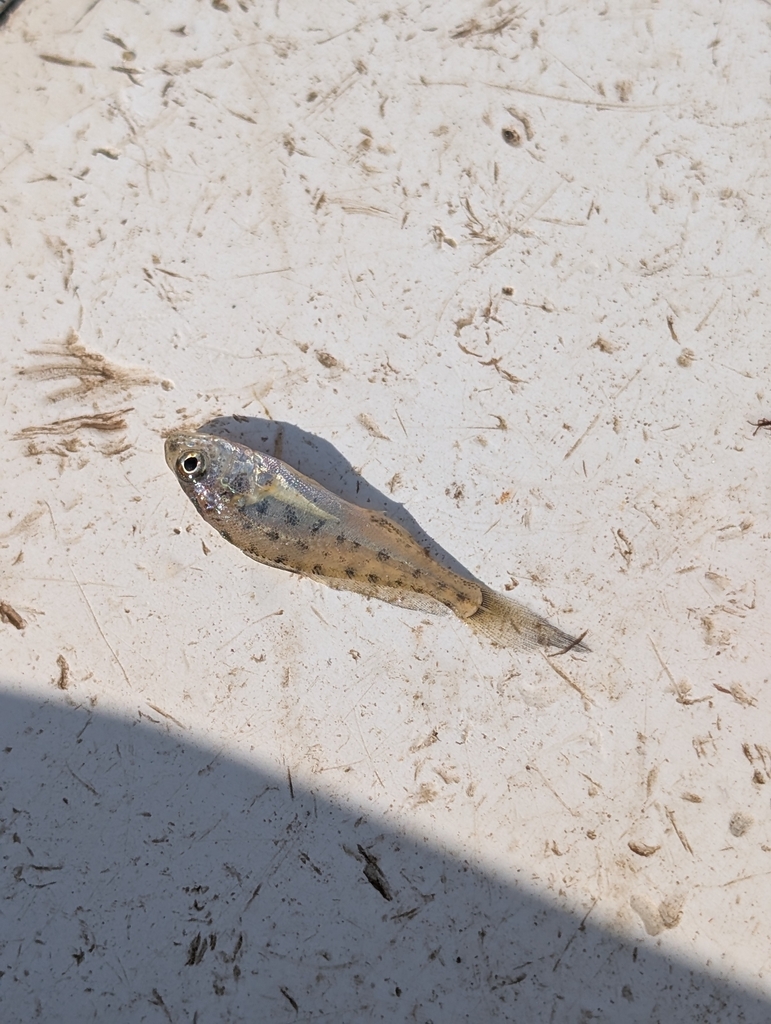
The Atlantic croaker (Micropogonias undulatus) is a fish that lives in both fresh and salt water of the family Sciaenidae that grows up to 55 cm.
Description
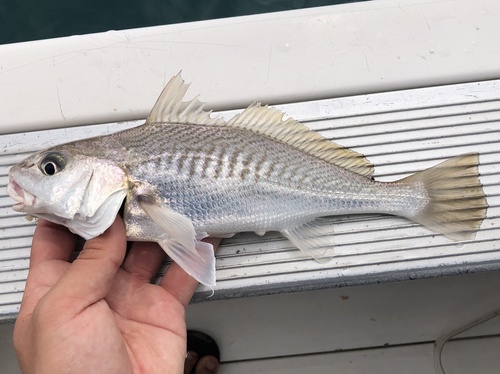
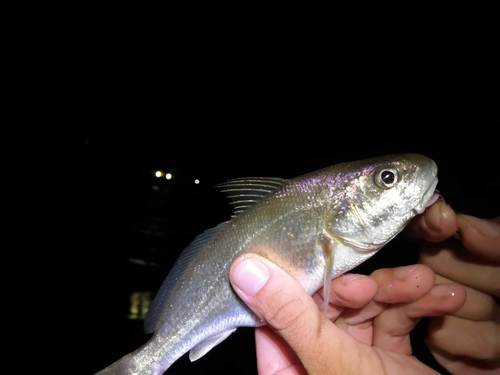
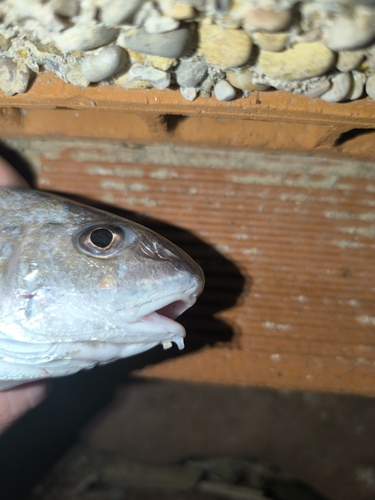
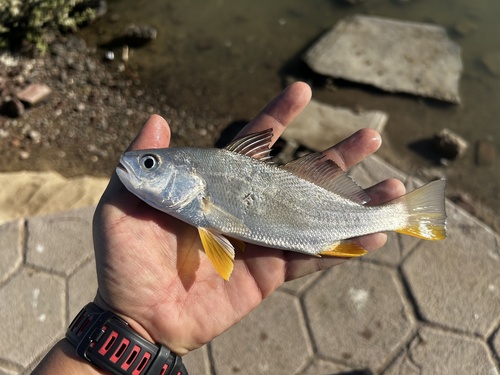
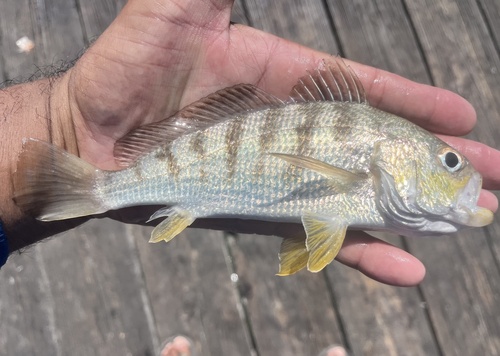
The Atlantic croaker is a silvery croaker of the family Sciaenidae (drums) reaching about 55 cm. The sturdy, silvery-grey body with a bronze tinge bears oblique rows of brown streaks; beneath the inferior mouth sit small chin barbels with which the fish probes the bottom. Like other drums it can make a loud drumming sound with muscles against its swim bladder. The species lives in estuaries, bays and coastal water along the east coast of the USA, the Gulf of Mexico and southward, and tolerates strongly varying salinities. On the bottom it searches for worms, small crustaceans, molluscs and detritus. Young fish grow up in the estuaries. With its tasty flesh it is a popular commercial and sport fish.
Frequently asked questions
How do you recognise the Atlantic croaker?
The Atlantic croaker has a torpedo-shaped body, is mainly silver-grey and shows a spots pattern.
Where does the Atlantic croaker live?
The Atlantic croaker lives in both fresh and salt water and is mostly found around sand or mud bottom.
How big does the Atlantic croaker get?
The Atlantic croaker grows to a maximum of about 55 cm. On average the species is around 30 cm.
Is the Atlantic croaker dangerous to humans?
No, the Atlantic croaker is harmless to humans.
Is the Atlantic croaker edible?
Yes, the Atlantic croaker is a highly prized food fish.
Download Fin's Fish Guide
Identify fish in seconds, log your catches and dives. Join the TestFlight beta.
All data
Identification
Appearance
Habitat & distribution
Behaviour & biology
For anglers
Safety
Status & sources
Same genus Micropogonias
More from the family Sciaenidae


Download Fin's Fish Guide
Identify fish in seconds, log your catches and dives. Join the TestFlight beta.