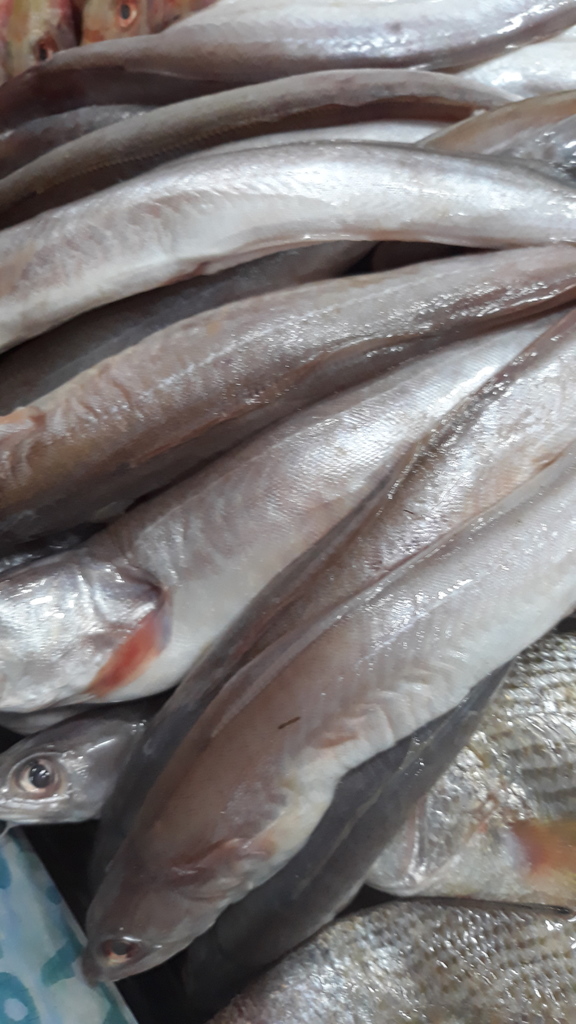
The Argentine hake (Merluccius hubbsi) is a saltwater fish of the family Merlucciidae that grows up to 95 cm.
Description
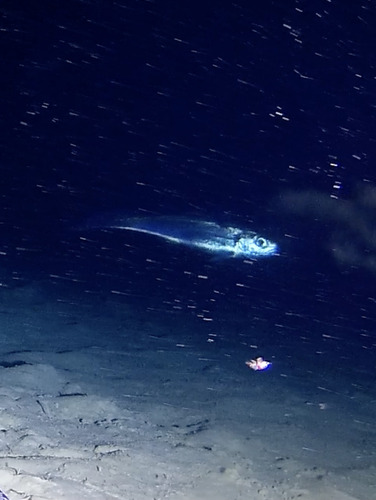
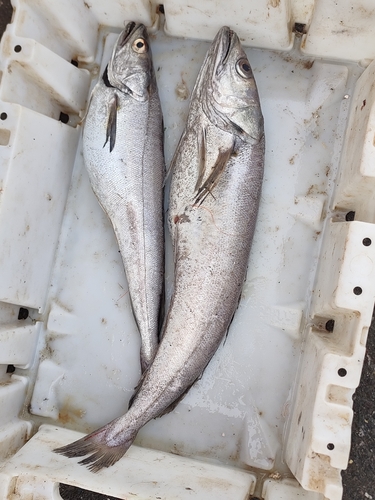
The Argentine hake is a commercially very important fish of the family Merlucciidae from the southwestern Atlantic, along the coast of Argentina, Uruguay and southern Brazil. The species reaches about 95 cm and has an elongate, silvery-grey body with a large, toothed mouth. Adults live on the continental shelf, mainly at 100 to 200 m deep. Larger fish prey on fishes such as anchovies and hake, on squid and on macrozooplankton, while smaller specimens eat mysids and amphipods. The species is one of the most important target species of the fishery in the region.
Frequently asked questions
How do you recognise the Argentine hake?
The Argentine hake has an elongate, eel-like body, is mainly silver-grey and shows a plain pattern.
Where does the Argentine hake live?
The Argentine hake lives in the sea (marine waters) and is mostly found around mixed bottom.
How big does the Argentine hake get?
The Argentine hake grows to a maximum of about 95 cm. On average the species is around 50 cm.
Is the Argentine hake dangerous to humans?
No, the Argentine hake is harmless to humans.
Is the Argentine hake edible?
Yes, the Argentine hake is a highly prized food fish.
Download Fin's Fish Guide
Identify fish in seconds, log your catches and dives. Join the TestFlight beta.
All data
Identification
Appearance
Habitat & distribution
Behaviour & biology
For anglers
Safety
Status & sources
Same genus Merluccius
More from the family Merlucciidae


Download Fin's Fish Guide
Identify fish in seconds, log your catches and dives. Join the TestFlight beta.