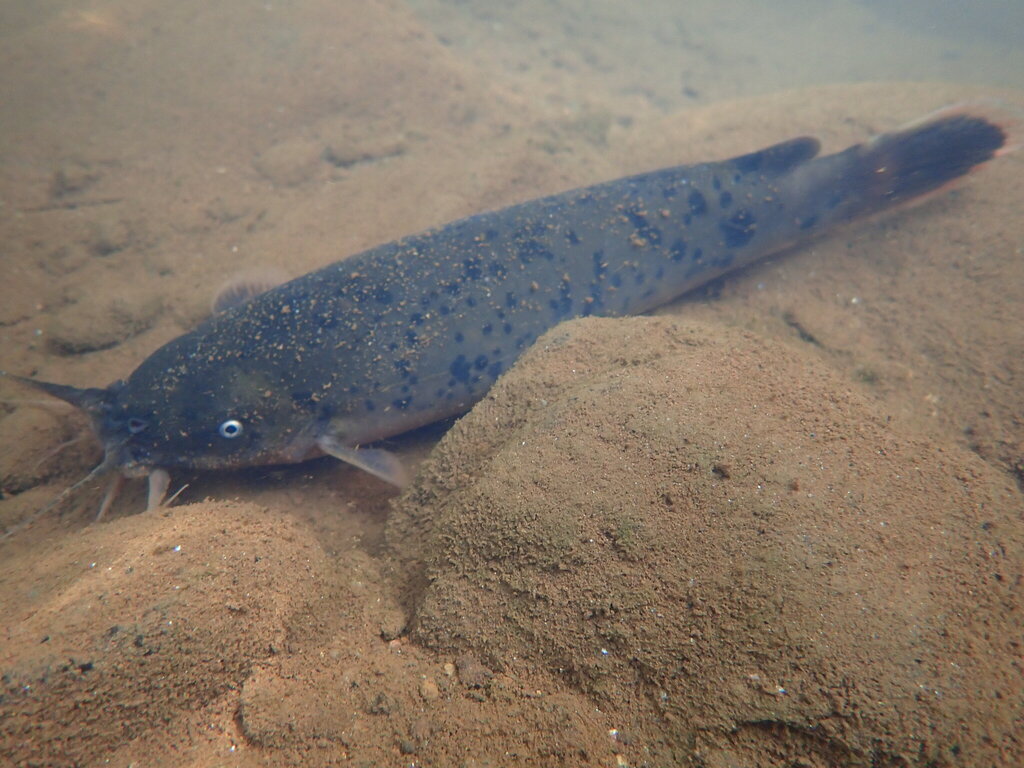
The Electric catfish (Malapterurus electricus) is a freshwater fish of the family Malapteruridae that grows up to 122 cm.
Description
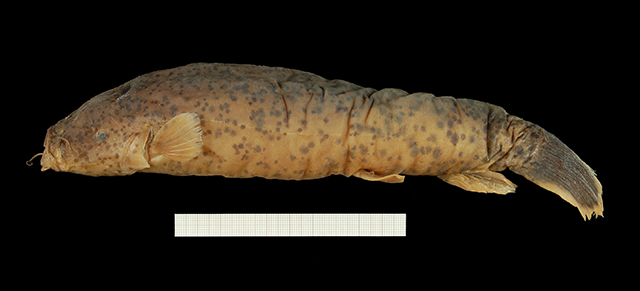
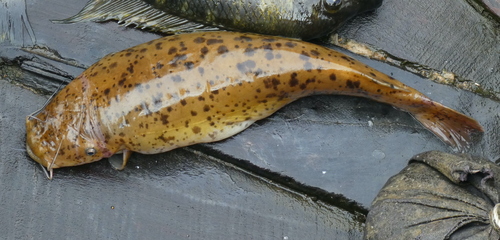
The electric catfish is a plump, scaleless catfish of the family Malapteruridae reaching about 1.2 metres. The grey-brown, spotted body lacks an ordinary dorsal fin but has an adipose fin at the rear, three pairs of barbels and a rounded tail. Beneath the skin lies an electric organ that wraps almost the whole body and can deliver strong shocks - up to several hundred volts - to stun prey and defend itself. The species comes from much of Africa, including the Nile, and lives in quiet, turbid rivers and lakes. At night it hunts fish and bottom animals. With its size it is locally a food fish, but it is feared for its painful, startling shocks.
Frequently asked questions
How do you recognise the Electric catfish?
The Electric catfish has a torpedo-shaped body, is mainly brown and shows a spots pattern.
Where does the Electric catfish live?
The Electric catfish lives in fresh water and is mostly found around sand or mud bottom.
How big does the Electric catfish get?
The Electric catfish grows to a maximum of about 122 cm.
Is the Electric catfish dangerous to humans?
The Electric catfish can cause injury; handle it with care.
Is the Electric catfish edible?
Yes, the Electric catfish is commonly eaten.
Download Fin's Fish Guide
Identify fish in seconds, log your catches and dives. Join the TestFlight beta.
All data
Identification
Appearance
Habitat & distribution
Behaviour & biology
For anglers
Safety
Status & sources
Same genus Malapterurus
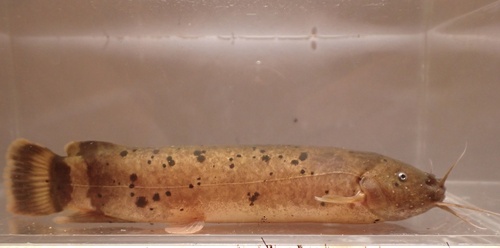

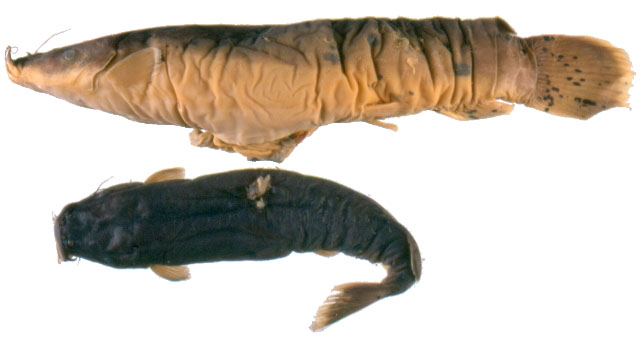

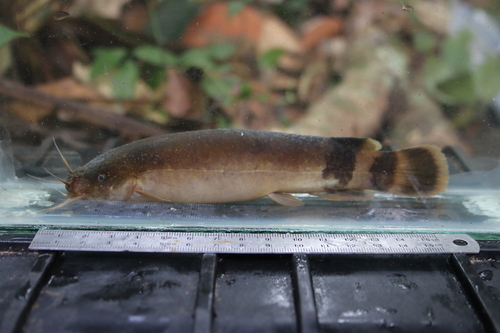
More from the family Malapteruridae

Download Fin's Fish Guide
Identify fish in seconds, log your catches and dives. Join the TestFlight beta.