 Fin's Fish Guide
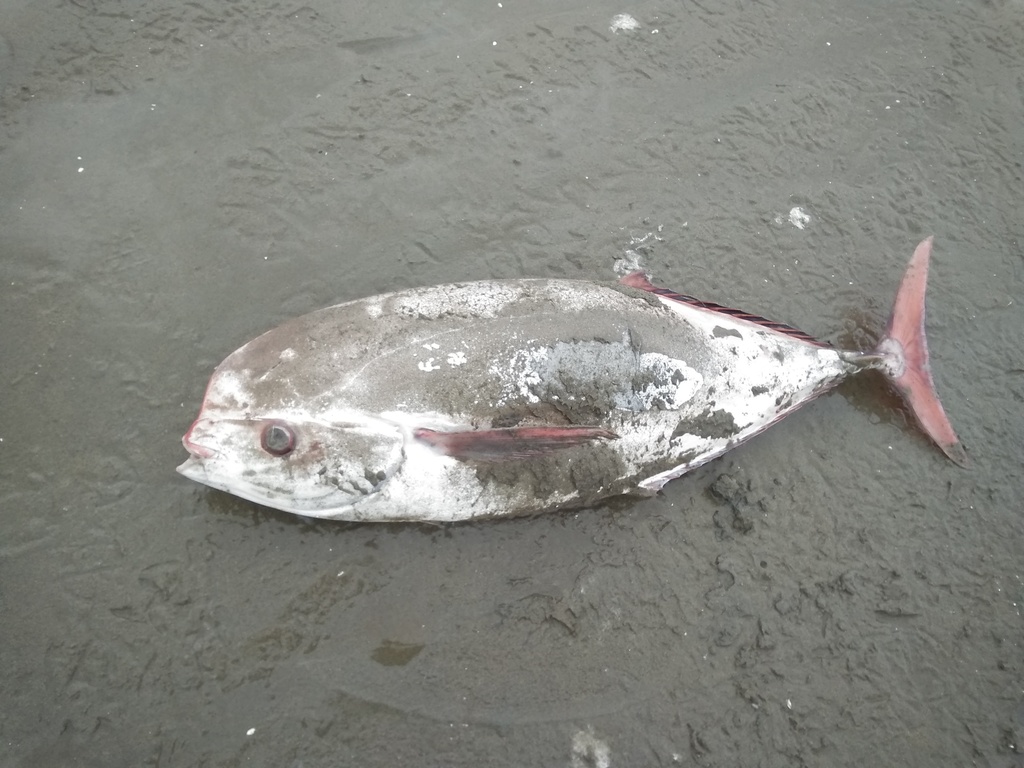

The Loo (Luvarus imperialis) is a saltwater fish of the family Luvaridae that grows up to 200 cm.
Description
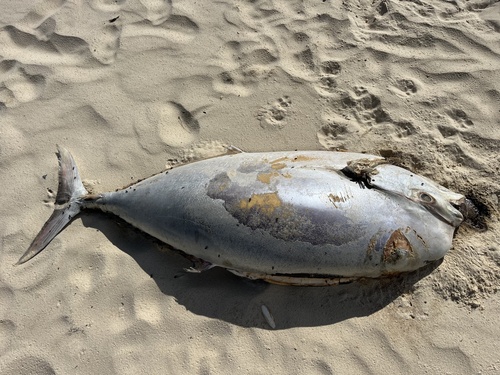
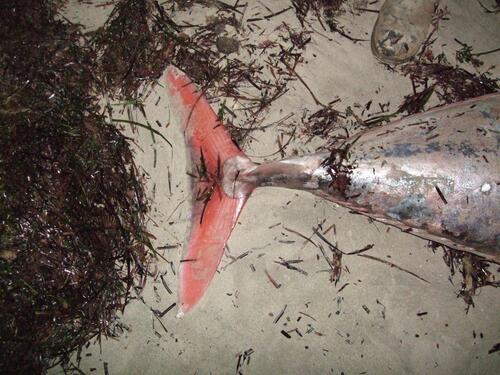
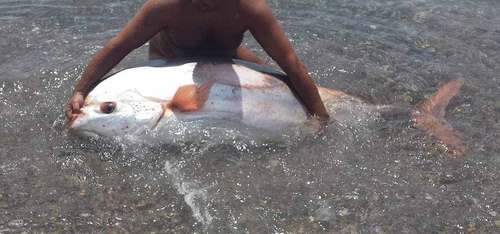
The louvar is a large oceanic fish and the only species of the family Luvaridae. The species can grow to nearly two metres and become heavy; it has a deep, pink to silvery body with a steep, bulging head, a small mouth and a reddish tinge on the fins. It lives oceanically and epipelagically, near the surface or in deeper water, and is usually solitary. It feeds mainly on jellyfishes, comb jellies and other gelatinous planktonic animals. Females produce millions of tiny, floating eggs. The species is harmless to humans.
Frequently asked questions
How do you recognise the Loo?
The Loo has a torpedo-shaped body, is mainly pink-purple and shows a plain pattern. The only species of its family; bulging head; eats jellyfish; produces millions of floating eggs.
Where does the Loo live?
The Loo lives in the sea (marine waters) and is mostly found around open water. Worldwide in warm oceans; oceanic and epipelagic.
How big does the Loo get?
The Loo grows to a maximum of about 200 cm. On average the species is around 152 cm.
Is the Loo dangerous to humans?
No, the Loo is harmless to humans. None required: this species is harmless to humans.
Is the Loo edible?
The Loo is rarely eaten.
More photos

Want the complete picture on the Loo?
Point your camera at the fish and Fin names the species in seconds. Free, and the Loo is one of 12,519 species in the app.
 Or scan with your phone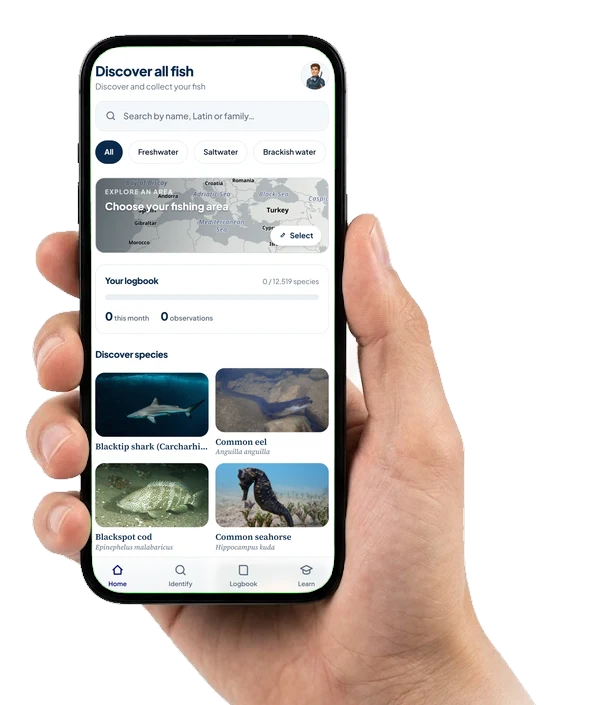
All data
Identification
Appearance
Habitat & distribution
Behaviour & biology
For anglers
Safety
Status & sources
Want the complete picture on the Loo?
Point your camera at the fish and Fin names the species in seconds. Free, and the Loo is one of 12,519 species in the app.
Or scan with your phone