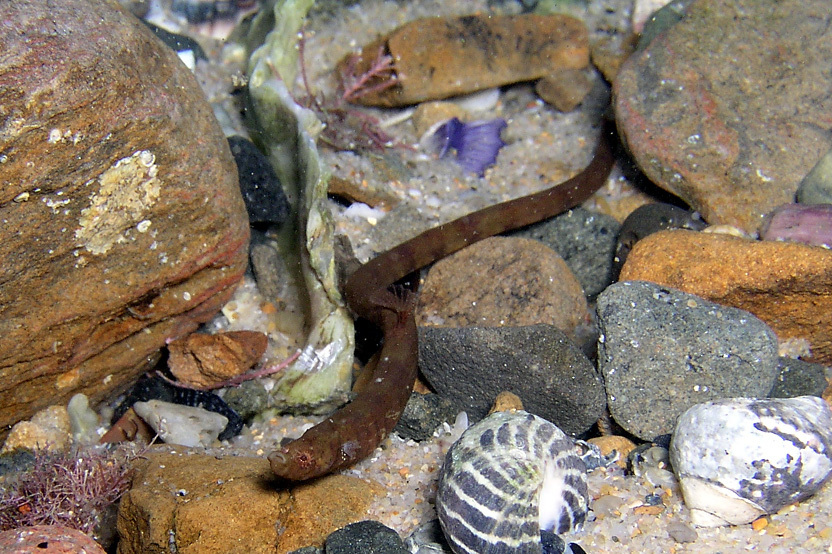
The Javelin pipefish (Lissocampus runa) is a saltwater fish of the family Syngnathidae that grows up to 9 cm.
Description
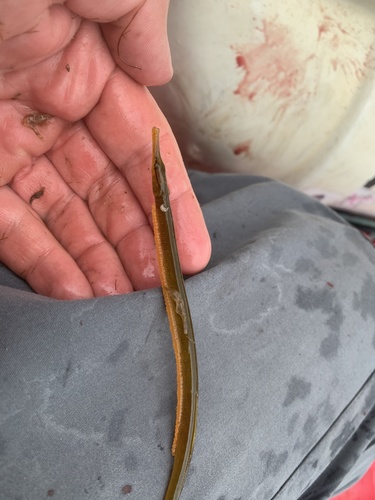
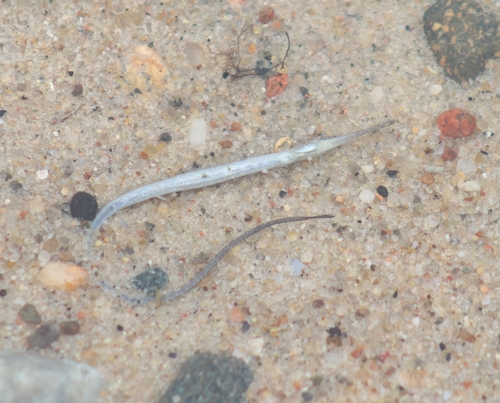
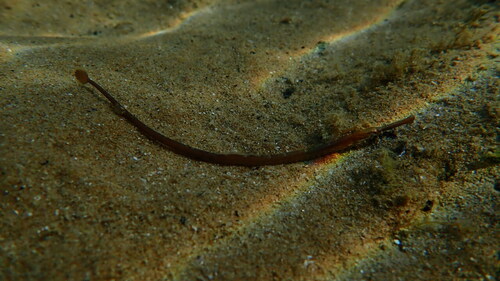
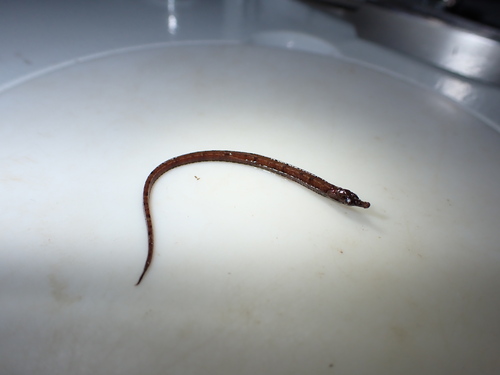
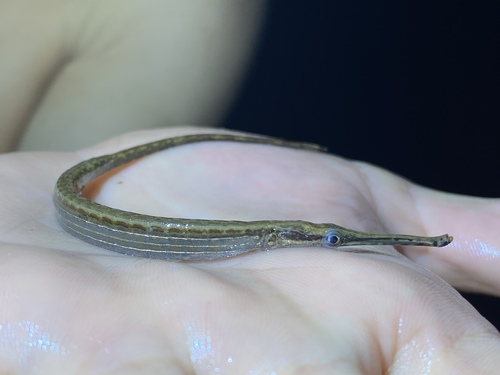
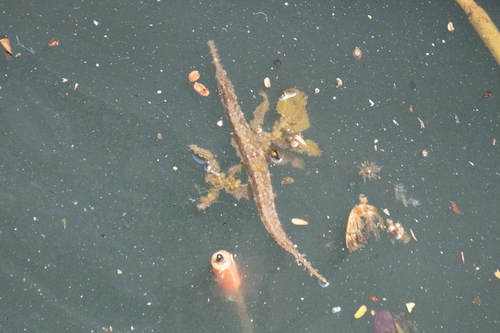
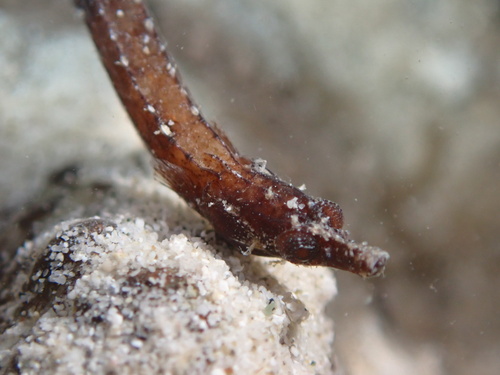
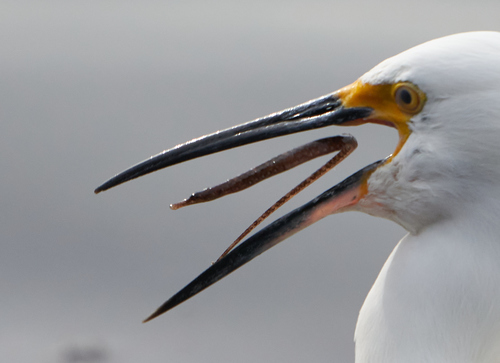
The javelin pipefish is a small pipefish (Syngnathidae) from temperate coastal waters of southern Australia and New Zealand. The species grows to about 9 cm and has a very slender, stiff, smooth bony-ringed body and a short, tubular snout. It lives hidden among weed and seagrass of shallow reefs and sucks up small zooplankton. Like other pipefishes the male carries and broods the eggs. The fish is harmless to humans.
Frequently asked questions
How do you recognise the Javelin pipefish?
The Javelin pipefish has a snake-like body and is mainly brown.
Where does the Javelin pipefish live?
The Javelin pipefish lives in the sea (marine waters) and is mostly found around sand or mud bottom.
How big does the Javelin pipefish get?
The Javelin pipefish grows to a maximum of about 9 cm.
Is the Javelin pipefish dangerous to humans?
No, the Javelin pipefish is harmless to humans.
Download Fin's Fish Guide
Identify fish in seconds, log your catches and dives. Join the TestFlight beta.
All data
Identification
Appearance
Habitat & distribution
Behaviour & biology
For anglers
Safety
Status & sources
Same genus Lissocampus
More from the family Syngnathidae
Download Fin's Fish Guide
Identify fish in seconds, log your catches and dives. Join the TestFlight beta.