 Fin's Fish Guide
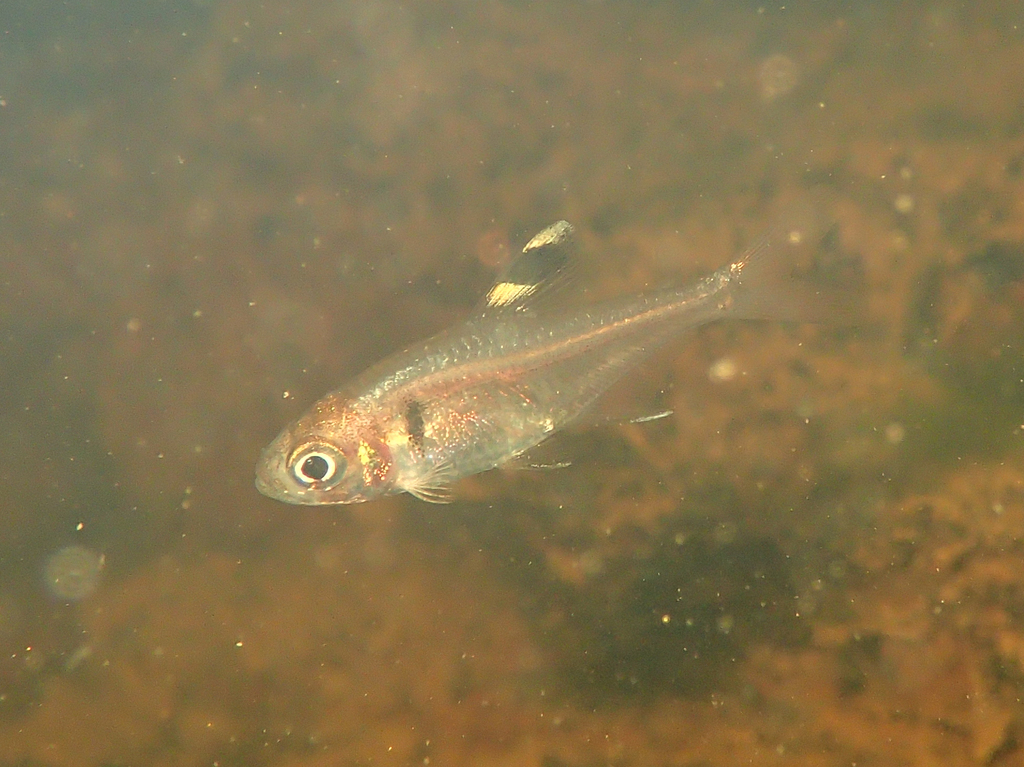
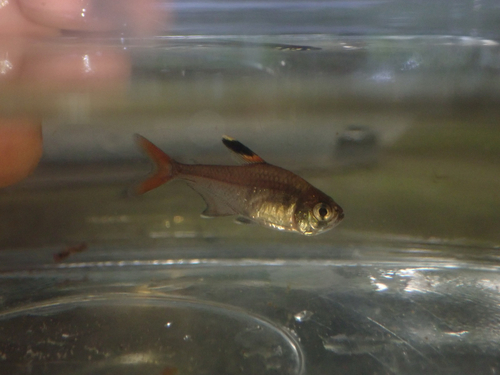
The Hyphessobrycon simulatus is a freshwater fish of the family Characidae that grows up to 3 cm.
Fresh water of the Amazon region in South America, in clear and blackwater streams and creeks.
Description
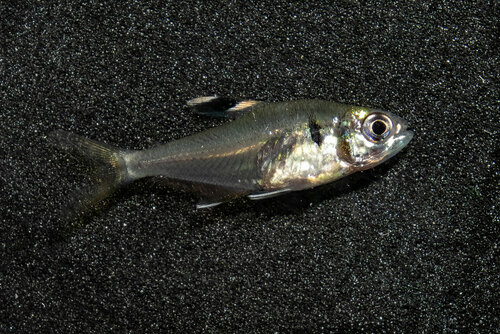
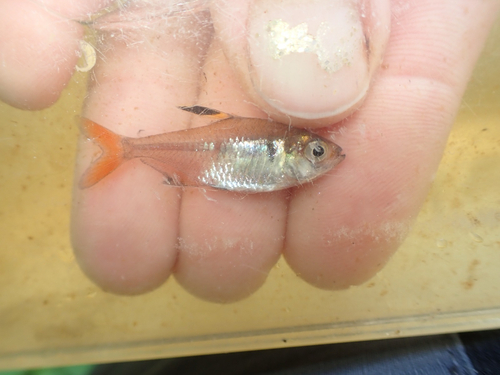
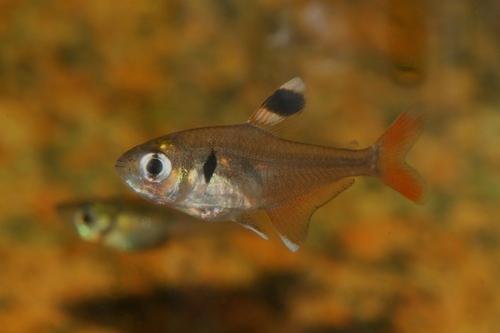
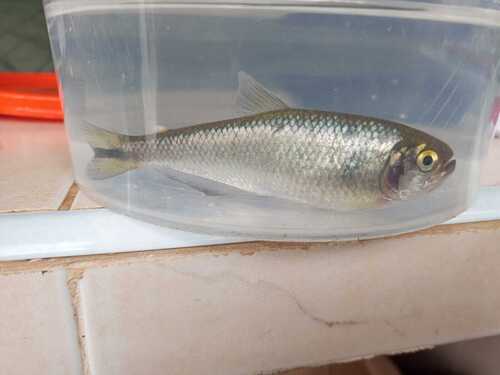
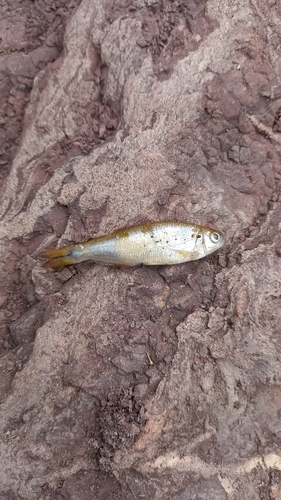
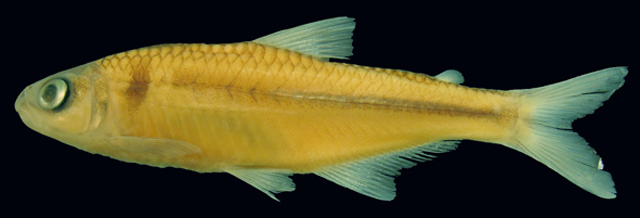
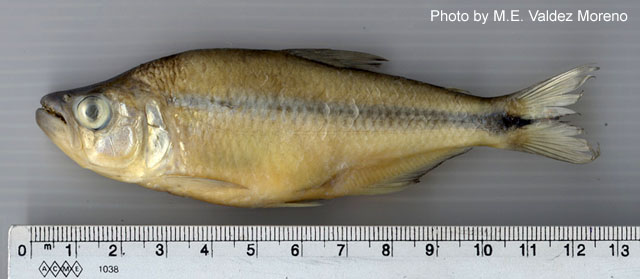
Hyphessobrycon simulatus is a very small, semi-transparent characin of the family Characidae (true tetras) reaching only about 3 cm. The silvery body has an adipose fin (as in many characins), a shiny lengthwise stripe and often a dark spot on the tail base. The species lives in dense schools in clear and blackwater streams and creeks of the Amazon region of South America. As an omnivore it eats small zooplankton, insects, algae and plant matter, taken in the water column and at the surface. In the rainy season it spawns among fine water plants. Because of its small size and great numbers it is an important prey fish for larger species and a link in the food web of the rainforest creeks.
Frequently asked questions
How do you recognise the Hyphessobrycon simulatus?
The Hyphessobrycon simulatus has a flattened, disc-shaped body, is mainly silver-grey and shows a horizontal stripes pattern. Very small, translucent tetra with an adipose fin, a shining longitudinal stripe and a dark caudal blotch.
Where does the Hyphessobrycon simulatus live?
The Hyphessobrycon simulatus lives in fresh water and is mostly found around open water. Fresh water of the Amazon region in South America, in clear and blackwater streams and creeks.
How big does the Hyphessobrycon simulatus get?
The Hyphessobrycon simulatus grows to a maximum of about 3 cm.
Is the Hyphessobrycon simulatus dangerous to humans?
No, the Hyphessobrycon simulatus is harmless to humans. None required: this species is harmless to humans.
Is the Hyphessobrycon simulatus edible?
The Hyphessobrycon simulatus is not usually eaten.
More photos

Want the complete picture on the Hyphessobrycon simulatus?
Point your camera at the fish and Fin names the species in seconds. Free, and the Hyphessobrycon simulatus is one of 12,519 species in the app.
All data
Identification
Appearance
Habitat & distribution
Behaviour & biology
For anglers
Safety
Status & sources
Same genus Hyphessobrycon


More from the family Characidae


Want the complete picture on the Hyphessobrycon simulatus?
Point your camera at the fish and Fin names the species in seconds. Free, and the Hyphessobrycon simulatus is one of 12,519 species in the app.