Home · Syngnathidae · Common sea-horse
Common sea-horse (Hippocampus whitei) — Syngnathidae

Common sea-horse

Hippocampus whitei
Family: Syngnathidae
EN · Endangered

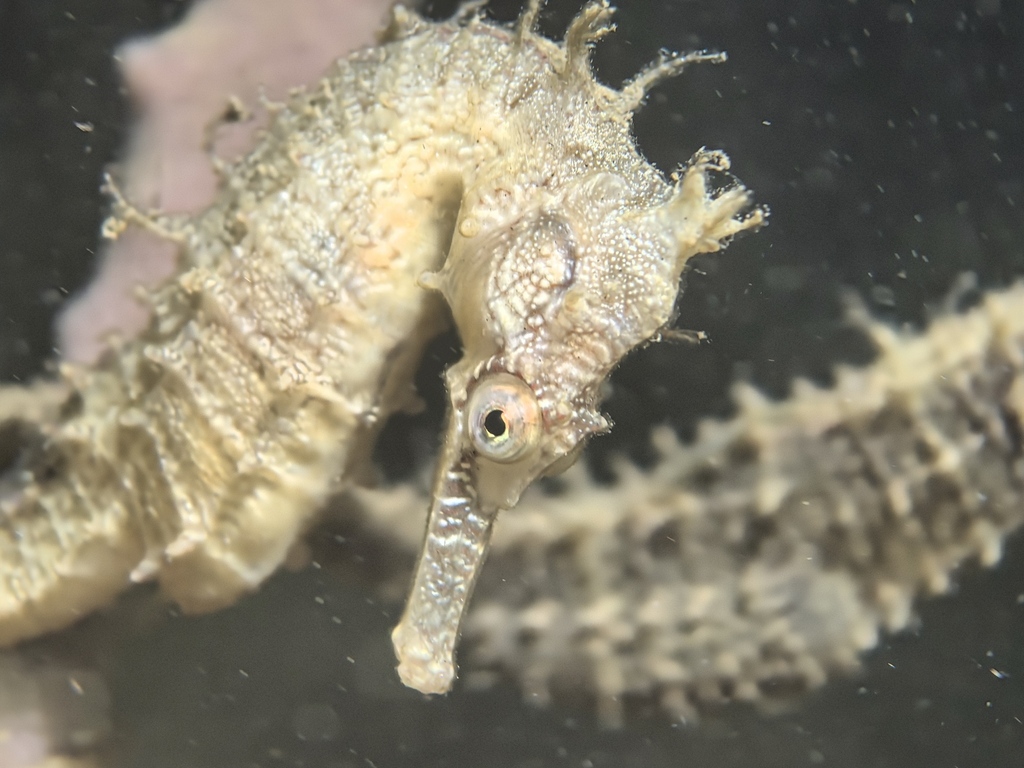
The Common sea-horse (Hippocampus whitei) is a brackish-water fish of the family Syngnathidae that grows up to 13 cm.

Length
13 cm
Water
Brackish
Depth
0.0–46.0 m
Diet
Carnivore
Behaviour
Solitary
Activity
Diurnal
Body shape
Irregular
Substrate
Sand / mud bottom
Danger
Harmless
Edibility
Not eaten

Description

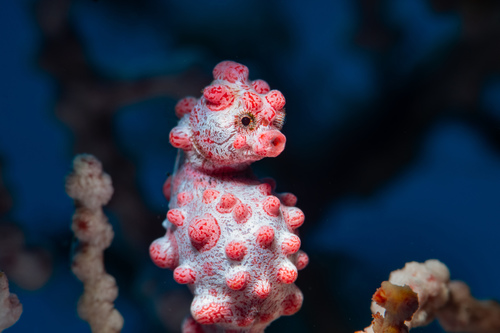
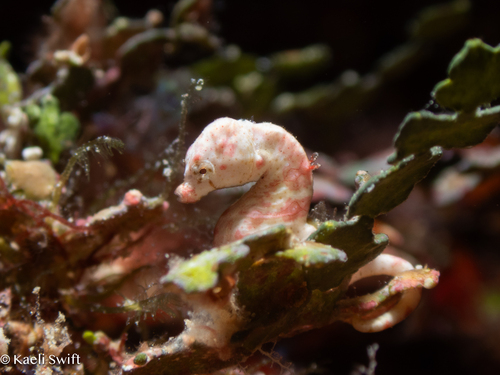
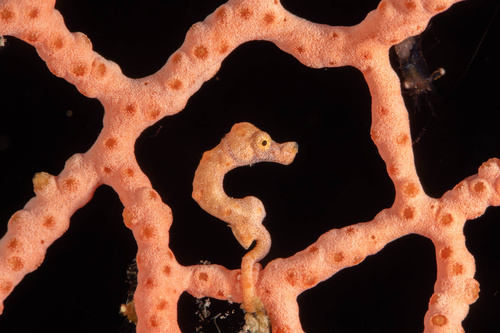
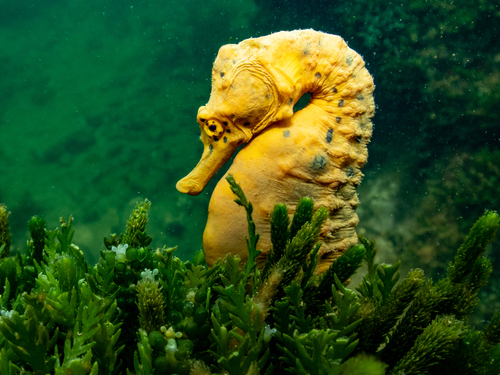
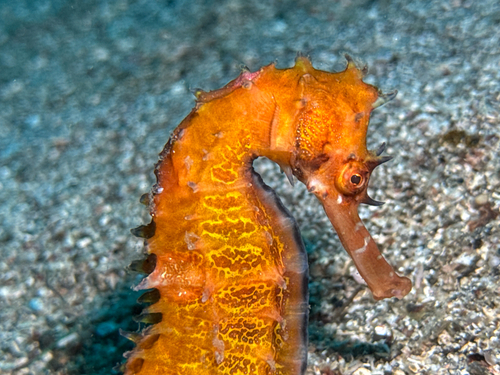
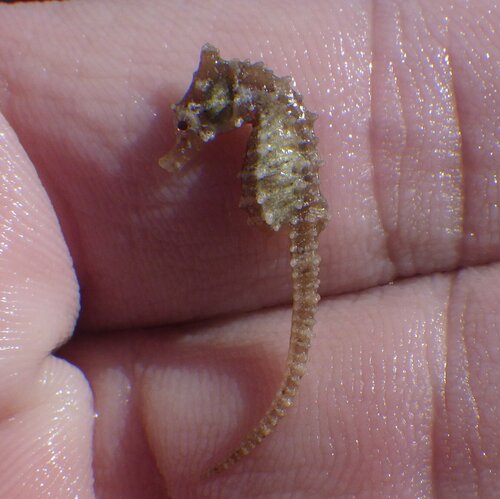
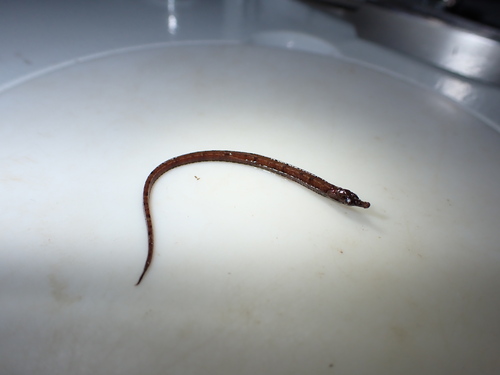
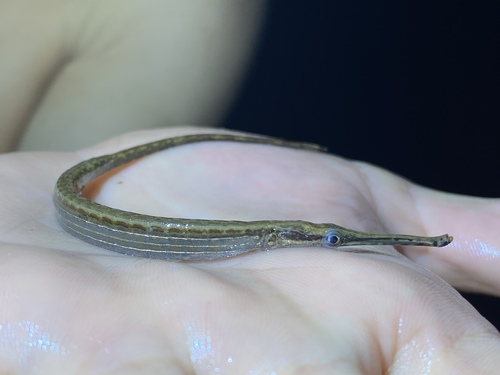
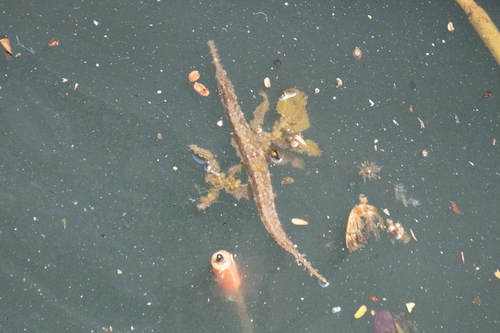
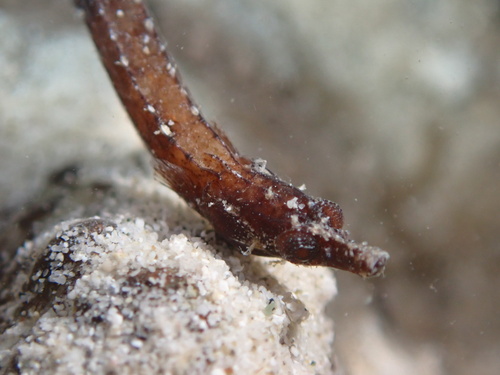
White's seahorse is a seahorse from coastal and estuarine water of eastern Australia, around Sydney. The species grows to about 13 cm and has an upright, bony-ringed body, a horse-like head and a prehensile tail with which it clings to seagrass, sponges and artificial structures. With its tubular snout it sucks up minute crustaceans. The male broods the eggs in a pouch. Owing to habitat loss the species has declined sharply. The IUCN assesses it as Endangered (EN).

Frequently asked questions

How do you recognise the Common sea-horse?

The Common sea-horse has an irregular in shape body, is mainly brown and shows a plain pattern.

Where does the Common sea-horse live?

The Common sea-horse lives in brackish water and is mostly found around sand or mud bottom.

How big does the Common sea-horse get?

The Common sea-horse grows to a maximum of about 13 cm. On average the species is around 8 cm.

Is the Common sea-horse dangerous to humans?

No, the Common sea-horse is harmless to humans.

Is the Common sea-horse edible?

The Common sea-horse is not usually eaten.

Download Fin's Fish Guide

Identify fish in seconds, log your catches and dives. Join the TestFlight beta.

Get the beta →

All data

Identification

Dutch name
Whites zeepaardje verified
English name
Common sea-horse verified
Scientific name
Hippocampus whitei
Family
Syngnathidae
Other names
Highcrown seahorse; High-crown seahorse; New Holland seahorse; Sydney seahorse; White's seahorse verified

Appearance

Size class
Small verified
Max length (cm)
13.0 verified
Average length (cm)
8.0 verified
Body shape
Irregular sourced
Dominant colour
Brown sourced
Pattern
Plain sourced
Tail shape
Straight inferred
Mouth position
Beak-shaped sourced
Lips
Thin sourced
Barbels
No sourced
Dorsal fins
One continuous sourced
Dorsal spines
No sourced

Habitat & distribution

Water type
Brackish sourced
Substrate
Sand / mud bottom sourced
Min depth (m)
0.0 verified
Max depth (m)
46.0 verified
Origin
Native verified

Behaviour & biology

Diet
Carnivore sourced
Social behaviour
Solitary sourced
Territorial
No sourced
Activity
Diurnal sourced
Reproduction
Separate sexes sourced
Sexual dimorphism
No sourced
levensduur_max_jaar
5.30000019073486 verified

For anglers

Edibility
Not eaten sourced
Fishing method
Geen doelsoort voor de hengelsport; hooguit incidentele vangst of bruikbaar als aasvisje. inferred
Regulations source
FishBase ↗ inferred

Safety

Danger to humans
Harmless sourced

Status & sources

Sources
FishBase via GBIF (DwC-A), CC-BY-NC 4.0

Same genus Hippocampus

More from the family Syngnathidae
Download Fin's Fish Guide

Identify fish in seconds, log your catches and dives. Join the TestFlight beta.

Get the beta →