 Fin's Fish Guide


The Fuentesi's wrasse (Pseudolabrus fuentesi) is a saltwater fish of the family Labridae that grows up to 17 cm.
Remote islands in the southeastern and central Pacific Ocean (Easter Island, Pitcairn, Rapa, Austral Islands).
Description
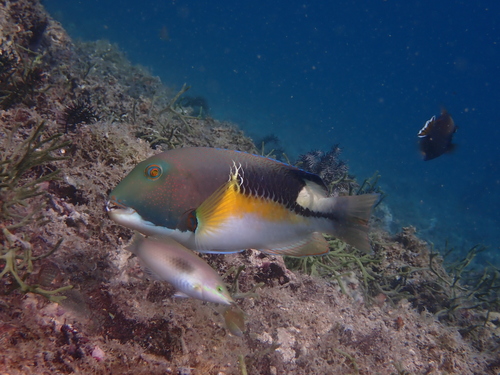
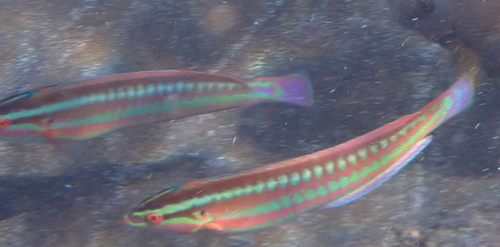
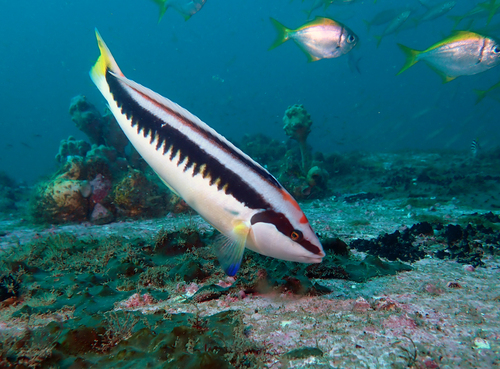
Fuentes wrasse is a wrasse (Labridae) from the southeastern and central Pacific, where it occurs around remote oceanic islands: Easter Island (Rapa Nui), Pitcairn, Rapa and the Austral Islands. The species is named after F. Fuentes, who collected it at Easter Island. It reaches about 16 cm and has a streamlined, brown to reddish body. It inhabits shallow rocky reefs to about 15 m deep and feeds on molluscs, other bottom invertebrates and small fishes. Like many wrasses the species is presumably a protogynous hermaphrodite, beginning as a female and later able to change into a male.
Frequently asked questions
How do you recognise the Fuentesi's wrasse?
The Fuentesi's wrasse has a torpedo-shaped body, is mainly brown and shows a plain pattern. Wrasse of the remote Pacific islands (Easter Island, Pitcairn, Rapa, Austral Islands); probably a protogynous hermaphrodite.
Where does the Fuentesi's wrasse live?
The Fuentesi's wrasse lives in the sea (marine waters) and is mostly found around stony or rocky ground. Remote islands in the southeastern and central Pacific Ocean (Easter Island, Pitcairn, Rapa, Austral Islands).
How big does the Fuentesi's wrasse get?
The Fuentesi's wrasse grows to a maximum of about 17 cm. On average the species is around 10 cm.
Is the Fuentesi's wrasse dangerous to humans?
No, the Fuentesi's wrasse is harmless to humans. None required: this species is harmless to humans.
Is the Fuentesi's wrasse edible?
The Fuentesi's wrasse is rarely eaten.
More photos


Want the complete picture on the Fuentesi's wrasse?
Point your camera at the fish and Fin names the species in seconds. Free, and the Fuentesi's wrasse is one of 12,519 species in the app.
 Or scan with your phone
All data
Identification
Appearance
Habitat & distribution
Behaviour & biology
For anglers
Safety
Status & sources
Same genus Pseudolabrus


More from the family Labridae




Want the complete picture on the Fuentesi's wrasse?
Point your camera at the fish and Fin names the species in seconds. Free, and the Fuentesi's wrasse is one of 12,519 species in the app.
Or scan with your phone