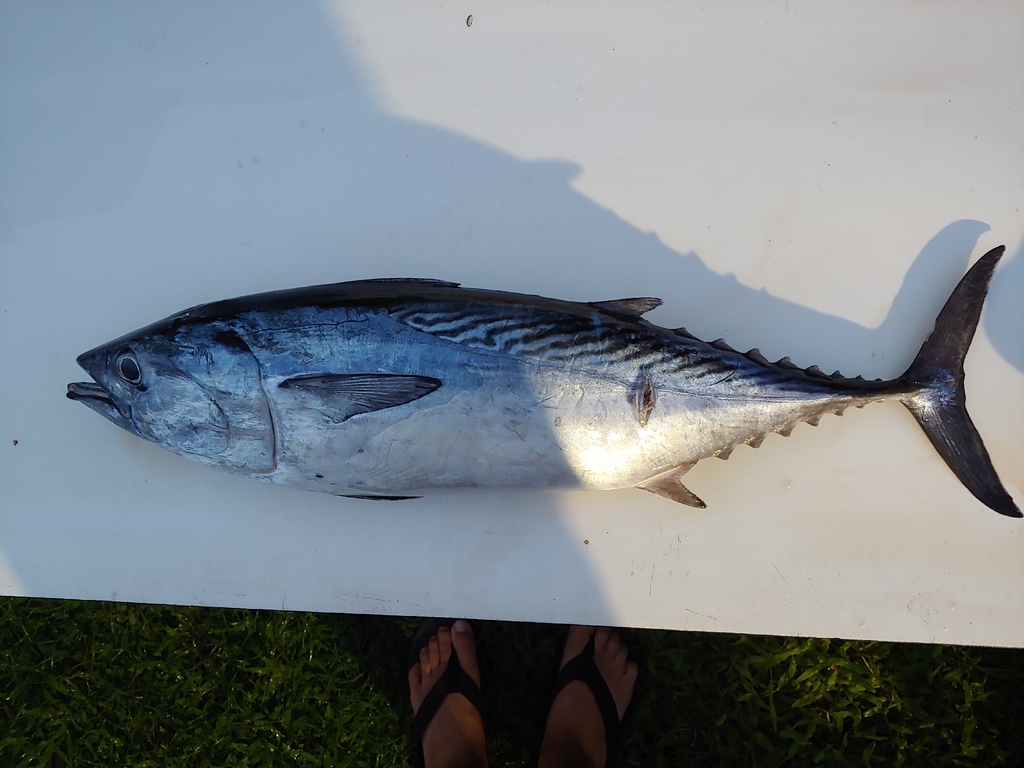
The Black skipjack (Euthynnus affinis) is a saltwater fish of the family Scombridae that grows up to 100 cm.
Description
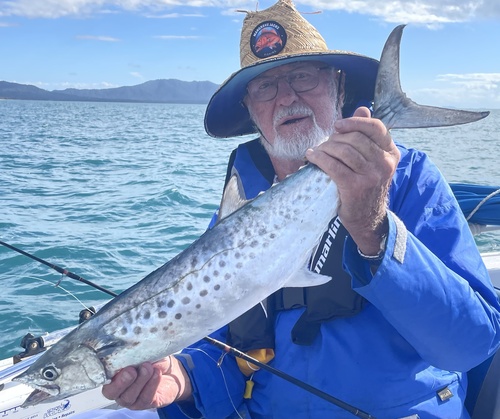
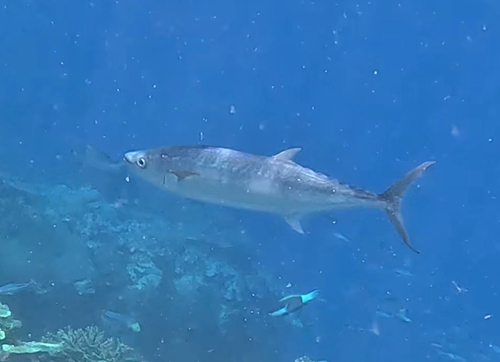
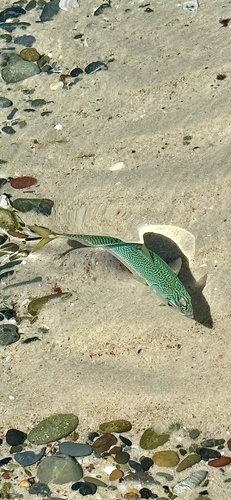
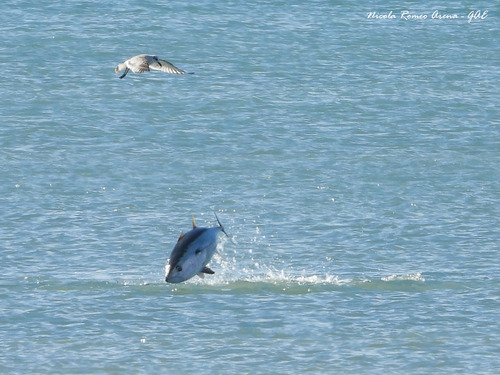
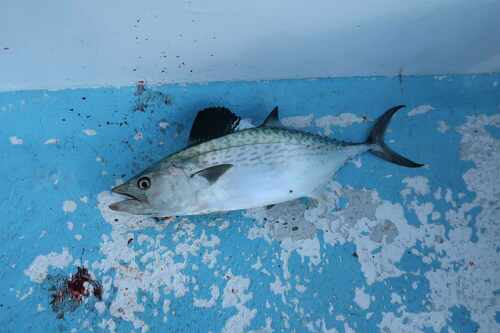
The kawakawa or mackerel tuna is a tuna-like fish of the mackerel family (Scombridae) from the Indo-Pacific. The species grows to about one metre and has a streamlined, torpedo-shaped body with a blue-green back with a pattern of oblique, broken stripes and a few dark spots below the pectoral fin. It occurs in open coastal waters but always stays close to the shoreline; juveniles enter bays. As a fast, powerful predator it hunts small fishes, squid and crustaceans in schools. The kawakawa is an important commercial and sport fish and is harmless to humans.
Frequently asked questions
How do you recognise the Black skipjack?
The Black skipjack has a torpedo-shaped body, is mainly blue and shows a flame-patterned pattern.
Where does the Black skipjack live?
The Black skipjack lives in the sea (marine waters) and is mostly found around open water.
How big does the Black skipjack get?
The Black skipjack grows to a maximum of about 100 cm. On average the species is around 60 cm.
Is the Black skipjack dangerous to humans?
The Black skipjack is venomous — handle spines with care and seek medical help after a sting if needed.
Is the Black skipjack edible?
Yes, the Black skipjack is commonly eaten.
Download Fin's Fish Guide
Identify fish in seconds, log your catches and dives. Join the TestFlight beta.
All data
Identification
Appearance
Habitat & distribution
Behaviour & biology
For anglers
Safety
Status & sources
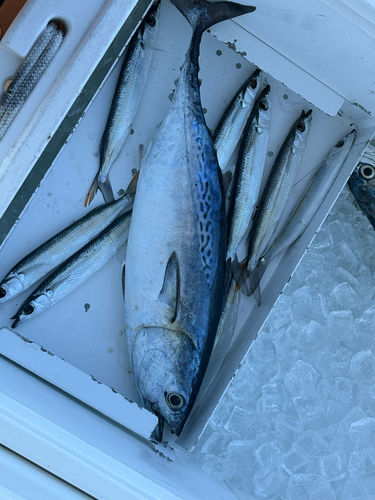
Same genus Euthynnus
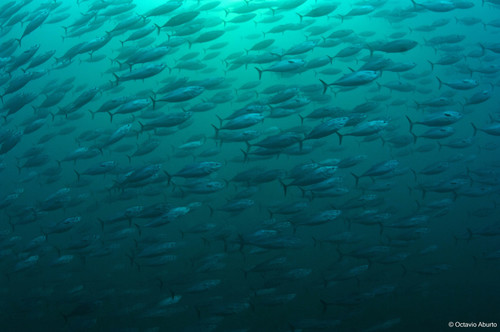
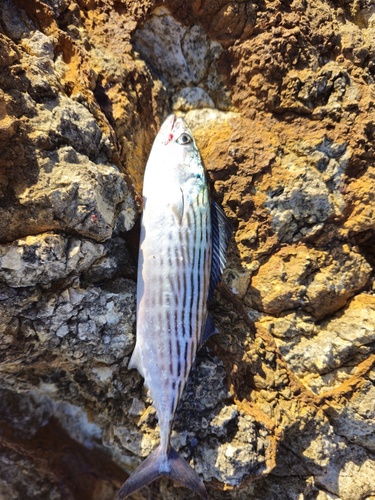
More from the family Scombridae
Download Fin's Fish Guide
Identify fish in seconds, log your catches and dives. Join the TestFlight beta.