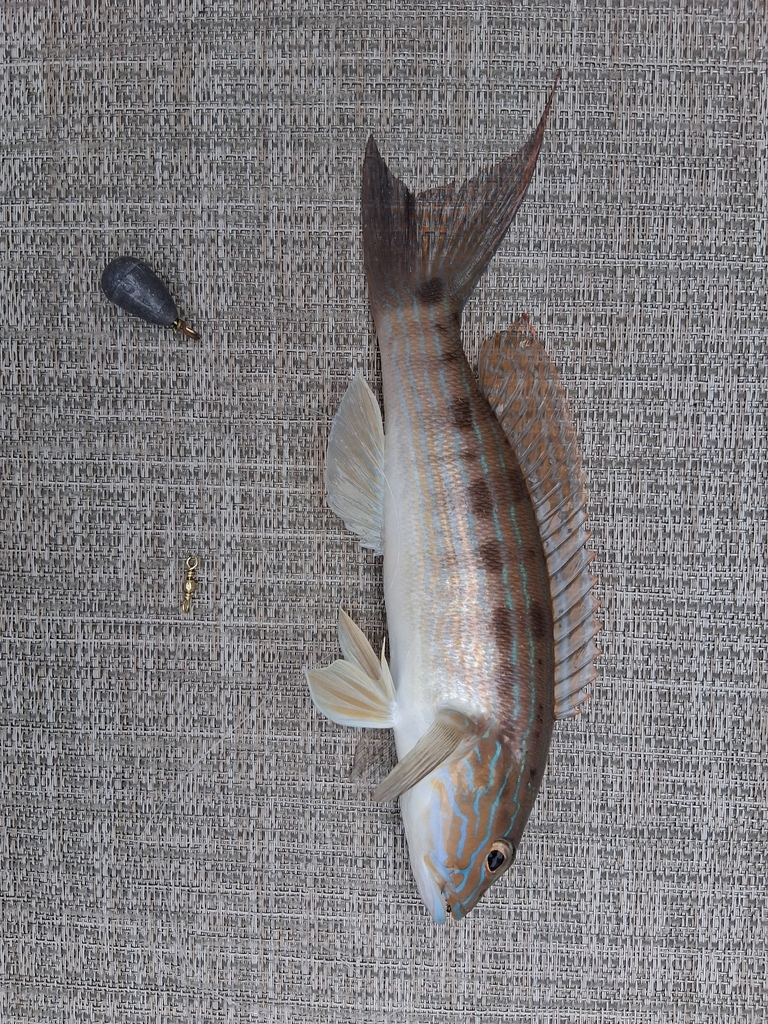
The Sand perch (Diplectrum formosum) is a saltwater fish of the family Serranidae that grows up to 30 cm.
Description
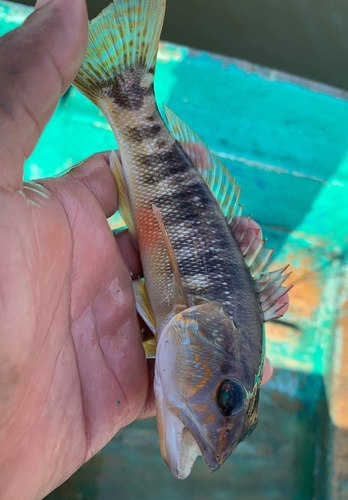
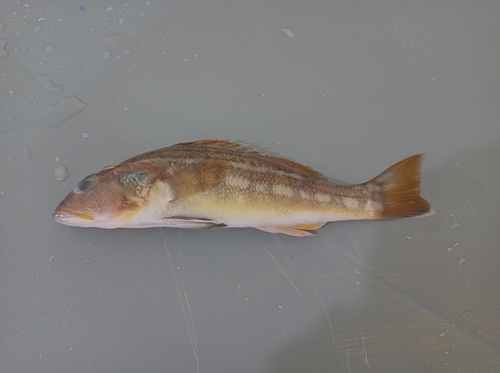
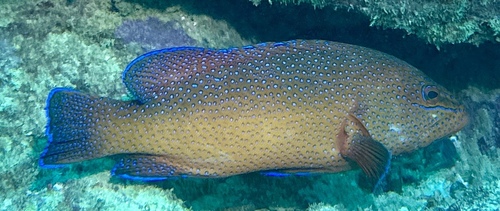
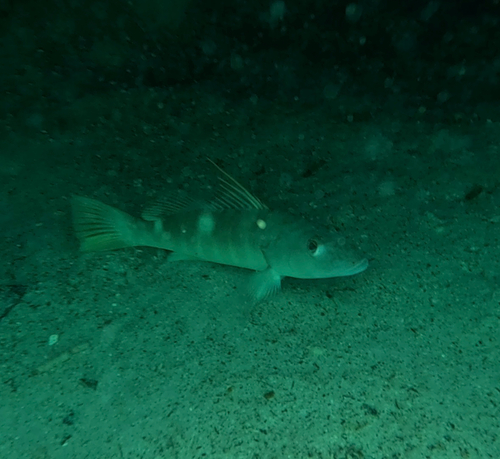
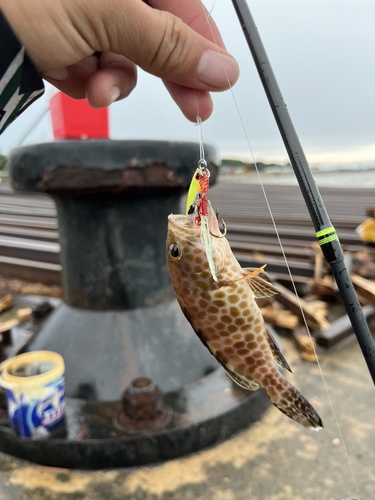
The sand perch is a slender sea bass of the family Serranidae reaching about 30 cm. The brownish body bears fine blue and orange lines on head and flank and a fan of sharp spines on the edge of the gill cover. The species lives on sand and shell bottoms of shallow coastal water in the western Atlantic and the Gulf of Mexico, often near a self-dug burrow. On the bottom it hunts shrimp, crabs, small fish and worms. Notably it is a synchronous hermaphrodite: an individual carries ripe ovaries and sperm at the same time and can release both eggs and sperm when spawning. It is a tasty panfish caught mainly as bycatch.
Frequently asked questions
How do you recognise the Sand perch?
The Sand perch has a torpedo-shaped body, is mainly brown and shows a horizontal stripes pattern.
Where does the Sand perch live?
The Sand perch lives in the sea (marine waters) and is mostly found around sand or mud bottom.
How big does the Sand perch get?
The Sand perch grows to a maximum of about 30 cm. On average the species is around 16 cm.
Is the Sand perch dangerous to humans?
No, the Sand perch is harmless to humans.
Is the Sand perch edible?
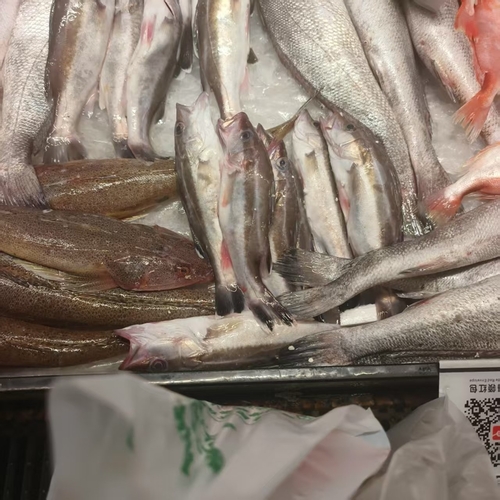
Yes, the Sand perch is commonly eaten.
Download Fin's Fish Guide
Identify fish in seconds, log your catches and dives. Join the TestFlight beta.
All data
Identification
Appearance
Habitat & distribution
Behaviour & biology
For anglers
Safety
Status & sources
Same genus Diplectrum
More from the family Serranidae


Download Fin's Fish Guide
Identify fish in seconds, log your catches and dives. Join the TestFlight beta.