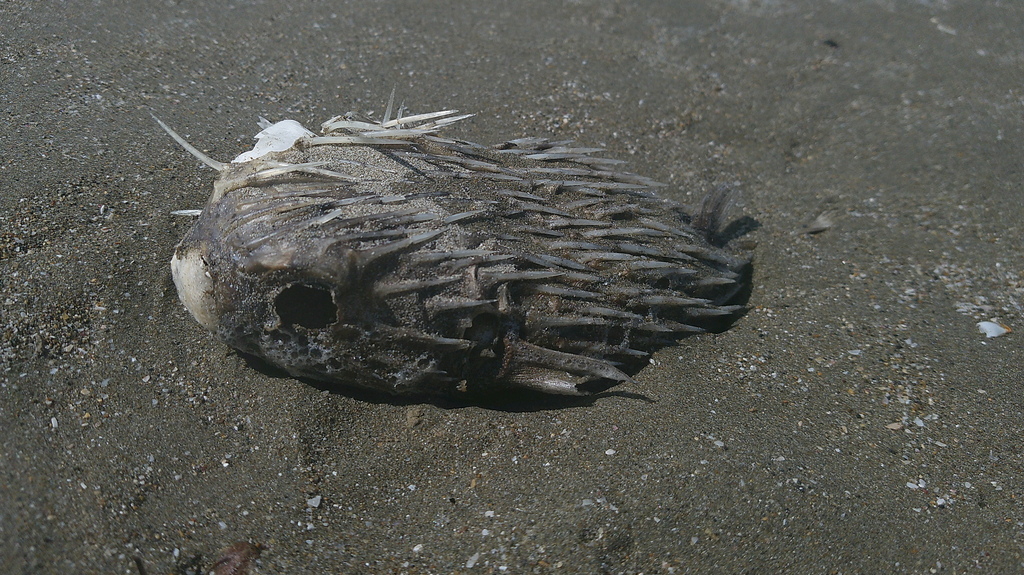
The Longspined porcupinefish (Diodon holocanthus) is a saltwater fish of the family Diodontidae that grows up to 50 cm.
Description
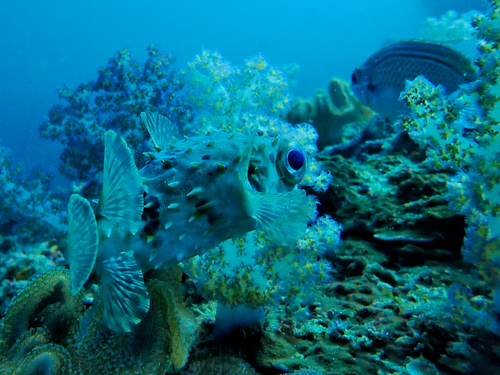
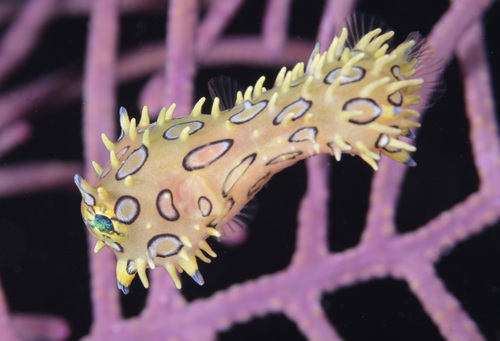
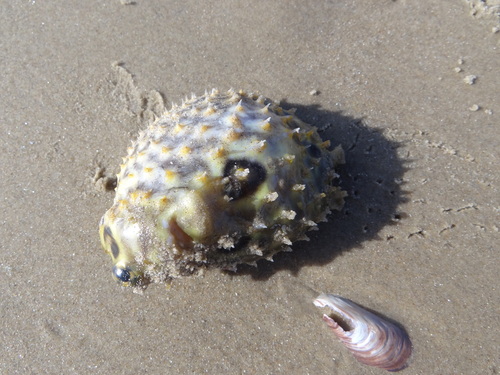
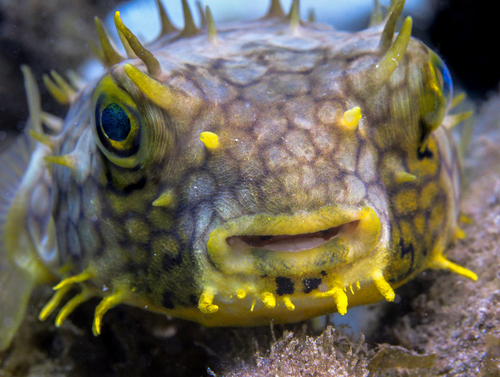
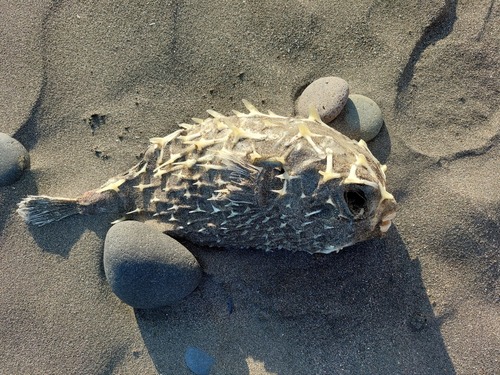
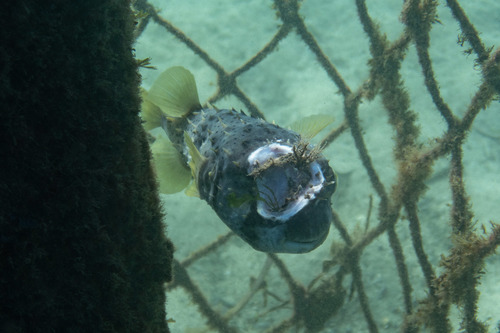
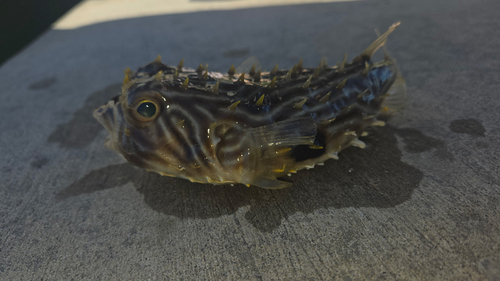
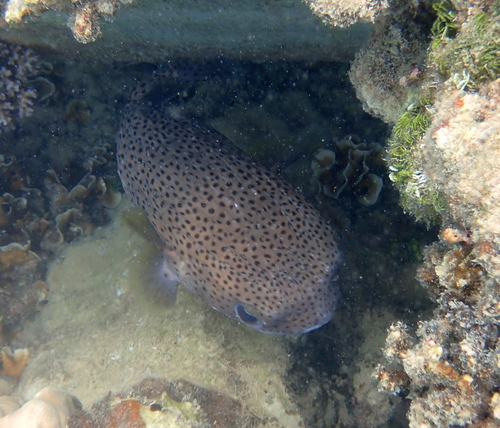
The longspined porcupinefish is a stocky fish of the family Diodontidae (porcupinefishes) reaching about 50 cm. The brown, dark-spotted body bears long, movable spines that normally lie flat but stand up when the fish inflates with water into a spiny ball - too large and sharp for most predators. The mouth forms a strong, parrot-like beak with which it crushes snails, sea urchins, hermit crabs and shellfish. The species lives worldwide in warm seas, around coral and rock reefs, seagrass and lagoons of shallow coastal water. As in related puffers, organs and skin may contain toxic tetrodotoxin, so it is not eaten.
Frequently asked questions
How do you recognise the Longspined porcupinefish?
The Longspined porcupinefish has a flattened, disc-shaped body, is mainly brown and shows a spots pattern.
Where does the Longspined porcupinefish live?
The Longspined porcupinefish lives in the sea (marine waters) and is mostly found around stony or rocky ground.
How big does the Longspined porcupinefish get?
The Longspined porcupinefish grows to a maximum of about 50 cm. On average the species is around 15 cm.
Is the Longspined porcupinefish dangerous to humans?
The Longspined porcupinefish is venomous — handle spines with care and seek medical help after a sting if needed.
Is the Longspined porcupinefish edible?
The Longspined porcupinefish is not usually eaten.
Download Fin's Fish Guide
Identify fish in seconds, log your catches and dives. Join the TestFlight beta.
All data
Identification
Appearance
Habitat & distribution
Behaviour & biology
For anglers
Safety
Status & sources
Same genus Diodon
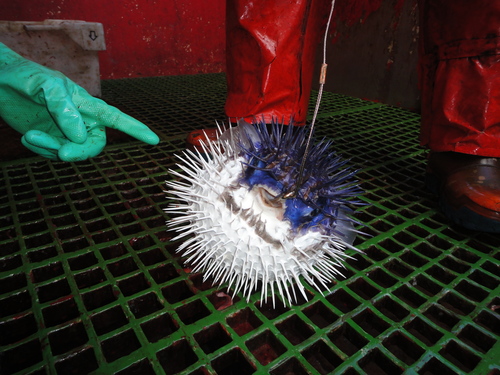
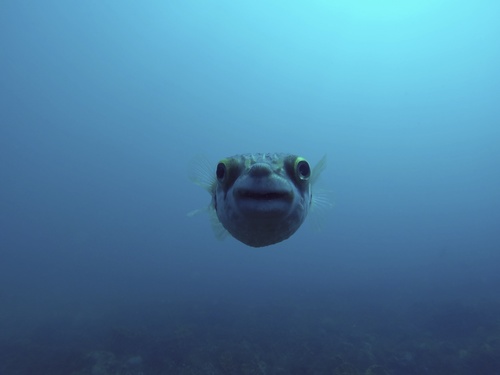
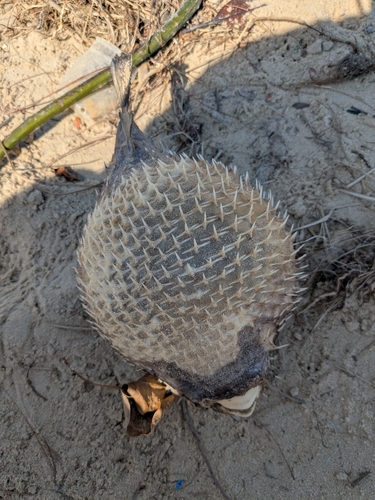
More from the family Diodontidae
Download Fin's Fish Guide
Identify fish in seconds, log your catches and dives. Join the TestFlight beta.