Home · Cottidae · Chabot bullhead
Chabot bullhead (Cottus perifretum) — Cottidae

Chabot bullhead

Cottus perifretum
Family: Cottidae
LC · Least Concern

The Chabot bullhead (Cottus perifretum) is a freshwater fish of the family Cottidae that grows up to 13 cm.

Length
13 cm
Water
Freshwater
Diet
Carnivore
Behaviour
Solitary
Activity
Nocturnal
Body shape
Torpedo-shaped
Substrate
Stone or rock
Danger
Harmless
Range
Western Europe, from central France to the middle Rhine in Germany, and southern and central England.
Edibility
Not eaten

Want the complete picture on the Chabot bullhead?

Description

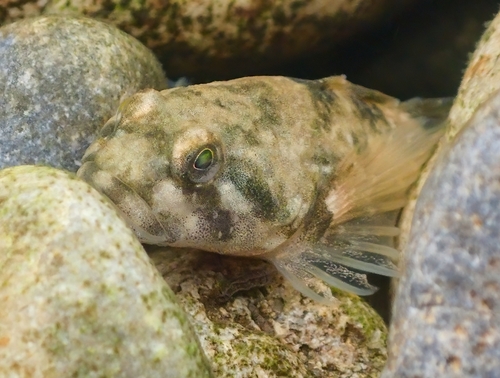
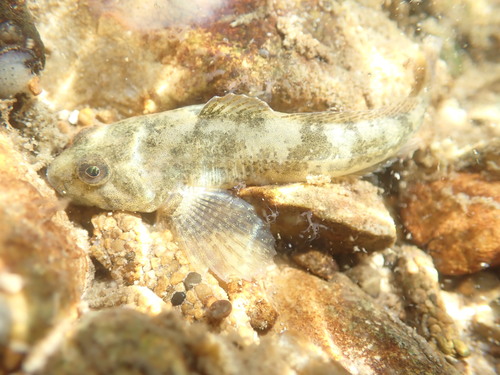
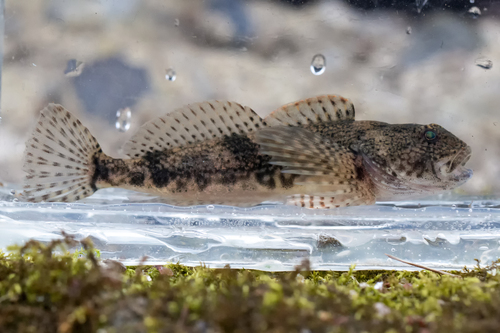
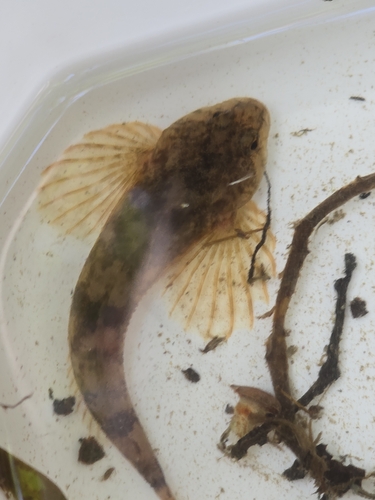
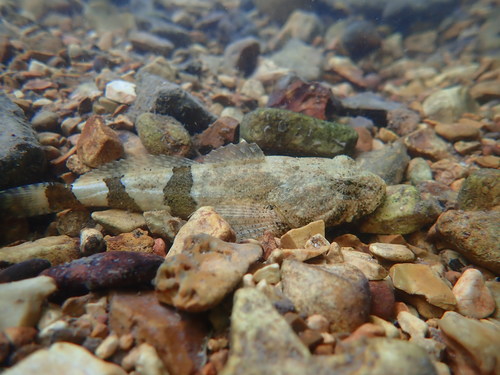
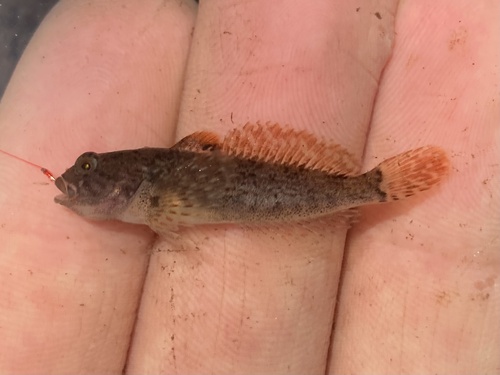
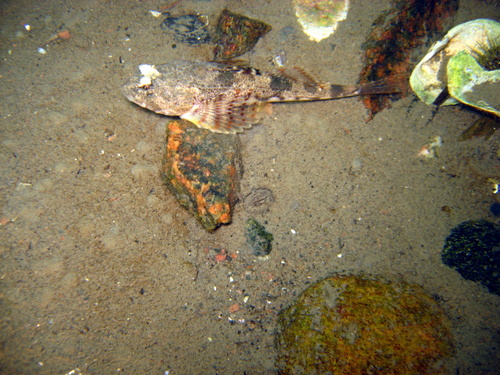
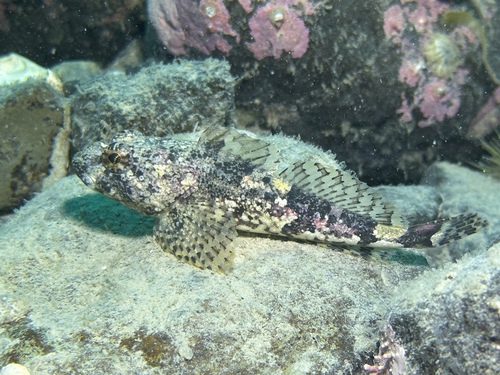
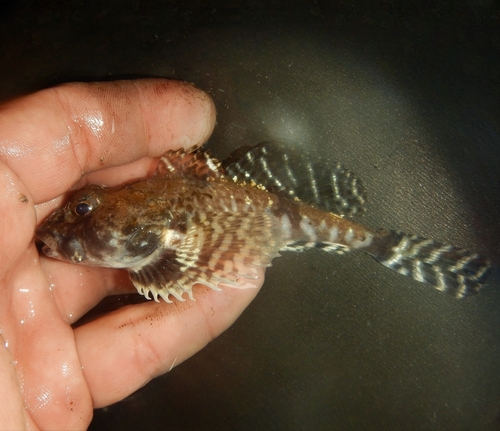
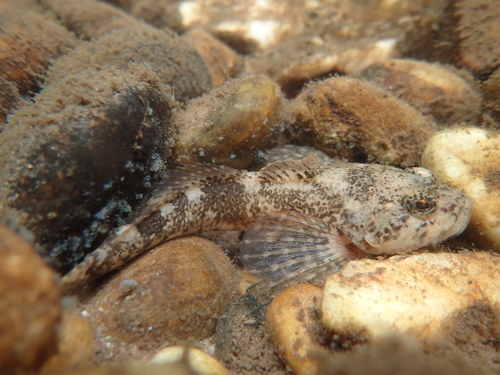
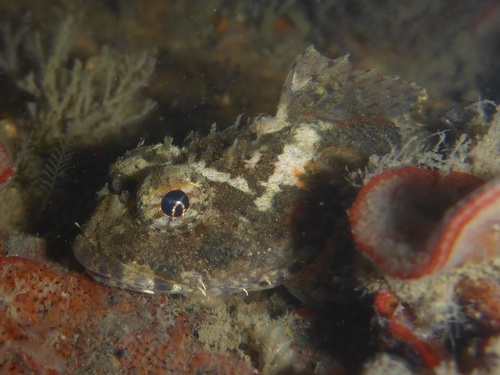
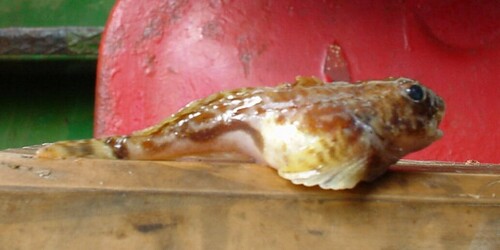
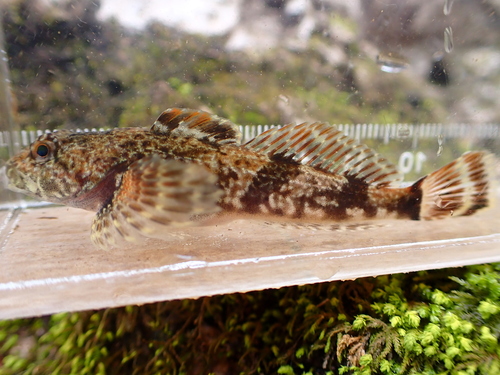
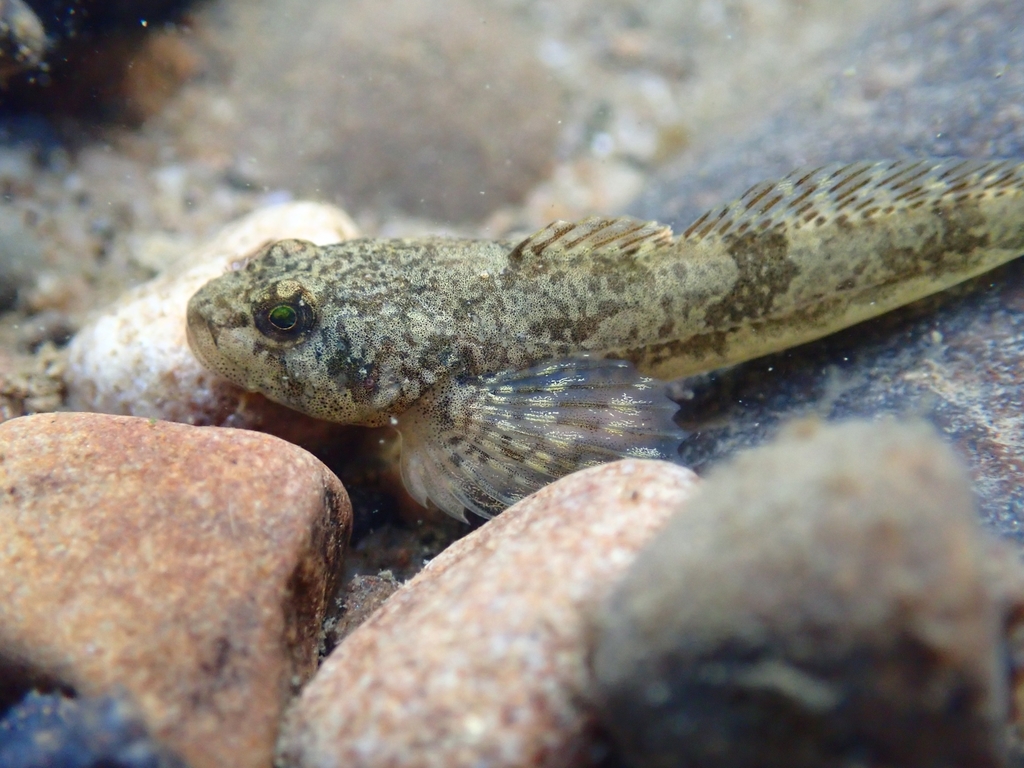
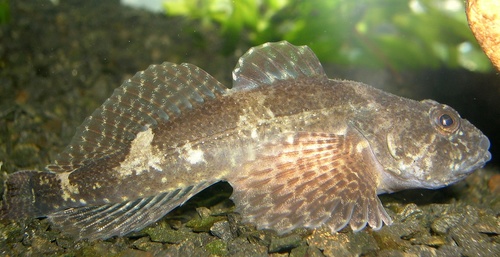
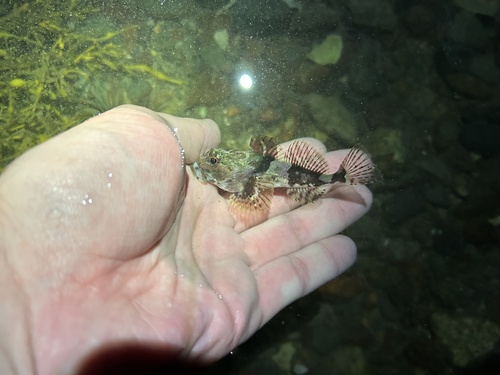
The Chabot bullhead is a small bottom fish of the family Cottidae reaching about 13 cm. It has a broad, flattened head with a large mouth, large pectoral fins, separate pelvic fins and a scaleless, brown-grey mottled skin. It was only described as a separate species in 2005; before that every bullhead in western Europe counted as Cottus gobio. In the Netherlands it occurs in almost every province, in rivers, streams, lakes, canals and ditches, but everywhere in low numbers. By day it hides under stones; at night it eats amphipods, water lice, midge larvae and fish eggs. The male guards the eggs.

Frequently asked questions

How do you recognise the Chabot bullhead?

The Chabot bullhead has a torpedo-shaped body, is mainly brown and shows a marbled pattern. Bottom fish with a broad, flat head, large mouth, separate pelvic fins and scaleless skin; young fish have rough prickles on back and flanks, unlike the Rhine sculpin.

Where does the Chabot bullhead live?

The Chabot bullhead lives in fresh water and is mostly found around stony or rocky ground. Western Europe, from central France to the middle Rhine in Germany, and southern and central England.

How big does the Chabot bullhead get?

The Chabot bullhead grows to a maximum of about 13 cm.

Is the Chabot bullhead dangerous to humans?

No, the Chabot bullhead is harmless to humans. None required: this species is harmless to humans.

Is the Chabot bullhead edible?

The Chabot bullhead is not usually eaten.

More photos
Chabot bullhead (Cottus perifretum) — Cottidae — 2
iNaturalist ((c) Piet Spaans, some rights reserved (CC BY-SA))
Chabot bullhead (Cottus perifretum) — Cottidae — 3
Wikimedia Commons — Dick Belgers, Waarneming.nl (CC BY 3.0)
Chabot bullhead (Cottus perifretum) — Cottidae — 4
iNaturalist ((c) Max Carter, some rights reserved (CC BY-NC), uploaded by Max Carter)
Chabot bullhead (Cottus perifretum) — Cottidae — 5
iNaturalist ((c) Calum McLennan, some rights reserved (CC BY-NC), uploaded by Calum McLennan)

Easily confused with

These species look like the Chabot bullhead and live in the same waters.
Want the complete picture on the Chabot bullhead?

Point your camera at the fish and Fin names the species in seconds. Free, and the Chabot bullhead is one of 12,519 species in the app.

All data

Identification

English name
Chabot bullhead verified
Scientific name
Cottus perifretum
Family
Cottidae
Other names
Chabot bullhead verified

Appearance

Size class
Small verified
Max length (cm)
13 verified
Body shape
Torpedo-shaped sourced
Dominant colour
Brown sourced
Pattern
Marbled sourced
Tail shape
Rounded
Mouth position
Terminal
Lips
Thin
Barbels
No verified
Dorsal fins
Two separate sourced
Dorsal spines
Yes verified

Habitat & distribution

Water type
Freshwater verified
Substrate
Stone or rock sourced
Natural range
Western Europe, from central France to the middle Rhine in Germany, and southern and central England. verified
Origin
Native verified

Behaviour & biology

Diet
Carnivore verified
Diet (detail)
Amphipods, water lice, midge larvae, small fish and fish eggs
Social behaviour
Solitary verified
Territorial
Yes verified
Activity
Nocturnal
Reproduction
Separate sexes verified
Sexual dimorphism
Yes verified
Max. age (years)
6 verified
Seasonality
Spawns in March and April; the female lays the eggs under a stone or tree root, after which the male guards the nest. verified
Special features
Bottom fish with a broad, flat head, large mouth, separate pelvic fins and scaleless skin; young fish have rough prickles on back and flanks, unlike the Rhine sculpin. verified

For anglers

Edibility
Not eaten verified
Fishing method
Not a target for angling; a small bottom fish that at most turns up as bycatch on a small hook with worm or maggot. verified
Regulations source

Safety

Danger to humans
Harmless sourced
First aid
None required: this species is harmless to humans. sourced

Status & sources

Sources
FishBase via GBIF (DwC-A), CC-BY-NC 4.0; aangevuld uit RAVON

Same genus Cottus

More from the family Cottidae

Want the complete picture on the Chabot bullhead?

Point your camera at the fish and Fin names the species in seconds. Free, and the Chabot bullhead is one of 12,519 species in the app.

Is this the Chabot bullhead?