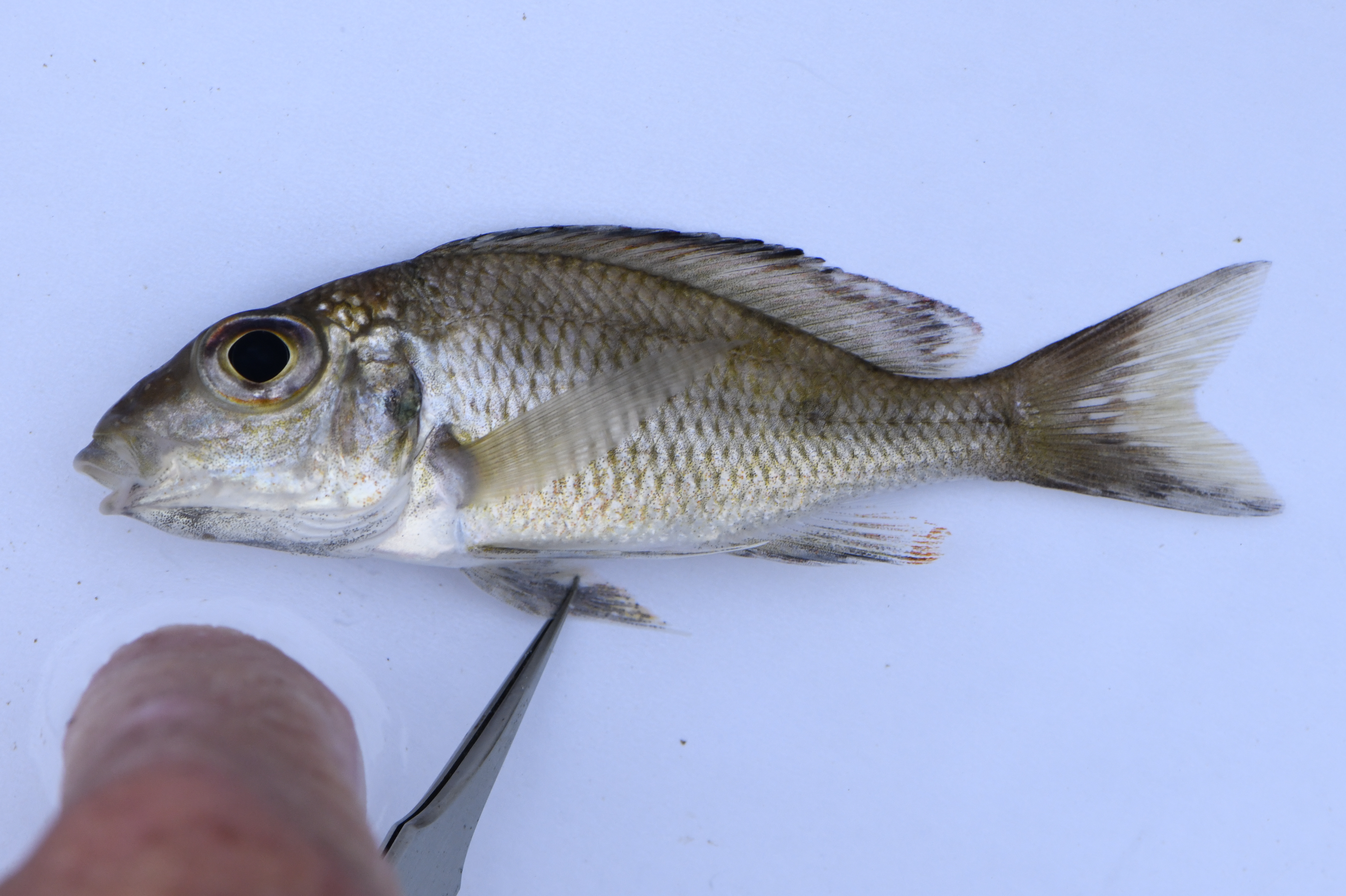
The Bigeye sand cichlid (Callochromis macrops) is a freshwater fish of the family Cichlidae that grows up to 14 cm.
Description
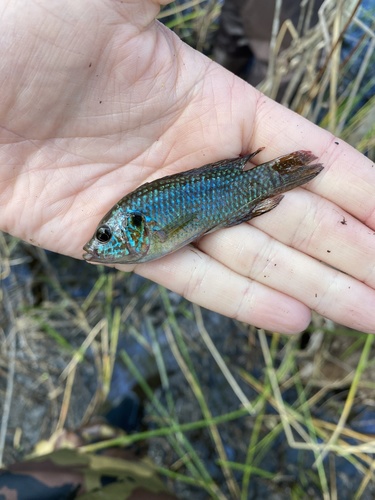
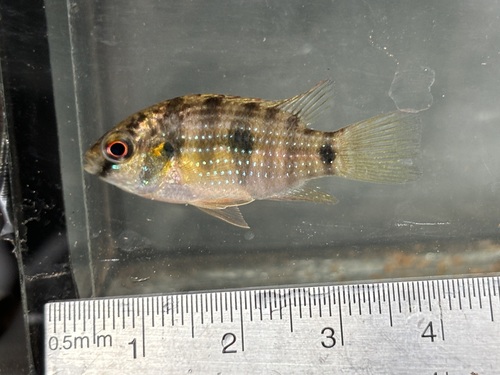
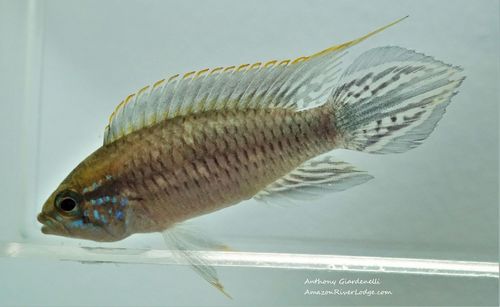
Callochromis macrops is a cichlid endemic to Lake Tanganyika in East Africa. The species has a streamlined body with conspicuously large eyes and reaches about 13 cm; males develop brilliant metallic colours during courtship. It lives over sandy bottoms near rocks, where it sifts the sand with its mouth in search of small invertebrates. The species forms schools and is a maternal mouthbrooder: the female broods the eggs and young in her mouth. Owing to its handsome courtship and colours it is prized by specialist cichlid keepers and of local fishery importance.
Frequently asked questions
How do you recognise the Bigeye sand cichlid?
The Bigeye sand cichlid has a torpedo-shaped body, is mainly silver-grey and shows a plain pattern.
Where does the Bigeye sand cichlid live?
The Bigeye sand cichlid lives in fresh water and is mostly found around mixed bottom.
How big does the Bigeye sand cichlid get?
The Bigeye sand cichlid grows to a maximum of about 14 cm.
Is the Bigeye sand cichlid dangerous to humans?
No, the Bigeye sand cichlid is harmless to humans.
Is the Bigeye sand cichlid edible?
The Bigeye sand cichlid is rarely eaten.
Download Fin's Fish Guide
Identify fish in seconds, log your catches and dives. Join the TestFlight beta.
All data
Identification
Appearance
Habitat & distribution
Behaviour & biology
For anglers
Safety
Status & sources
Same genus Callochromis
More from the family Cichlidae



Download Fin's Fish Guide
Identify fish in seconds, log your catches and dives. Join the TestFlight beta.