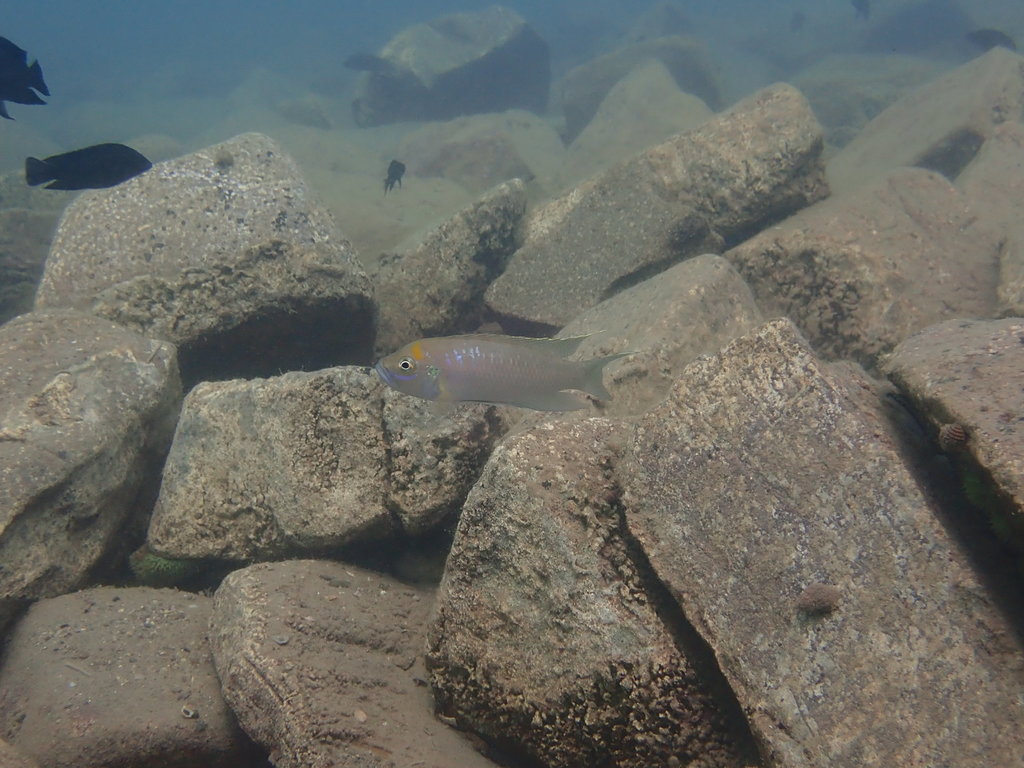

The Brevis shell-dweller (Neolamprologus brevis) is a freshwater fish of the family Cichlidae that grows up to 6 cm.
Endemic to Lake Tanganyika, on sandy bottoms strewn with empty snail shells.

Want the complete picture on the Brevis shell-dweller?
Description
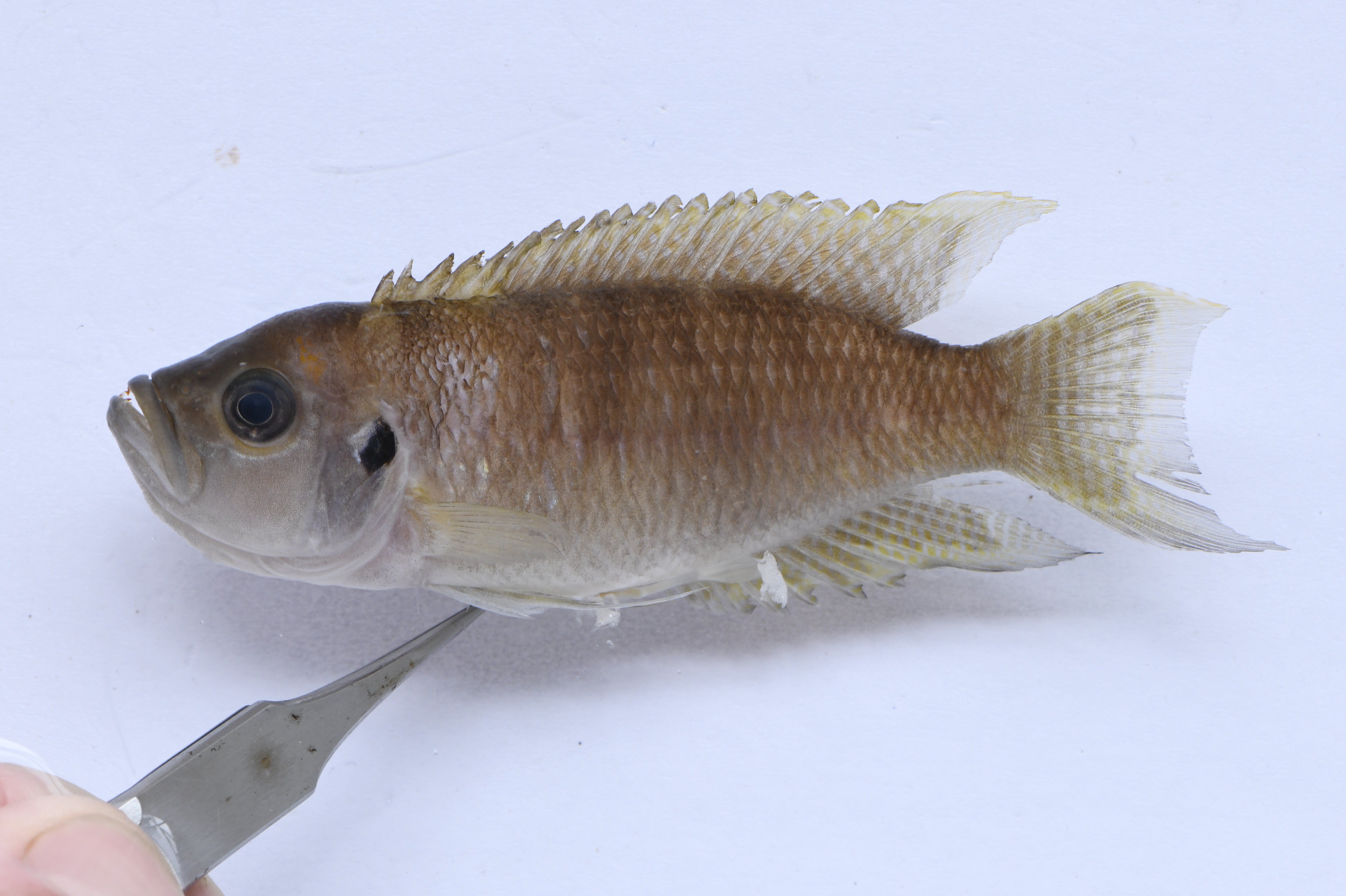
Neolamprologus brevis is a very small cichlid endemic to Lake Tanganyika in East Africa. The species reaches only about 5 cm and has a fusiform, yellow-brown body with faint bars. It lives on sandy bottoms strewn with empty snail shells and uses such a shell as shelter and breeding chamber; often a pair shares a single shell. Its diet consists of small zooplankton picked from the water. The species is a substrate spawner that tends its brood inside the shell. It is harmless to humans and popular in the aquarium trade.
Frequently asked questions
How do you recognise the Brevis shell-dweller?
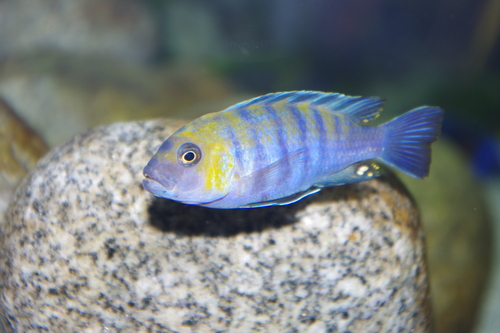
The Brevis shell-dweller has a torpedo-shaped body, is mainly yellow-gold and shows a vertical stripes pattern. Very small cichlid that lives in empty snail shells and cares for the brood inside them; a pair often shares a single shell.
Where does the Brevis shell-dweller live?
The Brevis shell-dweller lives in fresh water and is mostly found around mixed bottom. Endemic to Lake Tanganyika, on sandy bottoms strewn with empty snail shells.
How big does the Brevis shell-dweller get?
The Brevis shell-dweller grows to a maximum of about 6 cm.
Is the Brevis shell-dweller dangerous to humans?
No, the Brevis shell-dweller is harmless to humans. None required: this species is harmless to humans.
Is the Brevis shell-dweller edible?
The Brevis shell-dweller is not usually eaten.
More photos

Want the complete picture on the Brevis shell-dweller?
Point your camera at the fish and Fin names the species in seconds. Free, and the Brevis shell-dweller is one of 12,519 species in the app.
 Or scan with your phone
All data
Identification
Appearance
Habitat & distribution
Behaviour & biology
For anglers
Safety
Status & sources
Same genus Neolamprologus

More from the family Cichlidae




Want the complete picture on the Brevis shell-dweller?
Point your camera at the fish and Fin names the species in seconds. Free, and the Brevis shell-dweller is one of 12,519 species in the app.
Or scan with your phone