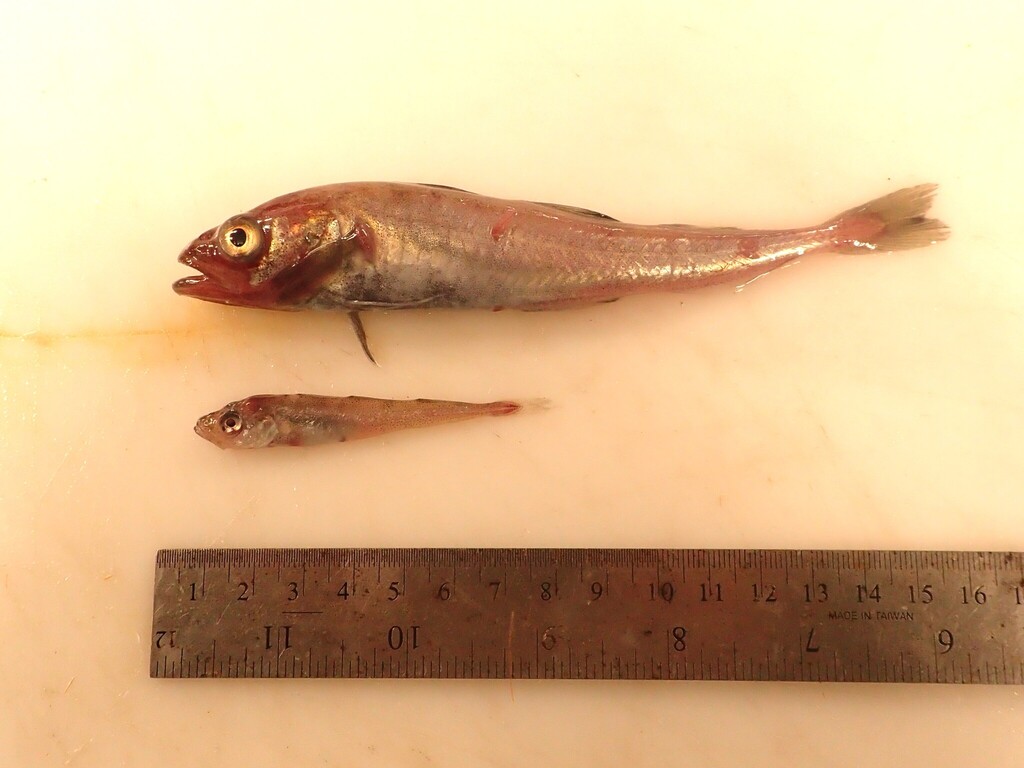
The Polar cod (Boreogadus saida) is a saltwater fish of the family Gadidae that grows up to 40 cm.
Description
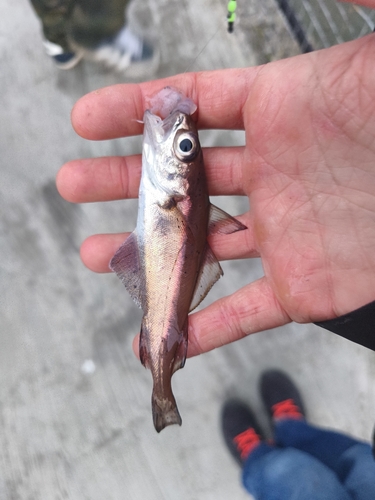
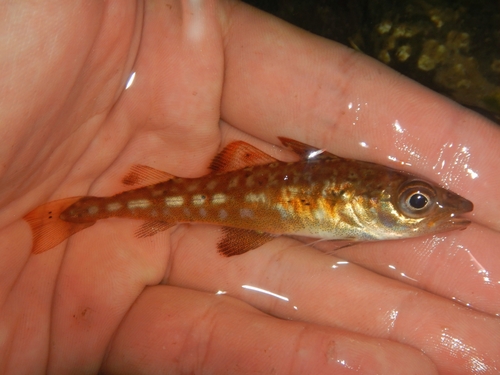
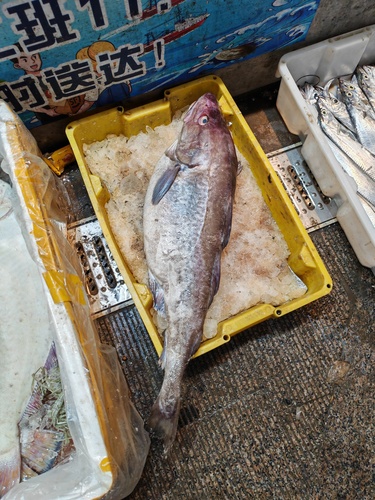
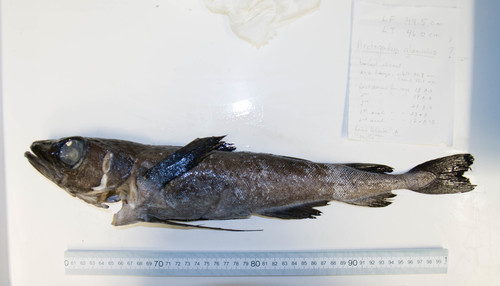
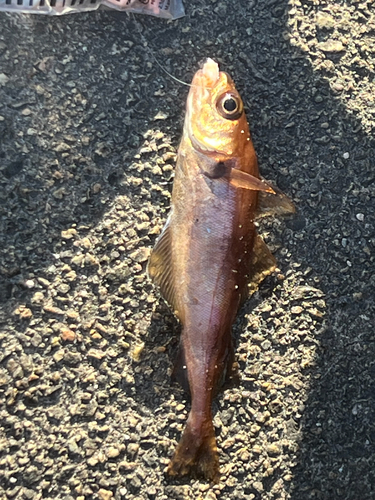
The polar cod is a small, slender cod relative of the family Gadidae reaching about 40 cm. The brownish-silver body has, typical of the cod family, three dorsal fins and two anal fins, a deeply forked tail and a small chin barbel. The species is a true ice-sea fish: it lives in the Arctic Ocean and adjacent cold waters, often just under or among the pack ice, and produces antifreeze proteins to survive in water below freezing. In schools it feeds on zooplankton, mainly copepods and amphipods. The polar cod is a keystone species of the Arctic food web: it is crucial food for seabirds, seals, whales and larger fish.
Frequently asked questions
How do you recognise the Polar cod?
The Polar cod has an elongate, eel-like body, is mainly brown and shows a plain pattern.
Where does the Polar cod live?
The Polar cod lives in the sea (marine waters) and is mostly found around sand or mud bottom.
How big does the Polar cod get?
The Polar cod grows to a maximum of about 40 cm. On average the species is around 25 cm.
Is the Polar cod dangerous to humans?
No, the Polar cod is harmless to humans.
Is the Polar cod edible?
The Polar cod is rarely eaten.
Download Fin's Fish Guide
Identify fish in seconds, log your catches and dives. Join the TestFlight beta.
All data
Identification
Appearance
Habitat & distribution
Behaviour & biology
For anglers
Safety
Status & sources
More from the family Gadidae
Download Fin's Fish Guide
Identify fish in seconds, log your catches and dives. Join the TestFlight beta.