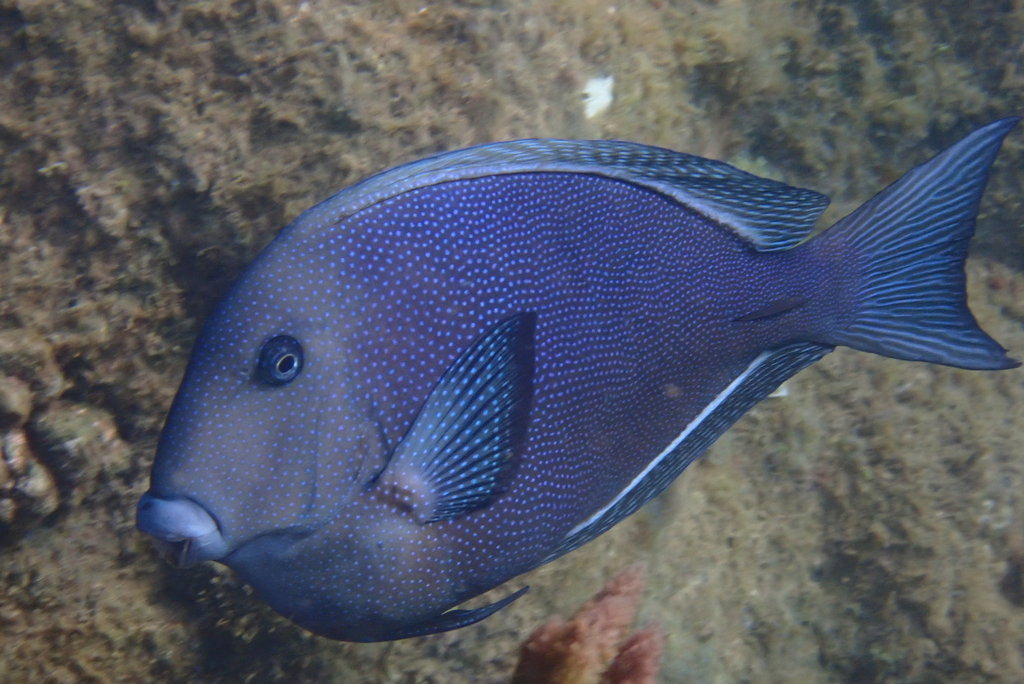

The Bluespotted bristletooth (Ctenochaetus marginatus) is a saltwater fish of the family Acanthuridae that grows up to 27 cm.
Oceania: Colombia, Costa Rica, Marquesas Is., French Polynesia, Kiribati, Johnston I. and others

Want the complete picture on the Bluespotted bristletooth?
Description
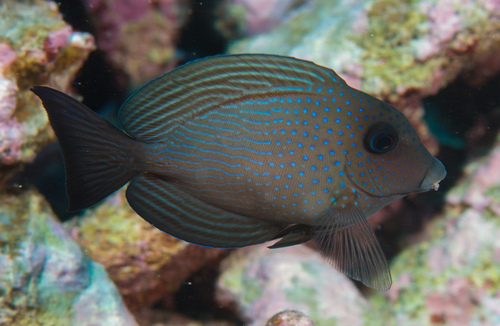
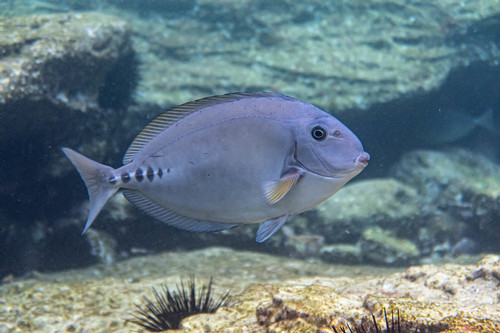
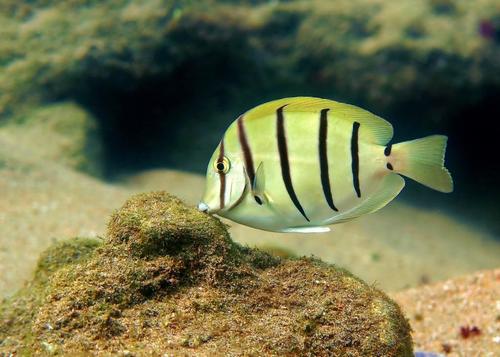
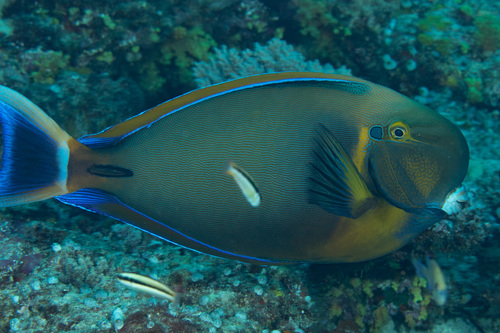
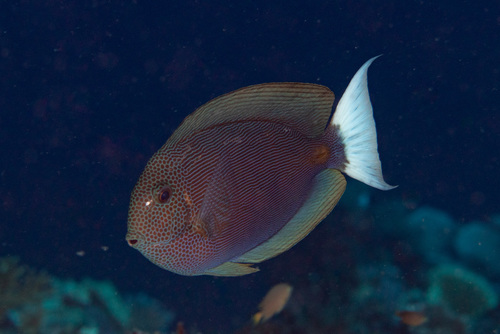
The Bluespotted bristletooth is a bristletooth surgeonfish (Acanthuridae) from the Pacific Ocean. The species grows to about 27 cm and has a dark, disc-shaped body with fine, mobile bristle teeth with which it brushes algal film, diatoms and detritus from reef surfaces. The dark body bears fine blue spots. A sharp, scalpel-like spine sits on each side of the tail base that can inflict a cut; handle with care.
Frequently asked questions
How do you recognise the Bluespotted bristletooth?
The Bluespotted bristletooth has a flattened, disc-shaped body and is mainly black. Bears sharp spines, plates or strong jaws that can cause cuts or puncture wounds; handle with care.
Where does the Bluespotted bristletooth live?
The Bluespotted bristletooth lives in the sea (marine waters) and is mostly found around stony or rocky ground. Oceania: Colombia, Costa Rica, Marquesas Is., French Polynesia, Kiribati, Johnston I. and others
How big does the Bluespotted bristletooth get?
The Bluespotted bristletooth grows to a maximum of about 27 cm.
Is the Bluespotted bristletooth dangerous to humans?
The Bluespotted bristletooth can cause injury; handle it with care. Never grab a live surgeonfish by the tail; a sharp, scalpel-like spine sits on each side of the tail base. For a cut: rinse with clean water, apply pressure to stop bleeding and cover with a sterile dressing. Deep wounds easily become infected: have them assessed medically and check tetanus status.
Is the Bluespotted bristletooth edible?
Yes, the Bluespotted bristletooth is commonly eaten.
More photos


Want the complete picture on the Bluespotted bristletooth?
Point your camera at the fish and Fin names the species in seconds. Free, and the Bluespotted bristletooth is one of 12,519 species in the app.
 Or scan with your phone
All data
Identification
Appearance
Habitat & distribution
Behaviour & biology
For anglers
Safety
Status & sources
Same genus Ctenochaetus


More from the family Acanthuridae


Want the complete picture on the Bluespotted bristletooth?
Point your camera at the fish and Fin names the species in seconds. Free, and the Bluespotted bristletooth is one of 12,519 species in the app.
Or scan with your phone