 Fin's Fish Guide
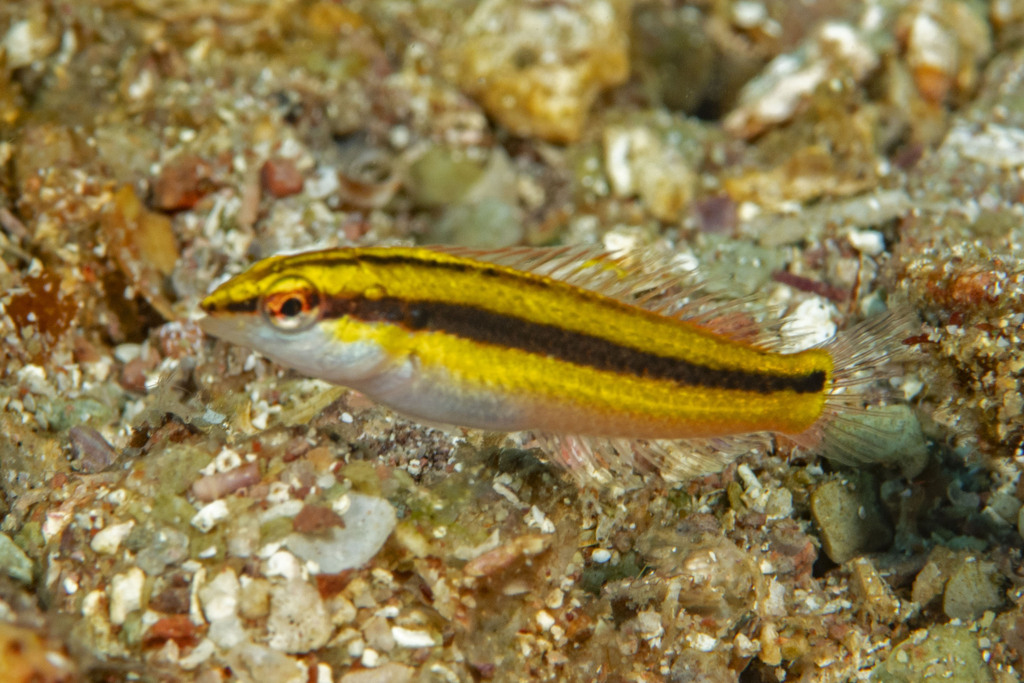

The Blackear wrasse (Halichoeres melanotis) is a saltwater fish of the family Labridae that grows up to 13 cm.
North America: Costa Rica, Galapagos Is., El Salvador, Guatemala, Honduras, Mexico and others
Description
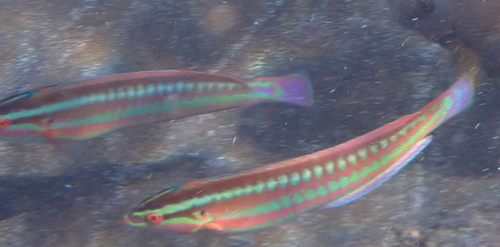
The Blackear wrasse is a wrasse (Labridae) from shallow reef and sand water of the eastern Pacific, from Mexico to Panama. The species grows to about 15 cm and has an elongate, greenish with a black spot behind the eye body that changes colour greatly with age and sex. As a bottom-oriented fish it swims by day over sand and reef bottoms and picks small crustaceans, molluscs and worms; at night it dives into the sand. Like many wrasses a female can change sex. The fish is harmless to humans.
Frequently asked questions
How do you recognise the Blackear wrasse?
The Blackear wrasse has a torpedo-shaped body and is mainly green.
Where does the Blackear wrasse live?
The Blackear wrasse lives in the sea (marine waters) and is mostly found around stony or rocky ground. North America: Costa Rica, Galapagos Is., El Salvador, Guatemala, Honduras, Mexico and others
How big does the Blackear wrasse get?
The Blackear wrasse grows to a maximum of about 13 cm.
Is the Blackear wrasse dangerous to humans?
No, the Blackear wrasse is harmless to humans. This species is harmless to humans. No specific first aid is needed. Still handle the fish with care: mind the fin rays and the sharp edges of the gill cover, and rinse any scratch with clean water and cover it. For a dirty or deep wound check tetanus status.
More photos
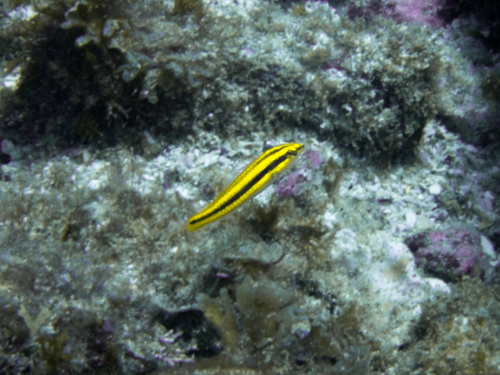
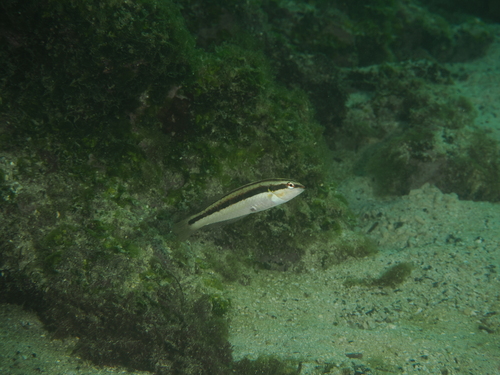
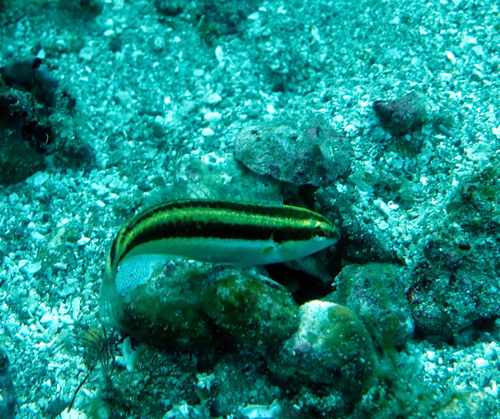
Want the complete picture on the Blackear wrasse?
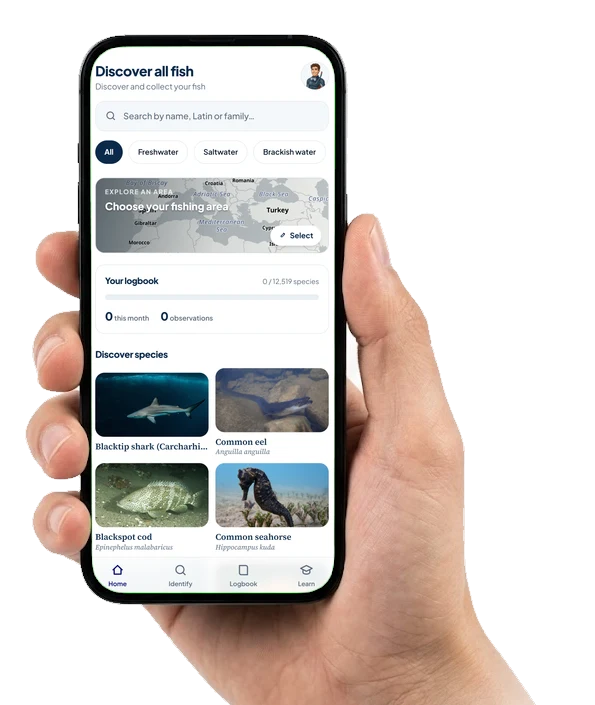
Point your camera at the fish and Fin names the species in seconds. Free, and the Blackear wrasse is one of 12,519 species in the app.
 Or scan with your phone
All data
Identification
Appearance
Habitat & distribution
Behaviour & biology
For anglers
Safety
Status & sources
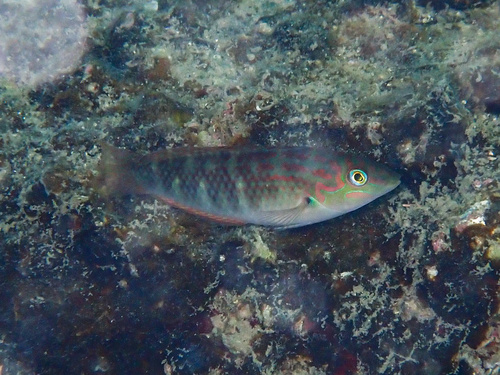
Same genus Halichoeres
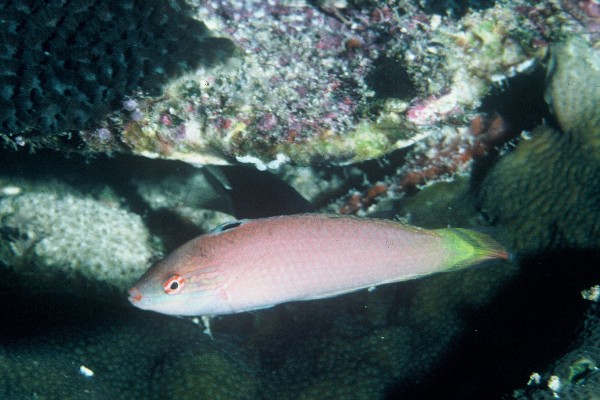


More from the family Labridae




Want the complete picture on the Blackear wrasse?
Point your camera at the fish and Fin names the species in seconds. Free, and the Blackear wrasse is one of 12,519 species in the app.
Or scan with your phone