Home · Cichlidae · Banded acara
Banded acara (Bujurquina vittata) — Cichlidae

Banded acara

Bujurquina vittata
Family: Cichlidae
LC · Least Concern

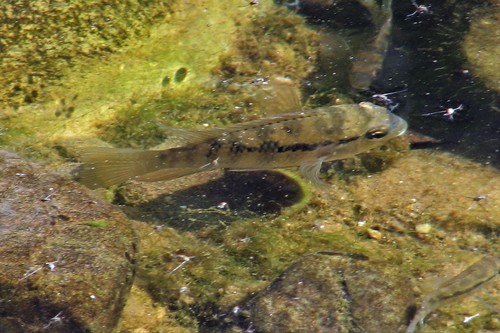
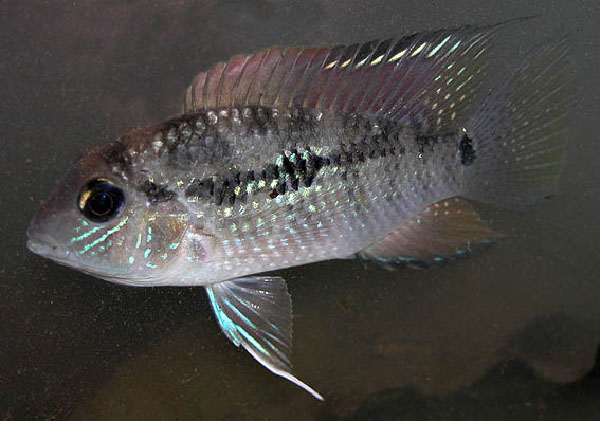
The Banded acara (Bujurquina vittata) is a freshwater fish of the family Cichlidae that grows up to 9 cm.

Length
9 cm
Water
Freshwater
Diet
Omnivore
Behaviour
Small groups
Body shape
Torpedo-shaped
Substrate
Mixed bottom
Danger
Harmless
Range
Southern South America; shallow zones of rivers.
Edibility
Not eaten

Want the complete picture on the Banded acara?

Description

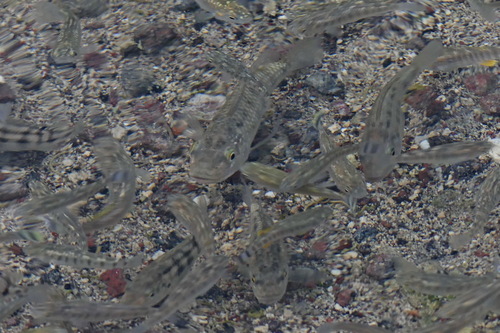
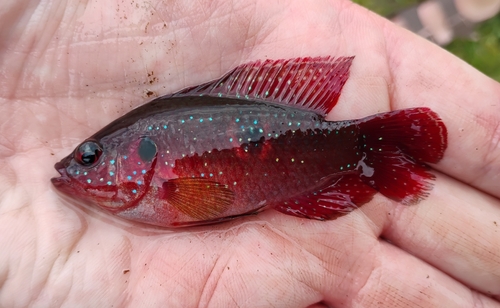
The chameleon cichlid is a cichlid (Cichlidae) from southern South America, including the Parana-Paraguay basin. The species grows to about 10 cm and has a yellow-brown body with a dark lengthwise band that fades or appears depending on its mood, hence the name. It lives in shallow zones of rivers. It is a larvophile mouthbrooder: both parents defend the eggs and take the newly hatched yolk-sac larvae into their mouths. As an omnivore it feeds on insects, small invertebrates and plant matter. The species is popular in the aquarium hobby and is harmless to humans.

Frequently asked questions

How do you recognise the Banded acara?

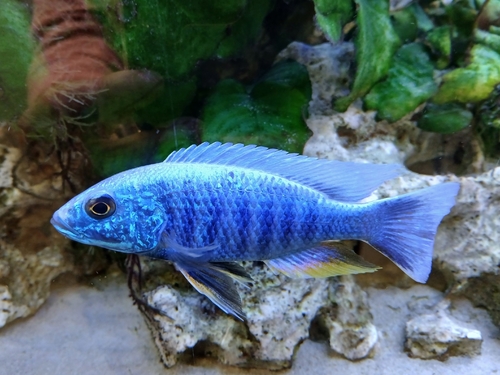
The Banded acara has a torpedo-shaped body, is mainly yellow-gold and shows a horizontal stripes pattern. Dark longitudinal band that changes with mood; biparental larvophilic mouthbrooder.

Where does the Banded acara live?

The Banded acara lives in fresh water and is mostly found around mixed bottom. Southern South America; shallow zones of rivers.

How big does the Banded acara get?

The Banded acara grows to a maximum of about 9 cm.

Is the Banded acara dangerous to humans?

No, the Banded acara is harmless to humans. None required: this species is harmless to humans.

Is the Banded acara edible?

The Banded acara is not usually eaten.

More photos

Banded acara (Bujurquina vittata) — Cichlidae — 2
iNaturalist ((c) Leandro Bareiro Guiñazú, some rights reserved (CC BY-NC))
Banded acara (Bujurquina vittata) — Cichlidae — 3
iNaturalist ((c) EmhartVuletich, some rights reserved (CC BY-NC))
Banded acara (Bujurquina vittata) — Cichlidae — 4
iNaturalist (no rights reserved)
Banded acara (Bujurquina vittata) — Cichlidae — 5
Wikimedia Commons — Franz Steindachner (1834 - 1919) (Public domain)

Want the complete picture on the Banded acara?

Point your camera at the fish and Fin names the species in seconds. Free, and the Banded acara is one of 12,519 species in the app.

All data

Identification

English name
Banded acara verified
Scientific name
Bujurquina vittata
Family
Cichlidae
Other names
Banded aequidens verified

Appearance

Size class
Small verified
Max length (cm)
9 verified
Body shape
Torpedo-shaped sourced
Dominant colour
Yellow / gold
Pattern
Horizontal stripes
Tail shape
Rounded
Mouth position
Terminal
Lips
Thick / fleshy
Barbels
No sourced
Dorsal fins
One continuous
Dorsal spines
Yes sourced

Habitat & distribution

Water type
Freshwater sourced
Substrate
Mixed bottom sourced
Natural range
Southern South America; shallow zones of rivers.
Origin
Native sourced

Behaviour & biology

Diet
Omnivore sourced
Diet (detail)
Insects, small invertebrates and plant material sourced
Social behaviour
Small groups
Territorial
Yes
Reproduction
Separate sexes sourced
Sexual dimorphism
Yes
Seasonality
Present year-round in its habitat; no pronounced seasonality known.
Special features
Dark longitudinal band that changes with mood; biparental larvophilic mouthbrooder. sourced

For anglers

Edibility
Not eaten sourced
Fishing method
Not a target species for angling; at most an incidental catch or usable as baitfish.
Regulations source

Safety

Danger to humans
Harmless sourced
First aid
None required: this species is harmless to humans. sourced

Status & sources

Sources
FishBase via GBIF (DwC-A), CC-BY-NC 4.0

Same genus Bujurquina

More from the family Cichlidae

Want the complete picture on the Banded acara?

Point your camera at the fish and Fin names the species in seconds. Free, and the Banded acara is one of 12,519 species in the app.

Is this the Banded acara?