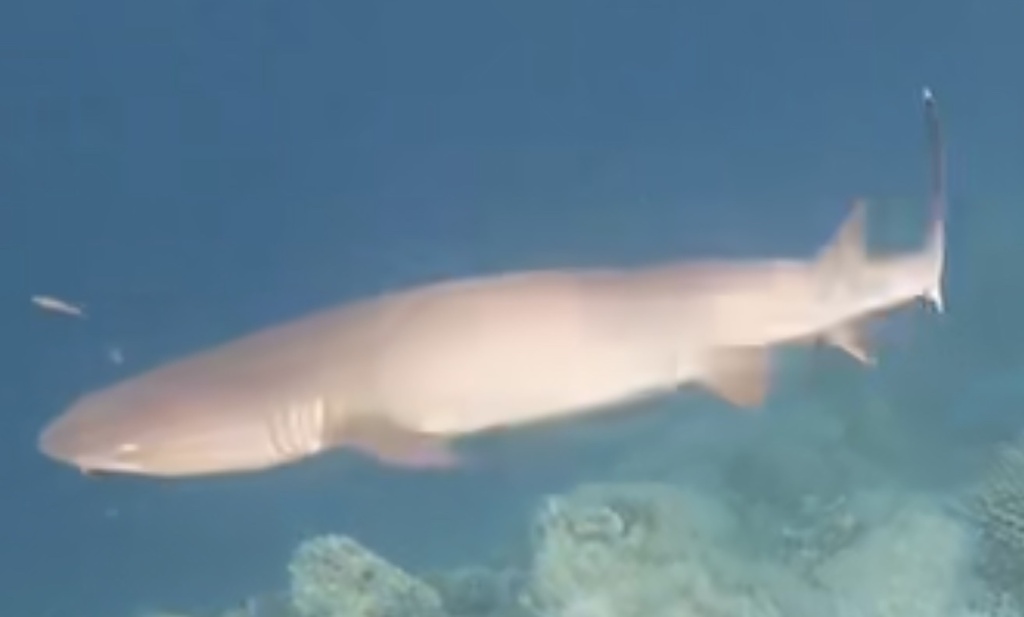
The Blunthead shark (Triaenodon obesus) is a saltwater fish of the family Carcharhinidae that grows up to 213 cm.
Description
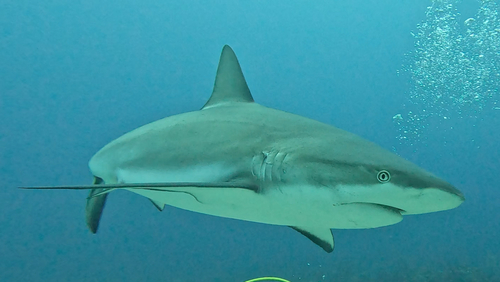
The whitetip reef shark is a reef shark (Carcharhinidae) from the Indo-West Pacific. The species has a slender, grey body with conspicuous white tips on the first dorsal fin and the upper tail lobe, to which the name refers, and grows to about 1.6 m. It is a sluggish inhabitant of lagoons and seaward reefs, often resting motionless in caves or under coral ledges by day and hunting fishes, crustaceans and octopuses in groups at night. Owing to fishing pressure it is considered vulnerable. It is usually not aggressive, but can bite when disturbed or provoked.
Frequently asked questions
How do you recognise the Blunthead shark?
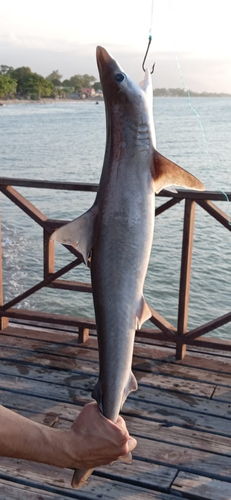
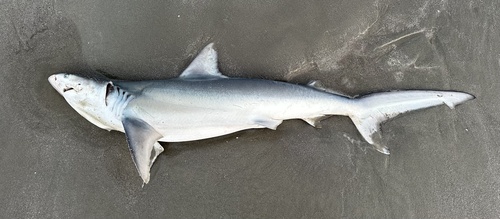
The Blunthead shark has a torpedo-shaped body, is mainly silver-grey and shows a plain pattern.
Where does the Blunthead shark live?
The Blunthead shark lives in the sea (marine waters) and is mostly found around stony or rocky ground.
How big does the Blunthead shark get?
The Blunthead shark grows to a maximum of about 213 cm. On average the species is around 160 cm.
Is the Blunthead shark dangerous to humans?
The Blunthead shark can cause injury; handle it with care.
Is the Blunthead shark edible?
The Blunthead shark is rarely eaten.
Download Fin's Fish Guide
Identify fish in seconds, log your catches and dives. Join the TestFlight beta.
All data
Identification
Appearance
Habitat & distribution
Behaviour & biology
For anglers
Safety
Status & sources
More from the family Carcharhinidae
Download Fin's Fish Guide
Identify fish in seconds, log your catches and dives. Join the TestFlight beta.