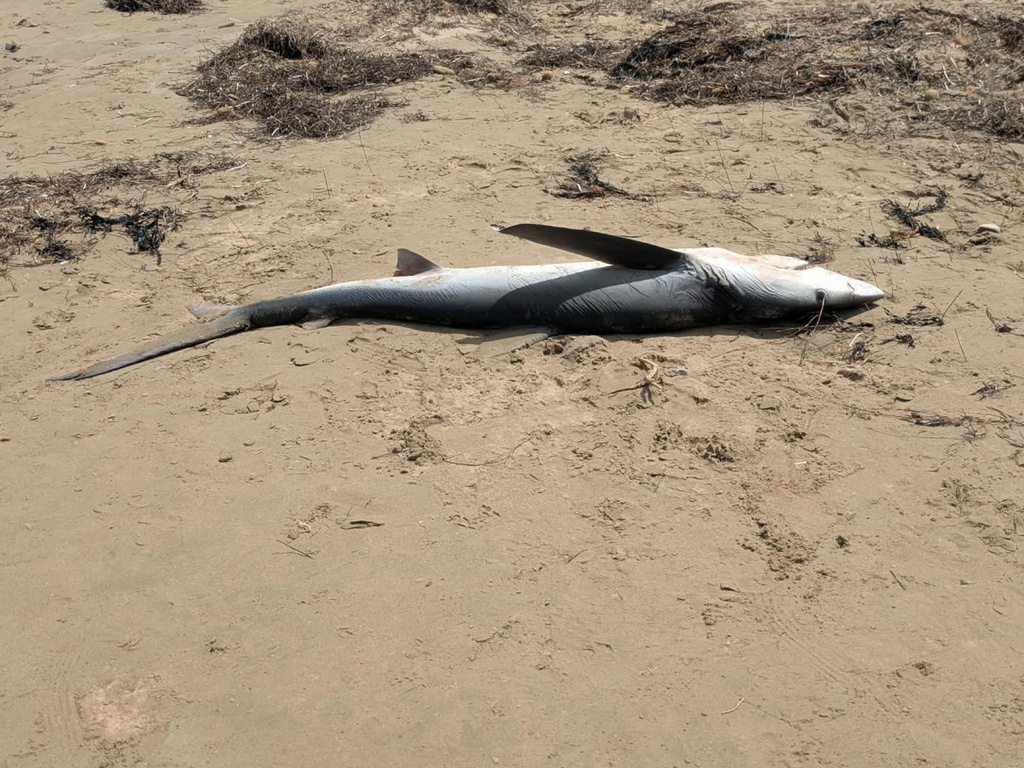
The Blue dog (Prionace glauca) is a brackish-water fish of the family Carcharhinidae that grows up to 400 cm.
Description
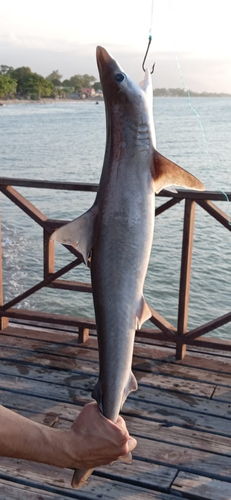
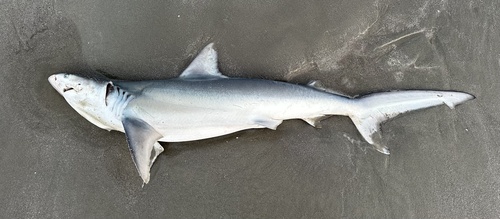
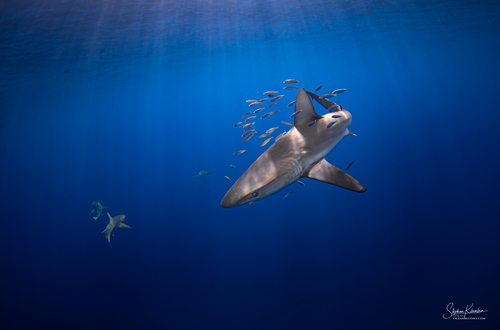
The blue shark is a slender, graceful oceanic shark of the family Carcharhinidae reaching about 400 cm. The species is named for its colour: deep blue on the back, bright blue on the flanks and white on the belly. Very long, pointed pectoral fins and a slender, long snout are characteristic. The blue shark is one of the most migratory of sharks and can travel thousands of kilometres. It lives pelagically in all temperate and tropical seas, hunting fish such as herring and mackerel, small sharks and squid. It is viviparous with large litters. Fishing pressure has left the species assessed as Near Threatened.
Frequently asked questions
How do you recognise the Blue dog?
The Blue dog has a torpedo-shaped body, is mainly blue and shows a plain pattern.
Where does the Blue dog live?
The Blue dog lives in brackish water and is mostly found around open water.
How big does the Blue dog get?
The Blue dog grows to a maximum of about 400 cm. On average the species is around 335 cm.
Is the Blue dog dangerous to humans?
The Blue dog can cause injury; handle it with care.
Is the Blue dog edible?
The Blue dog is rarely eaten.
Download Fin's Fish Guide
Identify fish in seconds, log your catches and dives. Join the TestFlight beta.
All data
Identification
Appearance
Habitat & distribution
Behaviour & biology
For anglers
Safety
Status & sources
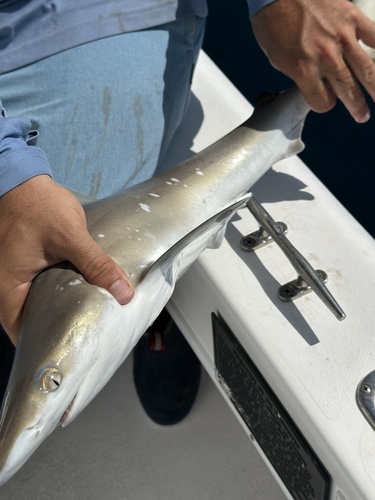
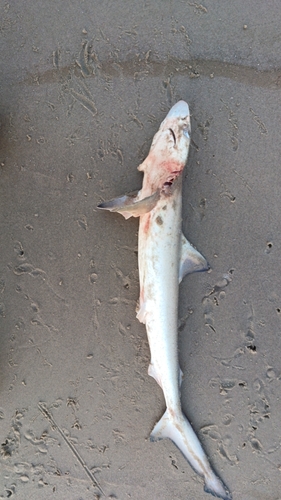
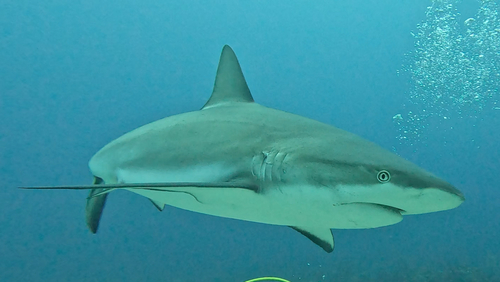
More from the family Carcharhinidae
Download Fin's Fish Guide
Identify fish in seconds, log your catches and dives. Join the TestFlight beta.