Home · Labridae · Blue-fin wrasse
Blue-fin wrasse (Thalassoma lutescens) — Labridae

Blue-fin wrasse

Thalassoma lutescens
Family: Labridae
LC · Least Concern

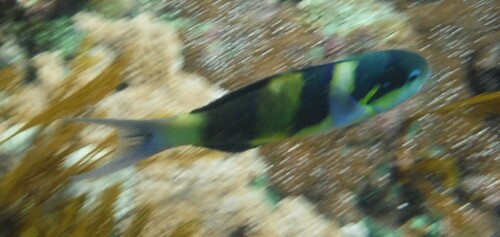
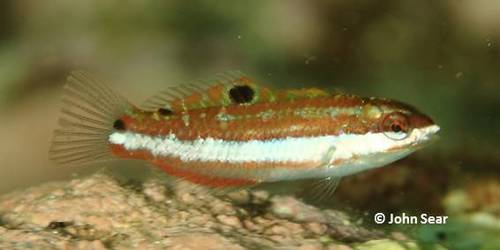
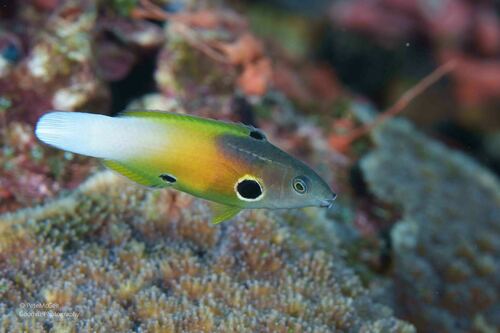
The Blue-fin wrasse (Thalassoma lutescens) is a saltwater fish of the family Labridae that grows up to 30 cm.

Length
30 cm
Water
Saltwater
Depth
0.0–30.0 m
Diet
Carnivore
Behaviour
Small groups
Activity
Diurnal
Body shape
Torpedo-shaped
Substrate
Stone or rock
Danger
Harmless
Edibility
Commonly eaten

Description

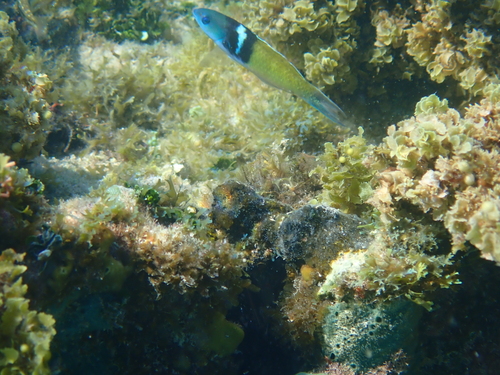
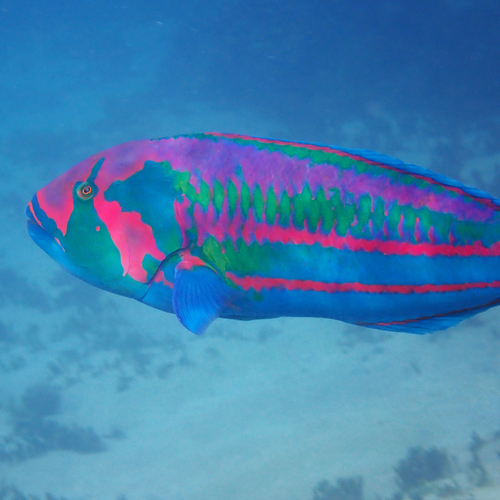
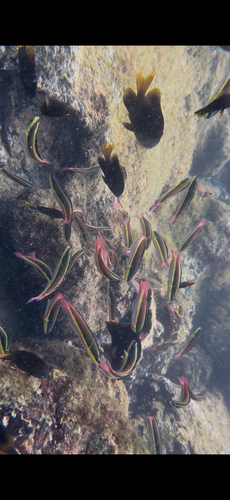
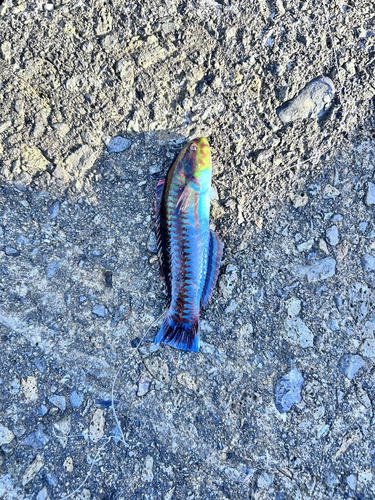
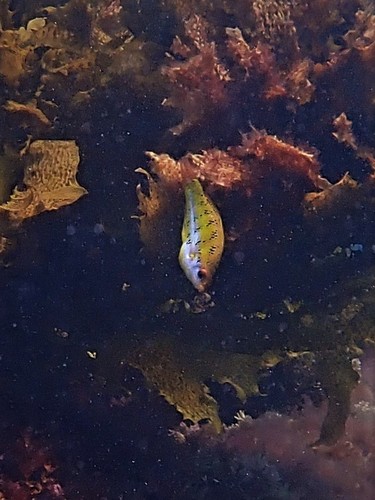
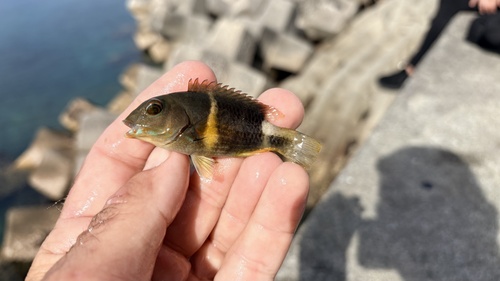
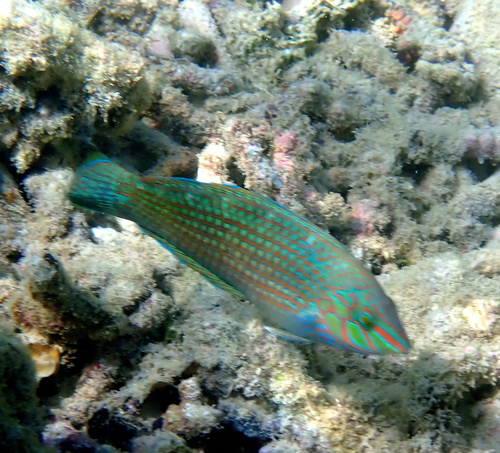
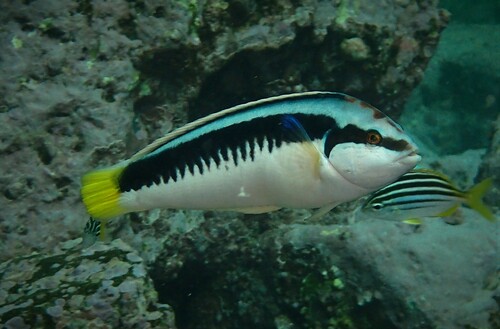
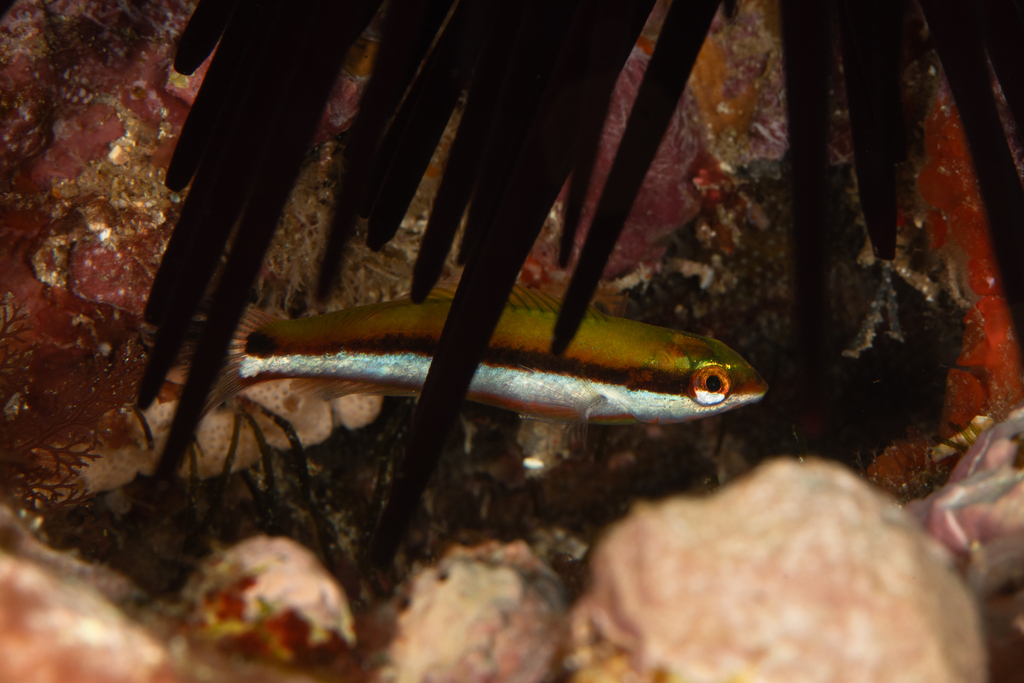
The yellow-brown wrasse is a wrasse (Labridae) from the Indo-Pacific. The species is handsomely coloured; adult males are green-blue with yellow tints and pink lines on the head, females more yellowish. It occurs in groups on clear outer lagoon and seaward reefs, over open sand and rubble. With its jaws it seeks small bottom animals such as crustaceans, molluscs and worms. It is protogynous: females can change into males. The species is harmless to humans.

Frequently asked questions

How do you recognise the Blue-fin wrasse?

The Blue-fin wrasse has a torpedo-shaped body, is mainly yellow-gold and shows a plain pattern.

Where does the Blue-fin wrasse live?

The Blue-fin wrasse lives in the sea (marine waters) and is mostly found around stony or rocky ground.

How big does the Blue-fin wrasse get?

The Blue-fin wrasse grows to a maximum of about 30 cm.

Is the Blue-fin wrasse dangerous to humans?

No, the Blue-fin wrasse is harmless to humans.

Is the Blue-fin wrasse edible?

Yes, the Blue-fin wrasse is commonly eaten.

Download Fin's Fish Guide

Identify fish in seconds, log your catches and dives. Join the TestFlight beta.

Get the beta →

All data

Identification

Dutch name
Geelgroene lipvis sourced
English name
Blue-fin wrasse verified
Scientific name
Thalassoma lutescens
Family
Labridae
Other names
Green moon wrasse; Lime green wrasse; Parrotfish; Surge wrasse verified

Appearance

Size class
Medium verified
Max length (cm)
30.0 verified
Body shape
Torpedo-shaped sourced
Dominant colour
Yellow / gold inferred
Pattern
Plain inferred
Tail shape
Straight inferred
Mouth position
Terminal inferred
Lips
Thick / fleshy inferred
Barbels
No sourced
Dorsal fins
One continuous inferred
Dorsal spines
Yes sourced

Habitat & distribution

Water type
Saltwater sourced
Substrate
Stone or rock sourced
Min depth (m)
0.0 verified
Max depth (m)
30.0 verified
Origin
Native sourced

Behaviour & biology

Diet
Carnivore sourced
Social behaviour
Small groups inferred
Territorial
No inferred
Activity
Diurnal inferred
Reproduction
Protogynous (female first) sourced
Sexual dimorphism
Yes inferred

For anglers

Edibility
Commonly eaten sourced
Fishing method
Vissen met natuurlijk aas (vis, garnaal, worm) of kunstaas dicht bij rif- en rotsstructuren. inferred
Regulations source
FishBase ↗ inferred

Safety

Danger to humans
Harmless sourced

Status & sources

Sources
FishBase via GBIF (DwC-A), CC-BY-NC 4.0

Same genus Thalassoma

More from the family Labridae
Download Fin's Fish Guide

Identify fish in seconds, log your catches and dives. Join the TestFlight beta.

Get the beta →