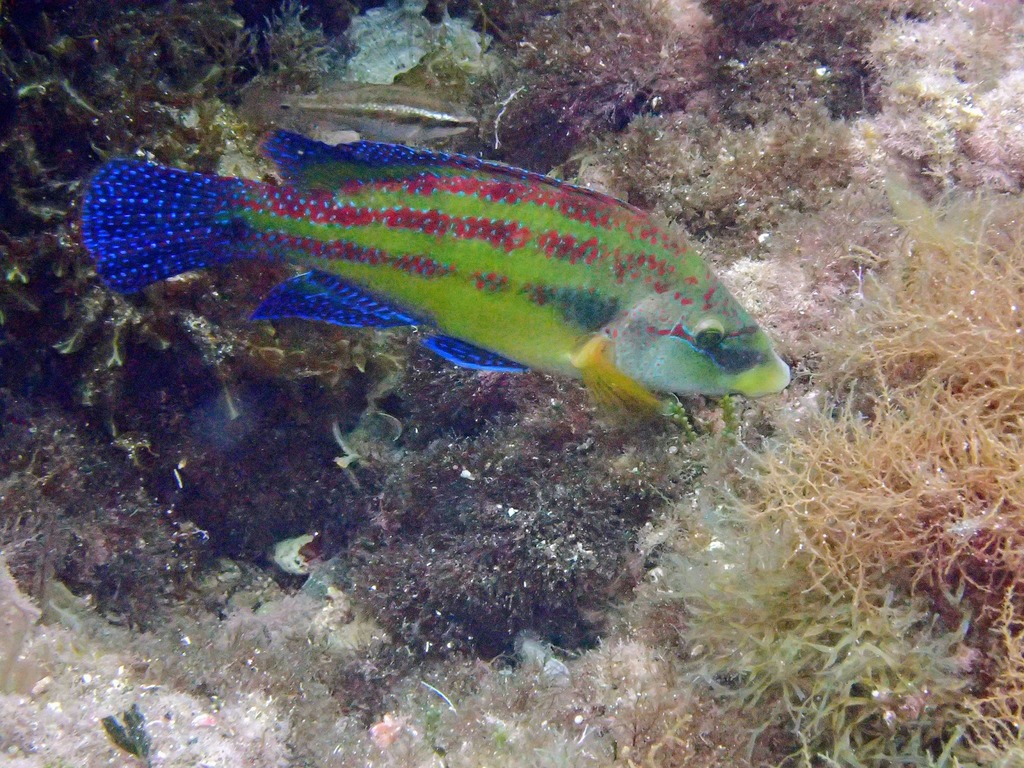
The East Atlantic peacock wrasse (Symphodus tinca) is a saltwater fish of the family Labridae that grows up to 44 cm.
Description
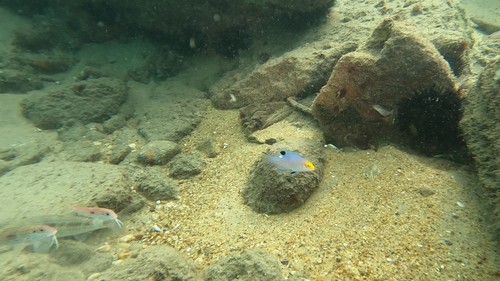
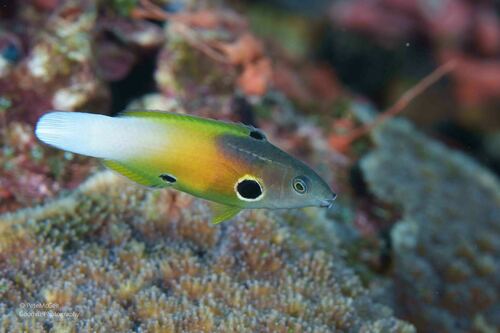
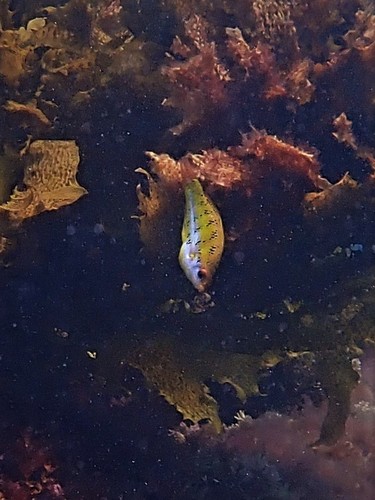
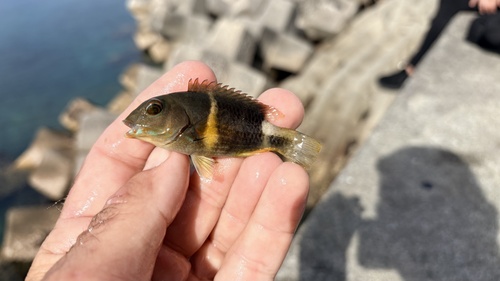
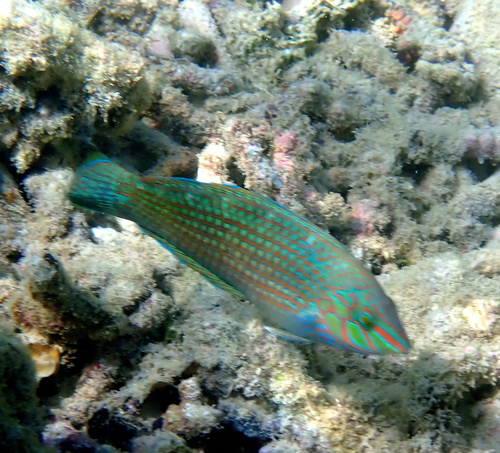
The East Atlantic peacock wrasse is the largest wrasse of the genus Symphodus in the family Labridae, reaching about 44 cm. The deep, laterally compressed body is brightly coloured, with green, blue and orange tints and fine longitudinal lines; breeding males are especially colourful with blue head patterns. The species lives on rocky and seagrass bottoms of the Mediterranean and the eastern Atlantic, from shallow to moderate depths. With its strong jaw teeth it eats shellfish, small crustaceans, snails and sea urchins. Like many wrasses it is a protogynous hermaphrodite. The male builds a large nest of weeds and fiercely guards the eggs. The peacock wrasse is a valued sport and pan fish in the Mediterranean region.
Frequently asked questions
How do you recognise the East Atlantic peacock wrasse?
The East Atlantic peacock wrasse has a torpedo-shaped body, is mainly green and shows a horizontal stripes pattern.
Where does the East Atlantic peacock wrasse live?
The East Atlantic peacock wrasse lives in the sea (marine waters) and is mostly found around stony or rocky ground.
How big does the East Atlantic peacock wrasse get?
The East Atlantic peacock wrasse grows to a maximum of about 44 cm. On average the species is around 25 cm.
Is the East Atlantic peacock wrasse dangerous to humans?
No, the East Atlantic peacock wrasse is harmless to humans.
Is the East Atlantic peacock wrasse edible?
Yes, the East Atlantic peacock wrasse is commonly eaten.
Download Fin's Fish Guide
Identify fish in seconds, log your catches and dives. Join the TestFlight beta.
All data
Identification
Appearance
Habitat & distribution
Behaviour & biology
For anglers
Safety
Status & sources
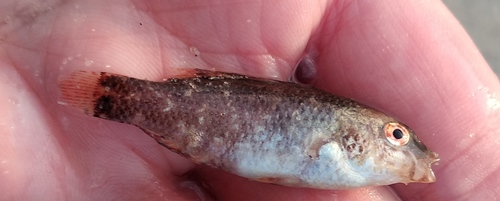
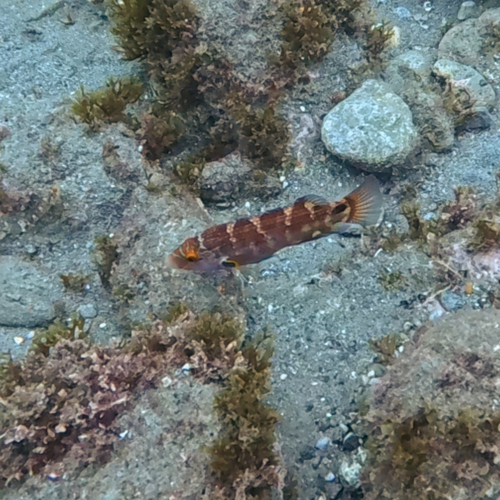
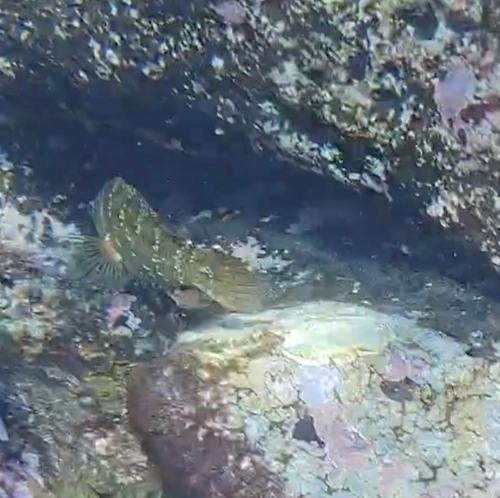
Same genus Symphodus
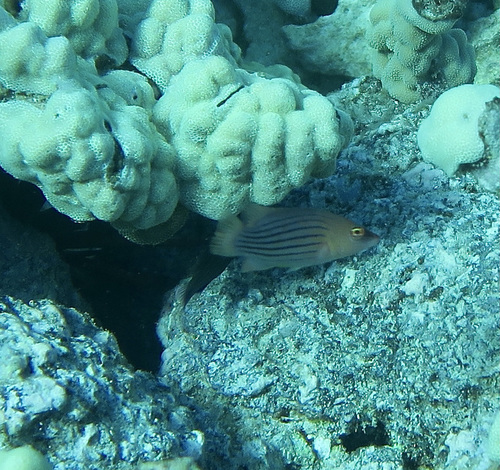
More from the family Labridae
Download Fin's Fish Guide
Identify fish in seconds, log your catches and dives. Join the TestFlight beta.