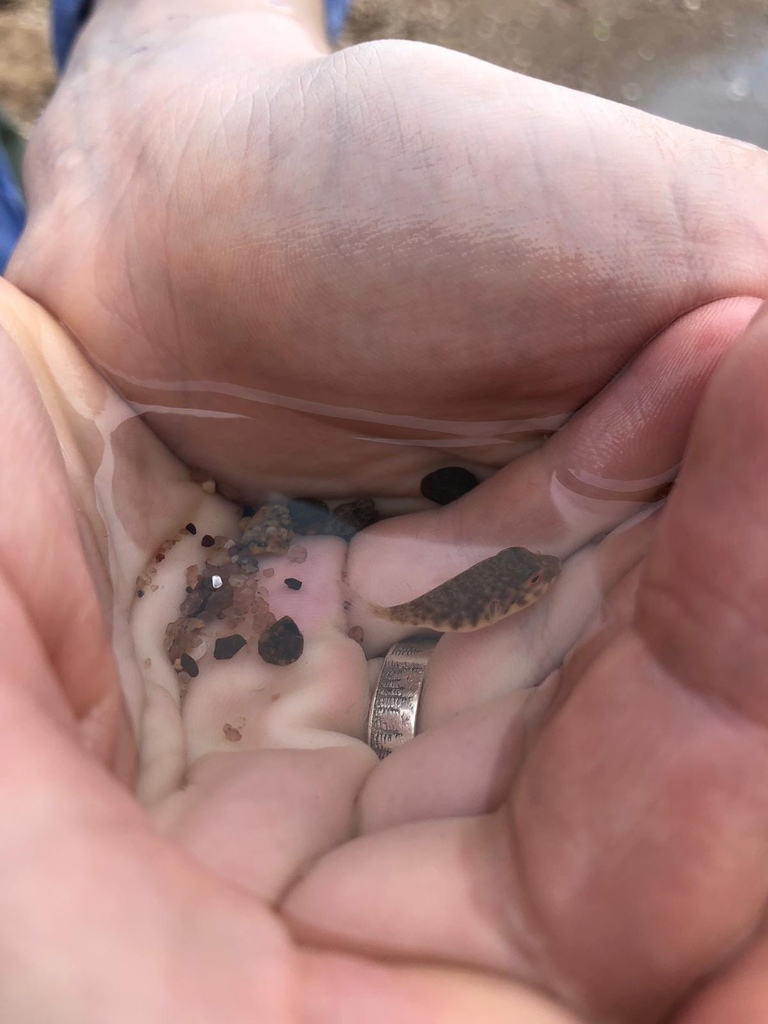
The Northern puffer (Sphoeroides maculatus) is a saltwater fish of the family Tetraodontidae that grows up to 36 cm.
Description
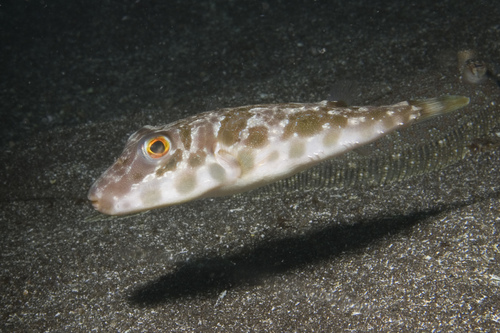
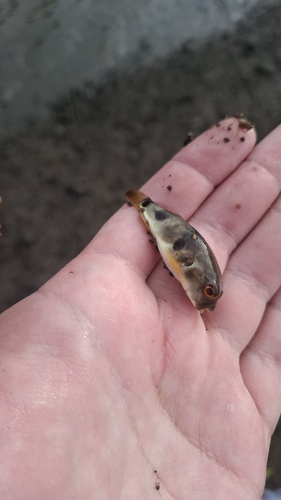
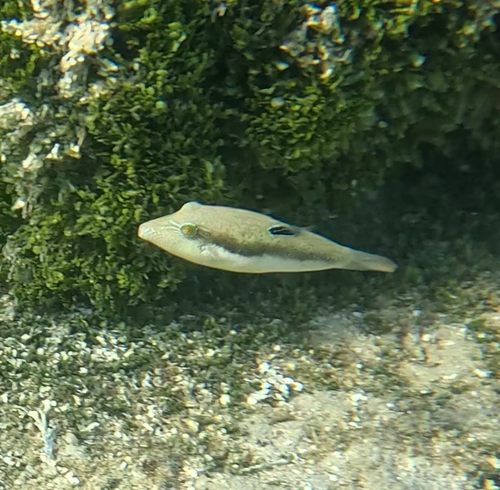
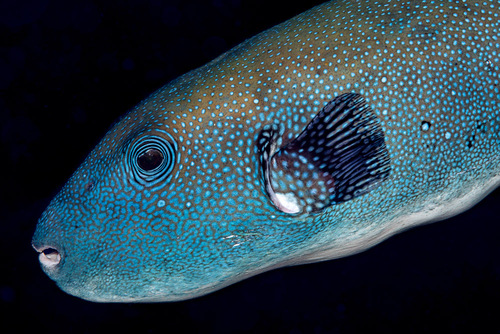
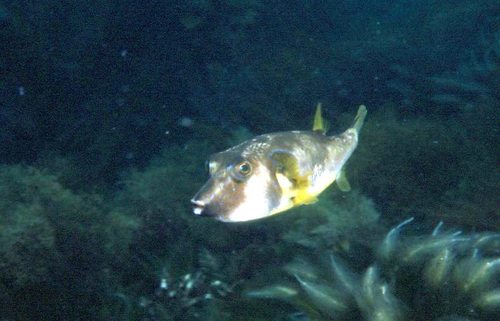
The northern puffer is a stocky fish of the family Tetraodontidae (pufferfishes) reaching about 36 cm. The brown, spotted body has a white belly with small skin prickles and a parrot-like beak of fused teeth. When threatened the fish gulps water or air and inflates into a spiny ball, too large for most predators. The species lives on sandy and weedy bottoms of shallow coastal water and bays along the east coast of North America. With its beak it crushes shellfish, molluscs, sea urchins and worms. The organs and skin of pufferfishes can contain highly toxic tetrodotoxin; only the back muscle, when expertly prepared, is eaten.
Frequently asked questions
How do you recognise the Northern puffer?
The Northern puffer has a flattened, disc-shaped body, is mainly brown and shows a spots pattern.
Where does the Northern puffer live?
The Northern puffer lives in the sea (marine waters) and is mostly found around sand or mud bottom.
How big does the Northern puffer get?
The Northern puffer grows to a maximum of about 36 cm. On average the species is around 20 cm.
Is the Northern puffer dangerous to humans?
The Northern puffer is venomous — handle spines with care and seek medical help after a sting if needed.
Is the Northern puffer edible?
The Northern puffer is rarely eaten.
Download Fin's Fish Guide
Identify fish in seconds, log your catches and dives. Join the TestFlight beta.
All data
Identification
Appearance
Habitat & distribution
Behaviour & biology
For anglers
Safety
Status & sources
Same genus Sphoeroides
More from the family Tetraodontidae

Download Fin's Fish Guide
Identify fish in seconds, log your catches and dives. Join the TestFlight beta.