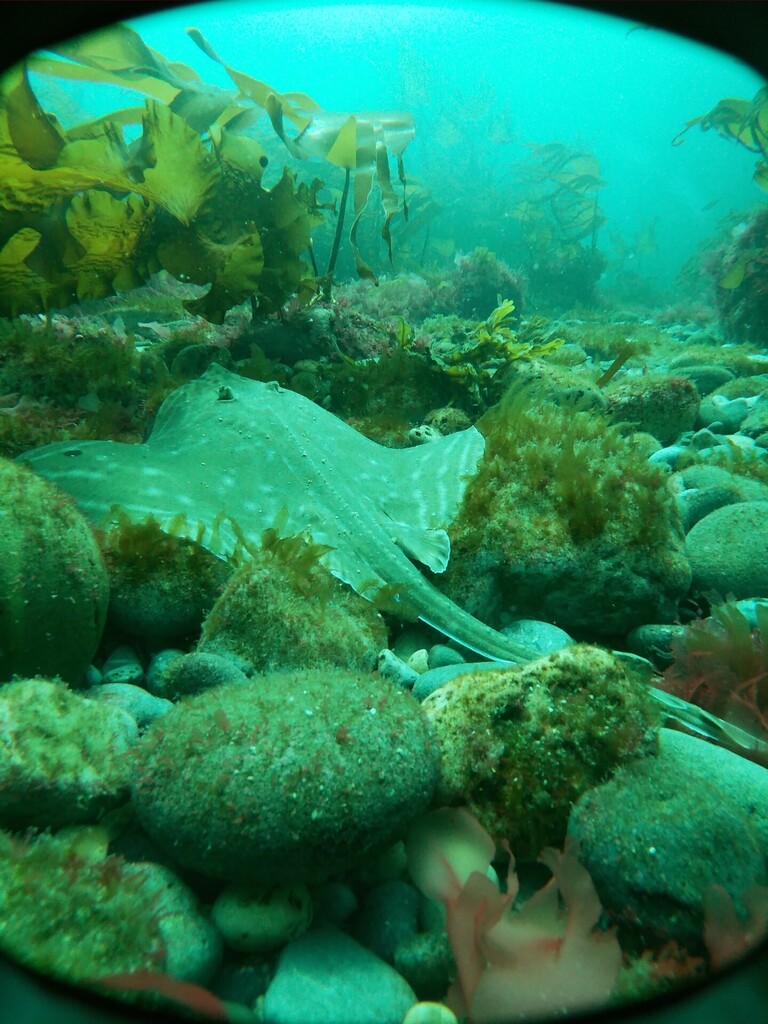
The Small-eyed ray (Raja microocellata) is a saltwater fish of the family Rajidae that grows up to 87 cm.
Description
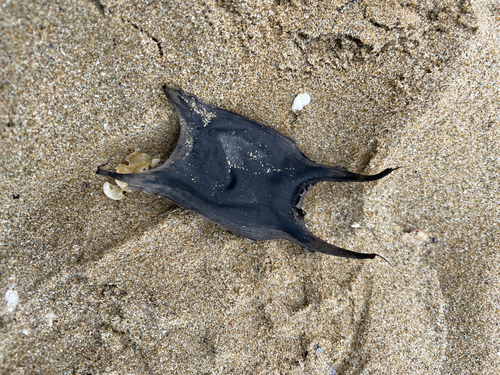
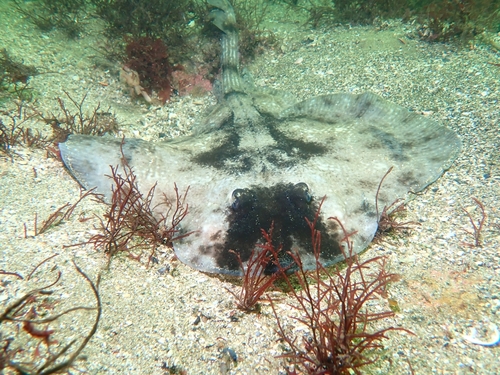
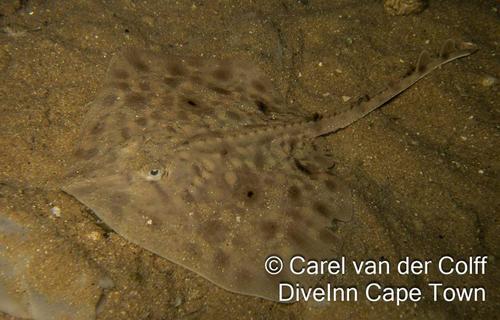
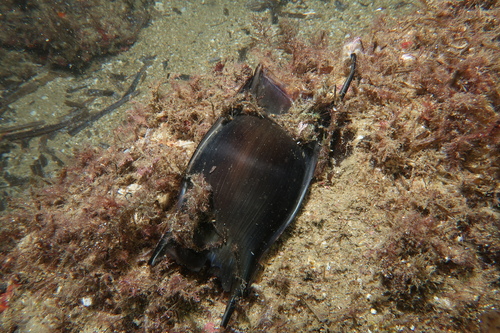
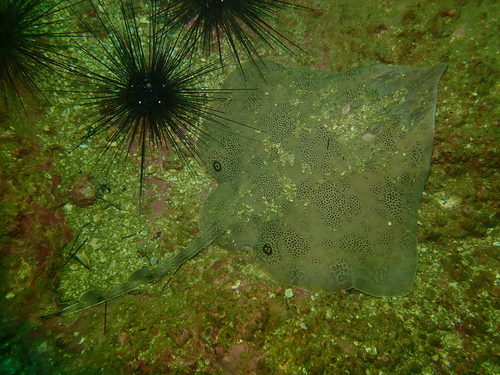
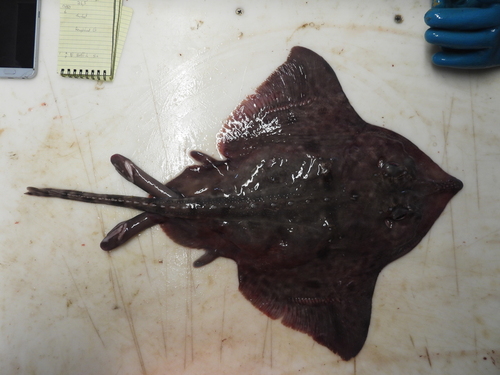
The small-eyed ray is a medium-sized skate of the family Rajidae reaching a total length of about 90 cm. The diamond-shaped body, formed by the pectoral fins fused to the head, has a pointed snout and, as the name says, conspicuously small eyes. The grey-brown upper side is beautifully marked with pale, winding lines and bands that follow the edges of the fins; the underside is white. The species lives on sand bottoms of shallow coastal water and the continental shelf of the north-eastern Atlantic. On the bottom it hunts mainly sandeel and other small fish and crustaceans. It lays eggs in horny capsules and grows slowly; due to fishing it is assessed as Near Threatened (NT).
Frequently asked questions
How do you recognise the Small-eyed ray?
The Small-eyed ray has a flattened, disc-shaped body, is mainly brown and shows a flame-patterned pattern.
Where does the Small-eyed ray live?
The Small-eyed ray lives in the sea (marine waters) and is mostly found around sand or mud bottom.
How big does the Small-eyed ray get?
The Small-eyed ray grows to a maximum of about 87 cm.
Is the Small-eyed ray dangerous to humans?
No, the Small-eyed ray is harmless to humans.
Is the Small-eyed ray edible?
The Small-eyed ray is rarely eaten.
Download Fin's Fish Guide
Identify fish in seconds, log your catches and dives. Join the TestFlight beta.
All data
Identification
Appearance
Habitat & distribution
Behaviour & biology
For anglers
Safety
Status & sources
Same genus Raja
More from the family Rajidae
Download Fin's Fish Guide
Identify fish in seconds, log your catches and dives. Join the TestFlight beta.