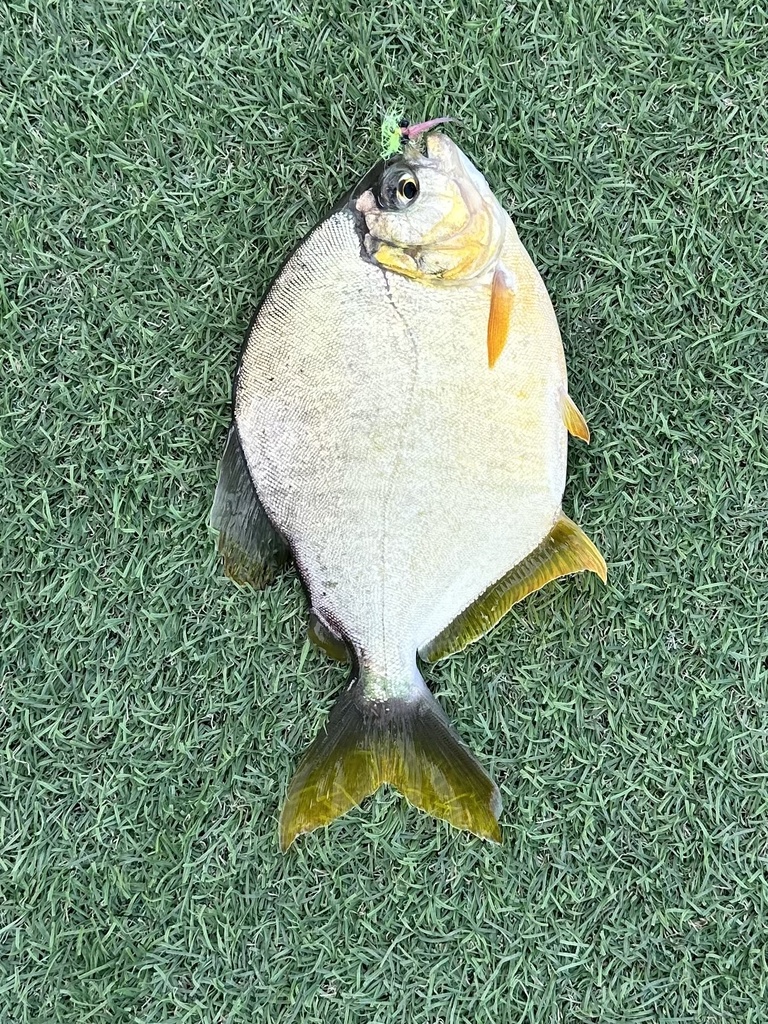
The Lobetooth piranha (Pygopristis denticulata) is a freshwater fish of the family Serrasalmidae that grows up to 22 cm.
Description
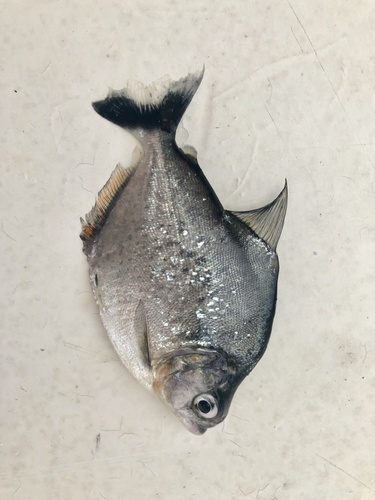
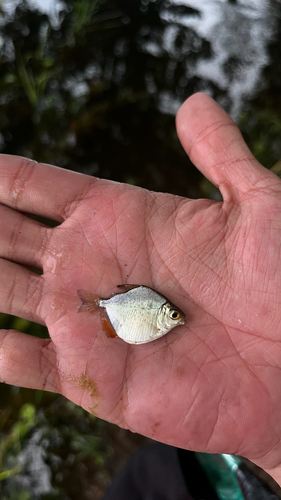
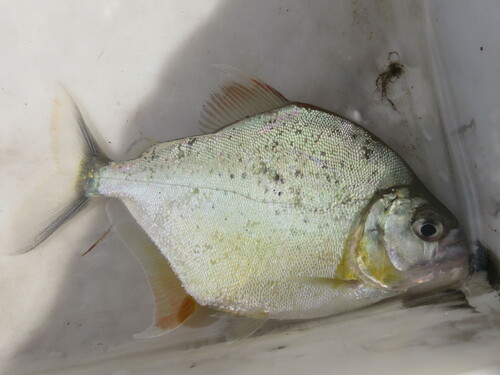
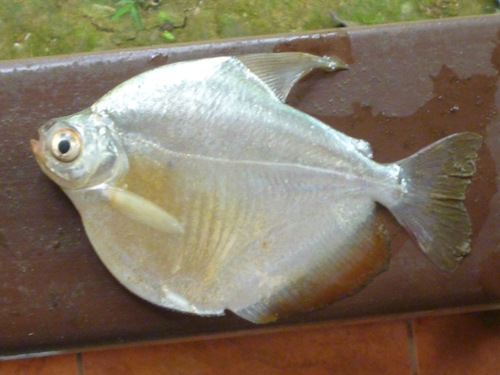
The Lobetooth piranha is a true piranha (Serrasalmidae) from fresh water of the Amazon, Orinoco and Guiana region in South America. The species grows to about 21 cm and has a deep, laterally compressed, silvery body with powerful jaws full of razor-sharp, triangular teeth. It has lobe-shaped teeth and is less predatory than other piranhas, with a more mixed diet. As a schooling predator it hunts fish, crustaceans and carrion in rivers and bites chunks of flesh from prey with its sharp teeth. Attacks on humans are rare, but the bite can inflict a serious wound; handle with care.
Frequently asked questions
How do you recognise the Lobetooth piranha?
The Lobetooth piranha has a flattened, disc-shaped body and is mainly silver-grey.
Where does the Lobetooth piranha live?
The Lobetooth piranha lives in fresh water and is mostly found around mixed bottom.
How big does the Lobetooth piranha get?
The Lobetooth piranha grows to a maximum of about 22 cm.
Is the Lobetooth piranha dangerous to humans?
The Lobetooth piranha can bite, but is otherwise not dangerous to humans.
Is the Lobetooth piranha edible?
Yes, the Lobetooth piranha is commonly eaten.
Download Fin's Fish Guide
Identify fish in seconds, log your catches and dives. Join the TestFlight beta.
All data
Identification
Appearance
Habitat & distribution
Behaviour & biology
For anglers
Safety
Status & sources
More from the family Serrasalmidae

Download Fin's Fish Guide
Identify fish in seconds, log your catches and dives. Join the TestFlight beta.