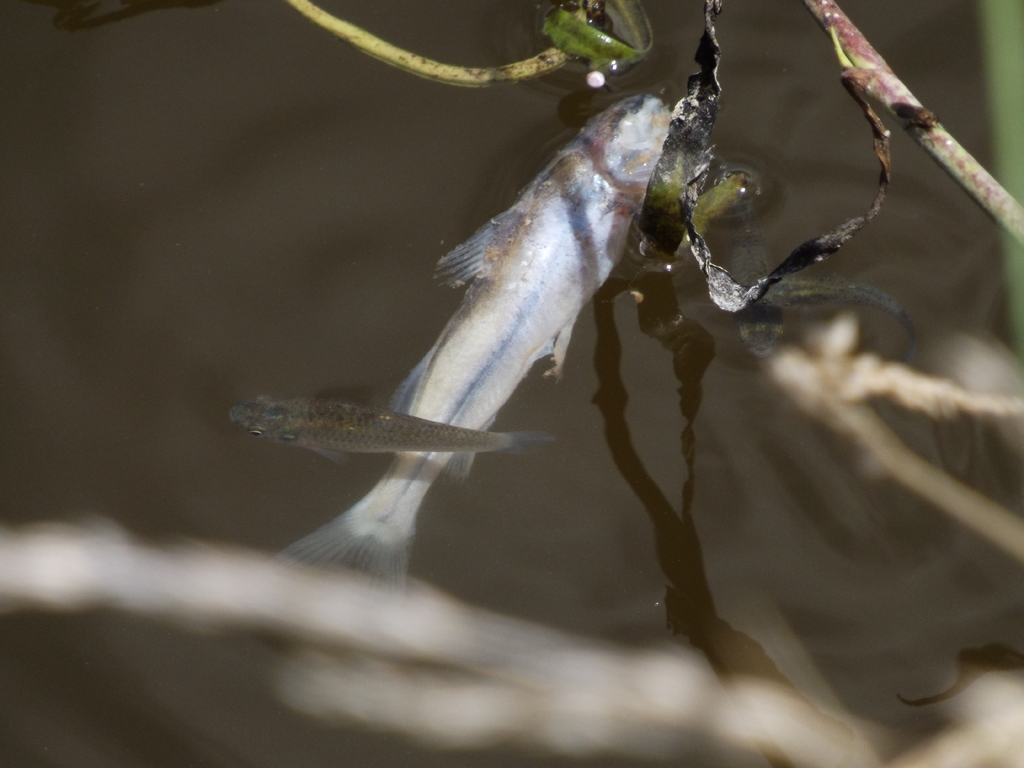
The Catfish (Parapimelodus valenciennis) is a freshwater fish of the family Pimelodidae that grows up to 24 cm.
Description
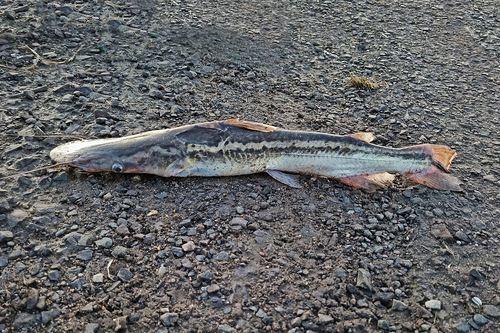
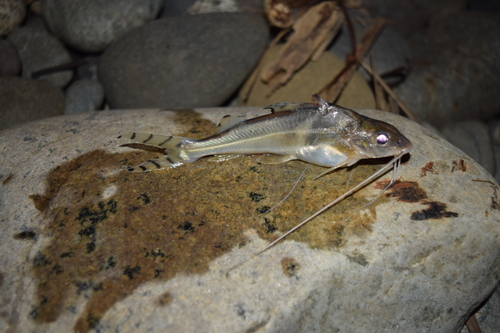
Valenciennes' antenna catfish is a catfish of the family Pimelodidae from southeastern South America, in the La Plata basin of Argentina, Uruguay and southern Brazil. The species reaches about 24 cm and has an elongate, silvery, scaleless body with long barbels. Unlike many catfishes it is a schooling fish that feeds mainly on zooplankton, which it filters from the water with numerous gill rakers. In front of the pectoral and dorsal fins it bears sharp spines that can cause puncture wounds when handled. The species is caught locally in fisheries.
Frequently asked questions
How do you recognise the Catfish?
The Catfish has a torpedo-shaped body, is mainly silver-grey and shows a plain pattern.
Where does the Catfish live?
The Catfish lives in fresh water and is mostly found around sand or mud bottom.
How big does the Catfish get?
The Catfish grows to a maximum of about 24 cm. On average the species is around 16 cm.
Is the Catfish dangerous to humans?
The Catfish can cause injury; handle it with care.
Is the Catfish edible?
The Catfish is rarely eaten.
Download Fin's Fish Guide
Identify fish in seconds, log your catches and dives. Join the TestFlight beta.
All data
Identification
Appearance
Habitat & distribution
Behaviour & biology
For anglers
Safety
Status & sources
More from the family Pimelodidae

Download Fin's Fish Guide
Identify fish in seconds, log your catches and dives. Join the TestFlight beta.