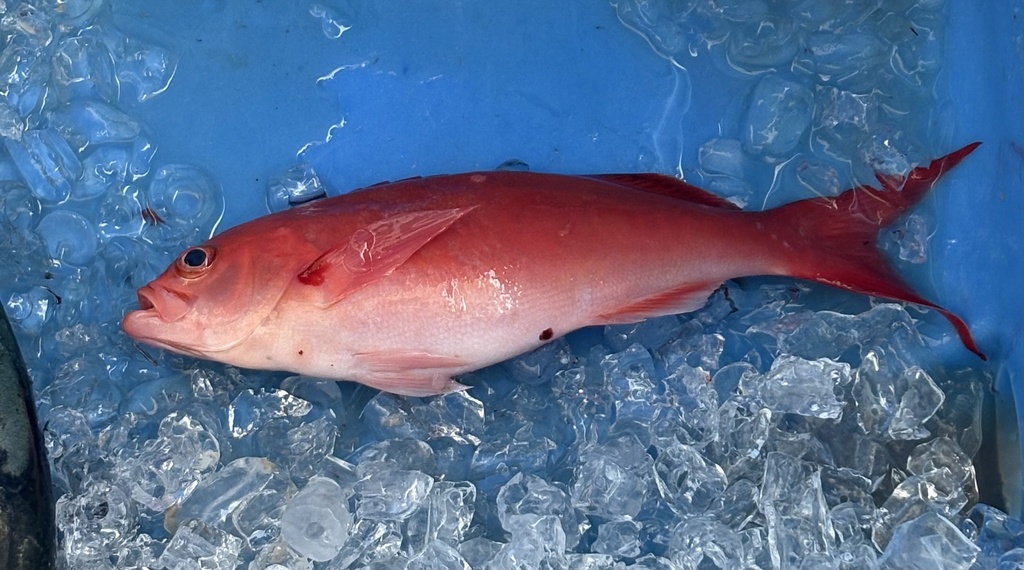
The Creole-fish (Paranthias furcifer) is a saltwater fish of the family Serranidae that grows up to 30 cm.
Description
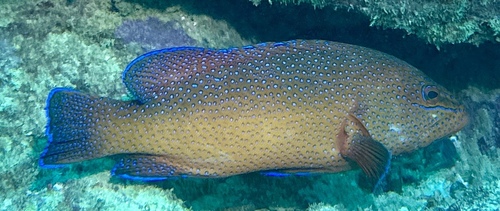
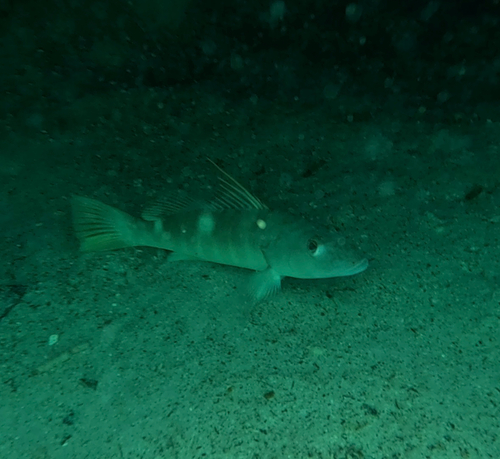
The creole-fish (Paranthias furcifer) is a reef bass of the Atlantic, in the east at Ascension and the Gulf of Guinea islands, and in the west from Bermuda and Florida through the Gulf of Mexico and Caribbean to Brazil. It grows to 30 centimetres and lives on coral reefs and hard bottoms, usually at 10-66 metres. Head and body are reddish brown with a bright orange spot at the pectoral-fin base, three white spots along the back and two blue lines on the cheek. The fish forms large feeding schools that hunt zooplankton in midwater. The species is harmless and is fished.
Frequently asked questions
How do you recognise the Creole-fish?
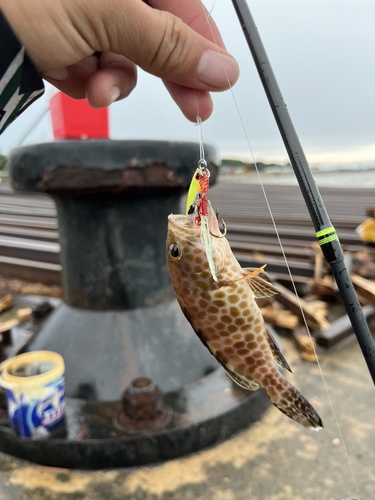
The Creole-fish has a torpedo-shaped body, is mainly red-orange and shows a spots pattern.
Where does the Creole-fish live?
The Creole-fish lives in the sea (marine waters) and is mostly found around stony or rocky ground.
How big does the Creole-fish get?
The Creole-fish grows to a maximum of about 30 cm. On average the species is around 20 cm.
Is the Creole-fish dangerous to humans?
No, the Creole-fish is harmless to humans.
Is the Creole-fish edible?
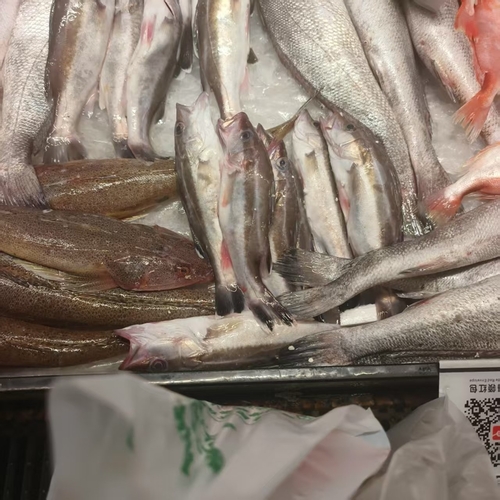
The Creole-fish is rarely eaten.
Download Fin's Fish Guide
Identify fish in seconds, log your catches and dives. Join the TestFlight beta.
All data
Identification
Appearance
Habitat & distribution
Behaviour & biology
For anglers
Safety
Status & sources
Same genus Paranthias
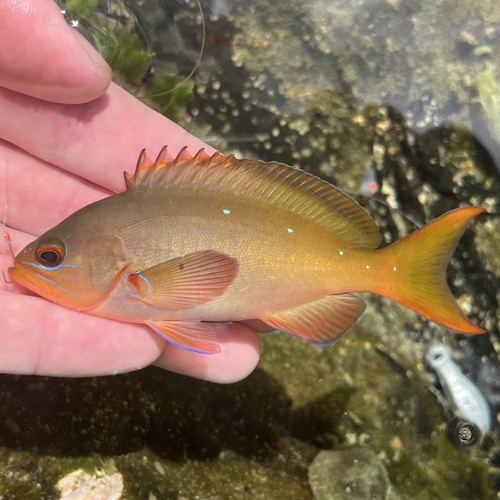
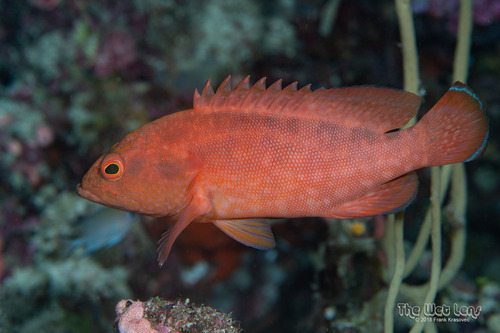
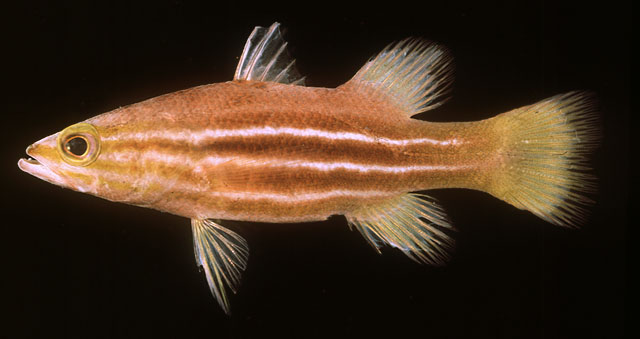
More from the family Serranidae


Download Fin's Fish Guide
Identify fish in seconds, log your catches and dives. Join the TestFlight beta.