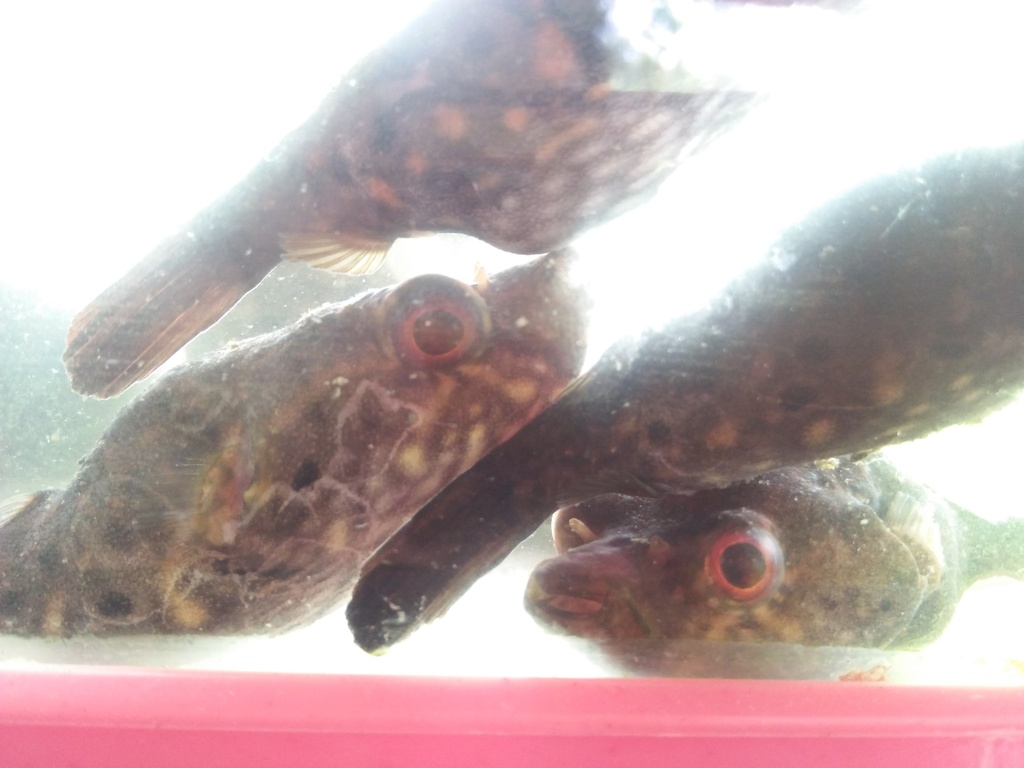
The Humpback puffer (Pao palembangensis) is a freshwater fish of the family Tetraodontidae that grows up to 19 cm.
Description
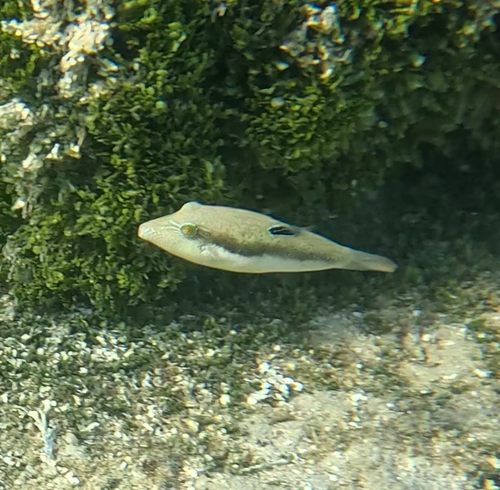
The humpback puffer is a freshwater pufferfish (Tetraodontidae) from slow, shaded water of Southeast Asia, including Sumatra and the Malay Peninsula. The species grows to about 20 cm and has a stocky, brown-mottled body with skin folds and projections, making it resemble a mossy stone or leaf. As an ambush hunter it lies motionless on the bottom and engulfs passing small fish, snails and crustaceans. Its skin and organs contain tetrodotoxin; eating it is dangerous.
Frequently asked questions
How do you recognise the Humpback puffer?
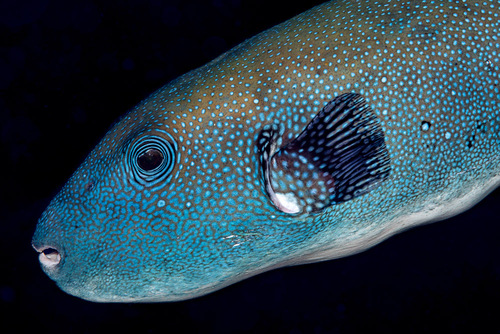
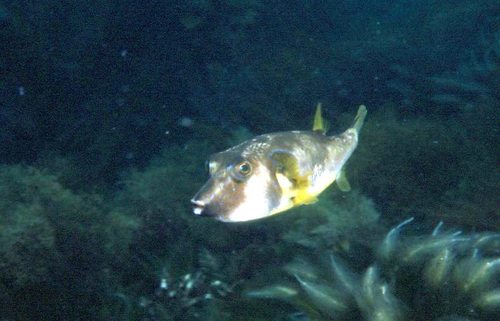
The Humpback puffer has a flattened, disc-shaped body, is mainly brown and shows a marbled pattern.
Where does the Humpback puffer live?
The Humpback puffer lives in fresh water and is mostly found around sand or mud bottom.
How big does the Humpback puffer get?
The Humpback puffer grows to a maximum of about 19 cm.
Is the Humpback puffer dangerous to humans?
The Humpback puffer is venomous — handle spines with care and seek medical help after a sting if needed.
Is the Humpback puffer edible?
The Humpback puffer is not usually eaten.
Download Fin's Fish Guide
Identify fish in seconds, log your catches and dives. Join the TestFlight beta.
All data
Identification
Appearance
Habitat & distribution
Behaviour & biology
For anglers
Safety
Status & sources
Same genus Pao
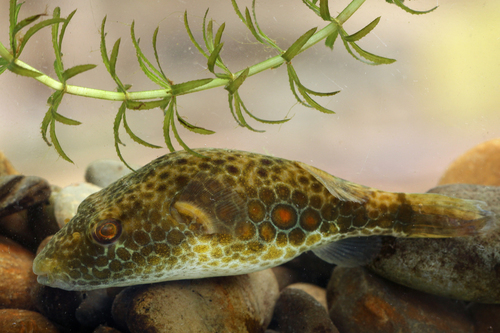
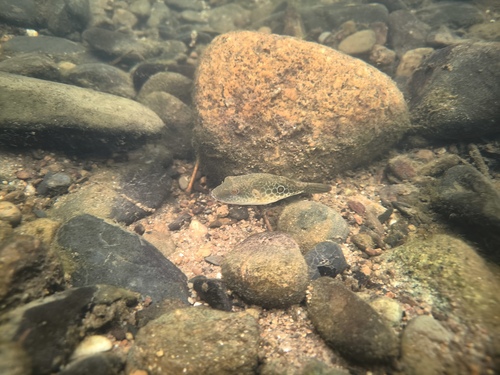
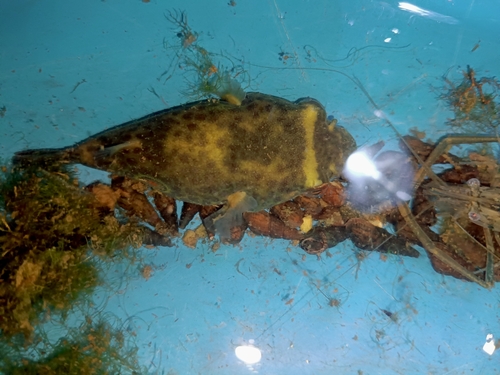
More from the family Tetraodontidae

Download Fin's Fish Guide
Identify fish in seconds, log your catches and dives. Join the TestFlight beta.