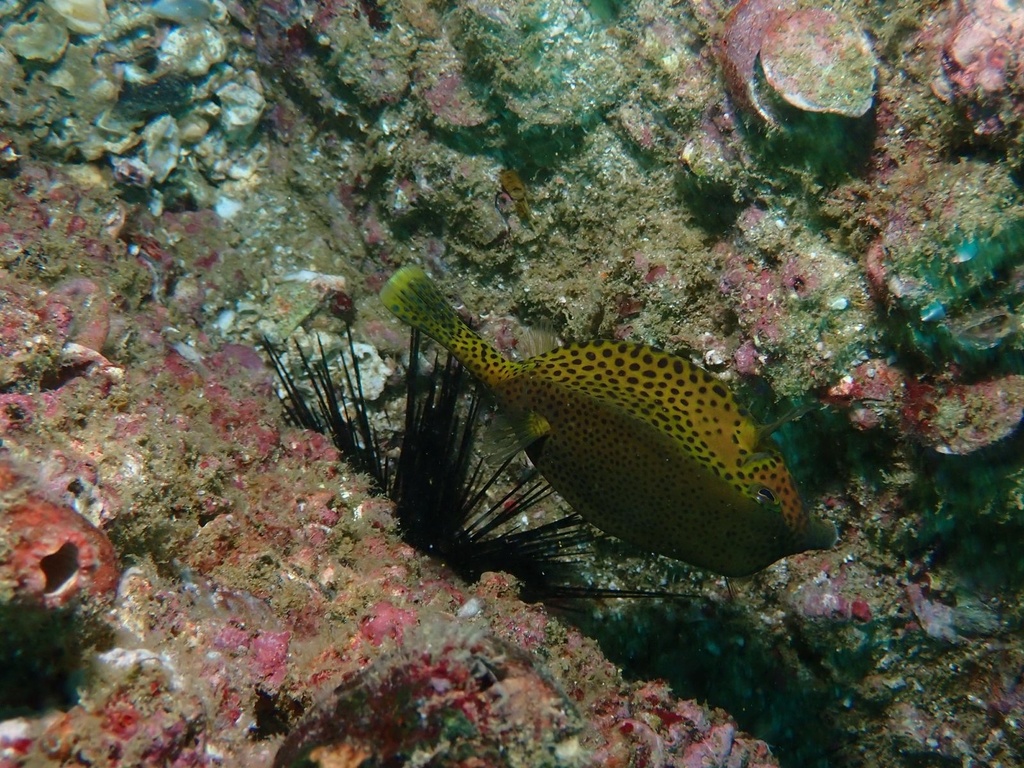
The Bluetail trunkfish (Ostracion cyanurus) is a saltwater fish of the family Ostraciidae that grows up to 15 cm.
Description
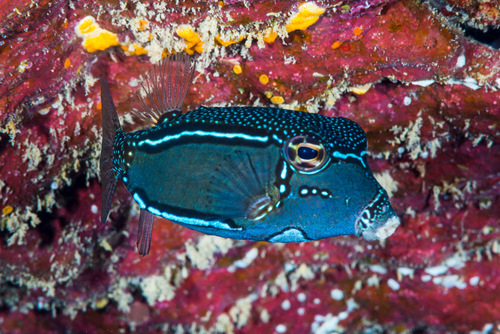
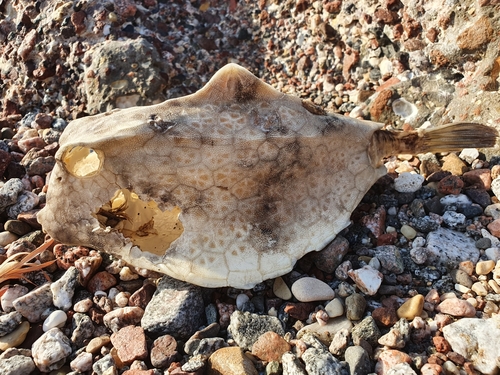
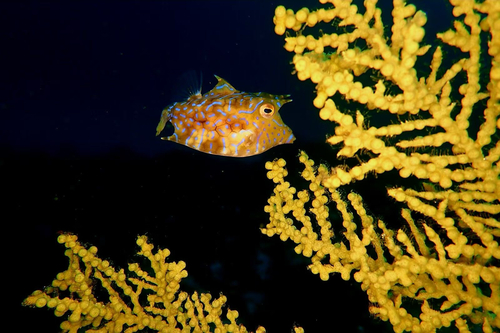
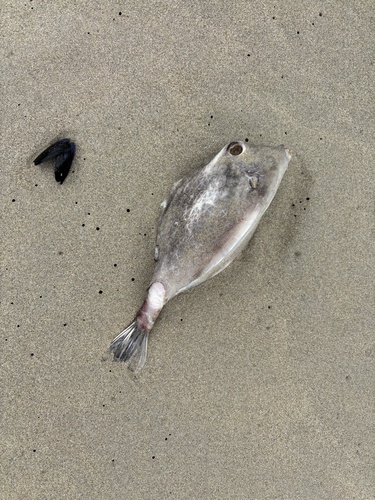
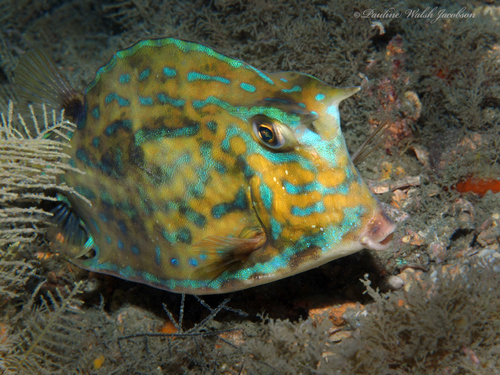
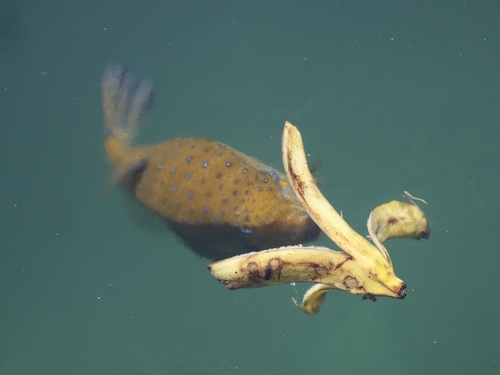
The bluetail trunkfish is a boxfish (Ostraciidae) from the Red Sea and western Indian Ocean. The species grows to about 15 cm and has a box-shaped, armoured body of bony plates; males are yellow-blue with a bright blue tail base, females darker with blue spots. As a slow reef-dweller it picks algae, sponges and small invertebrates. When stressed the skin releases the toxin ostracitoxin, which can kill other fish in a confined space. The fish is harmless to humans in normal contact but should not be eaten.
Frequently asked questions
How do you recognise the Bluetail trunkfish?
The Bluetail trunkfish has a torpedo-shaped body and is mainly blue.
Where does the Bluetail trunkfish live?
The Bluetail trunkfish lives in the sea (marine waters) and is mostly found around stony or rocky ground.
How big does the Bluetail trunkfish get?
The Bluetail trunkfish grows to a maximum of about 15 cm.
Is the Bluetail trunkfish dangerous to humans?
The Bluetail trunkfish is venomous — handle spines with care and seek medical help after a sting if needed.
Is the Bluetail trunkfish edible?
The Bluetail trunkfish is not usually eaten.
Download Fin's Fish Guide
Identify fish in seconds, log your catches and dives. Join the TestFlight beta.
All data
Identification
Appearance
Habitat & distribution
Behaviour & biology
For anglers
Safety
Status & sources
Same genus Ostracion
More from the family Ostraciidae
Download Fin's Fish Guide
Identify fish in seconds, log your catches and dives. Join the TestFlight beta.