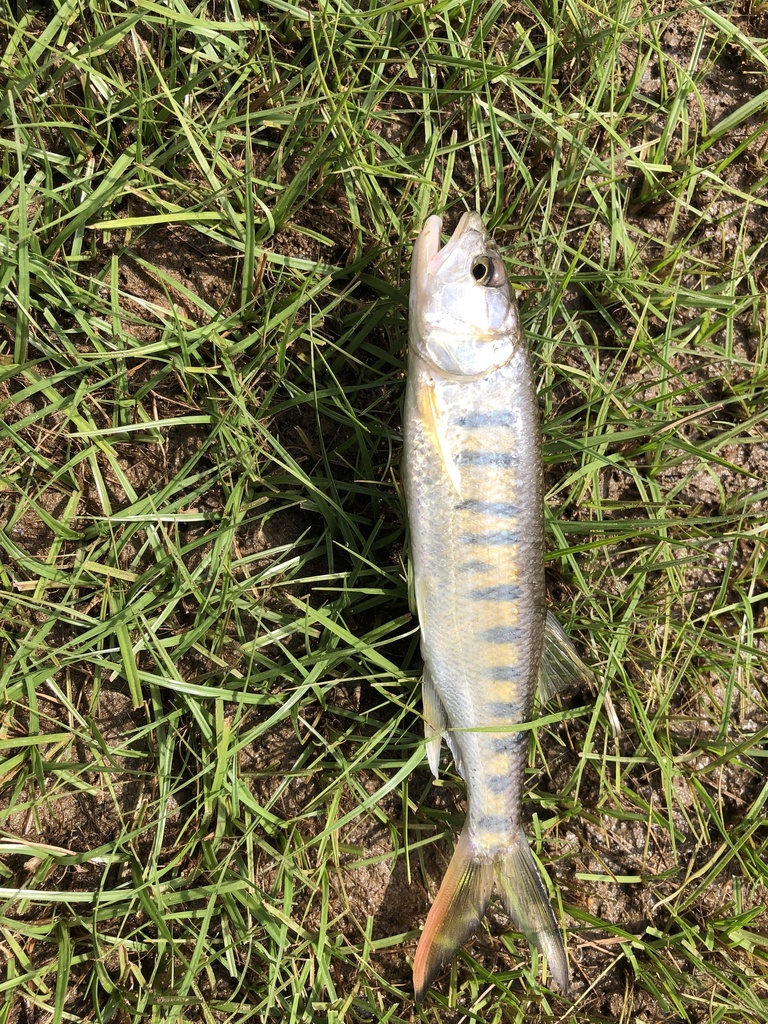
The Ubangi minnow (Opsaridium ubangiense) is a freshwater fish of the family Cyprinidae that grows up to 12 cm.
Description
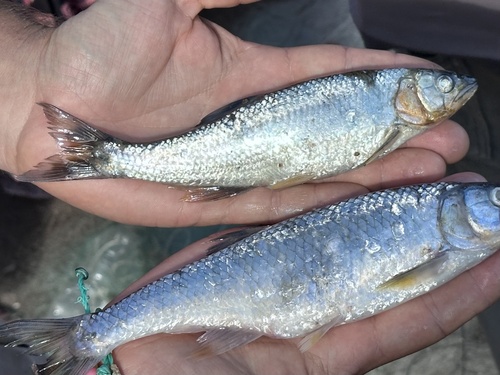
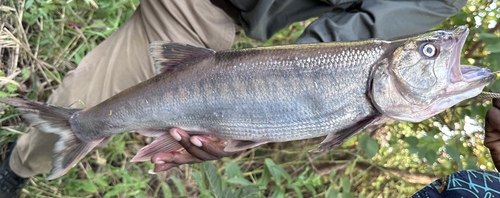
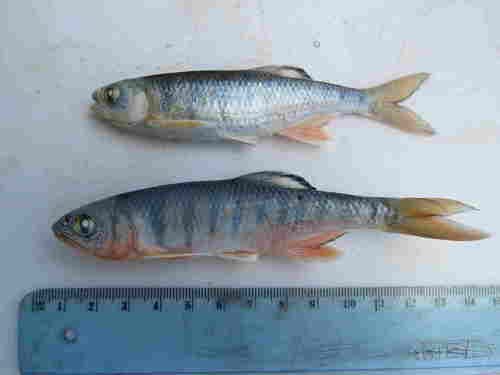
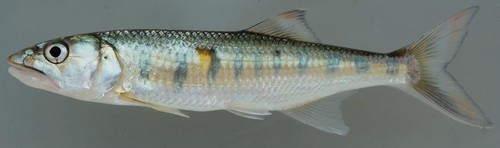
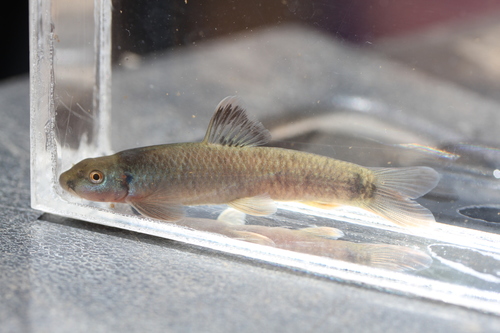
The Ubangi minnow is a slender, silvery cyprinid relative of the family Danionidae reaching about 12 cm. The streamlined body bears a row of dark spots along the flank and has a terminal mouth. The species comes from the Congo basin in Central Africa and lives in active schools in clear, flowing rivers and streams. Just below the surface and in the water column it hunts insects and small invertebrates, including insects that fall on the water. In the rainy season it spawns on gravel bars in riffles. Because of its small size it has little fishery value, but it is an important prey fish and an active inhabitant of clear flowing water.
Frequently asked questions
How do you recognise the Ubangi minnow?
The Ubangi minnow has an elongate, eel-like body, is mainly silver-grey and shows a spots pattern.
Where does the Ubangi minnow live?
The Ubangi minnow lives in fresh water and is mostly found around open water.
How big does the Ubangi minnow get?
The Ubangi minnow grows to a maximum of about 12 cm.
Is the Ubangi minnow dangerous to humans?
No, the Ubangi minnow is harmless to humans.
Is the Ubangi minnow edible?
The Ubangi minnow is rarely eaten.
Download Fin's Fish Guide
Identify fish in seconds, log your catches and dives. Join the TestFlight beta.
All data
Identification
Appearance
Habitat & distribution
Behaviour & biology
For anglers
Safety
Status & sources
Same genus Opsaridium
More from the family Cyprinidae


Download Fin's Fish Guide
Identify fish in seconds, log your catches and dives. Join the TestFlight beta.