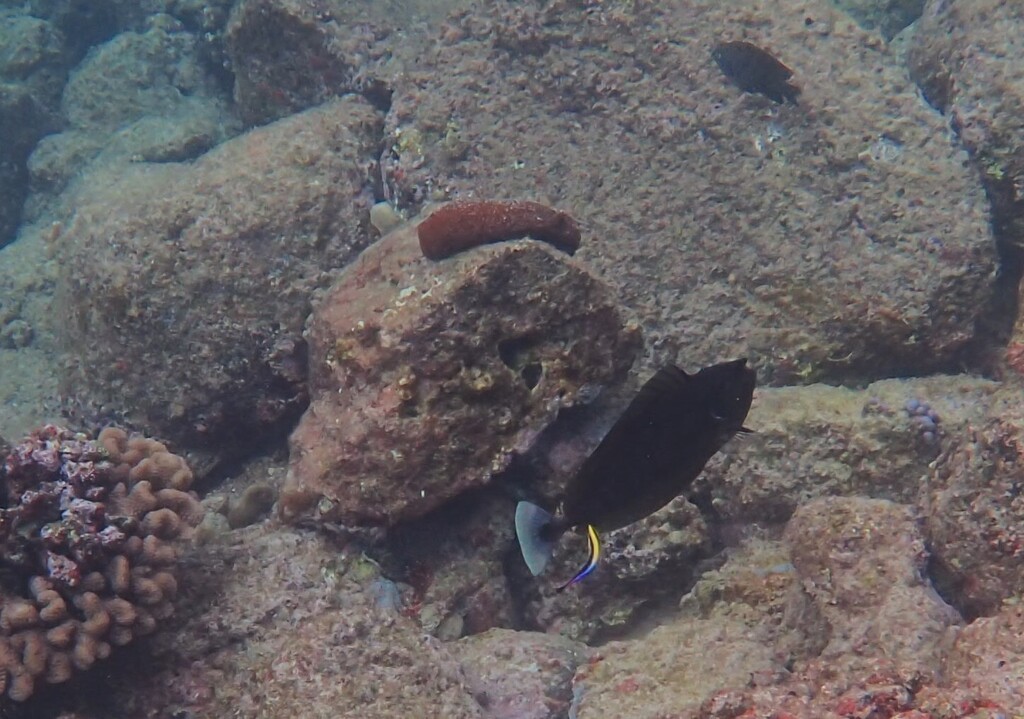
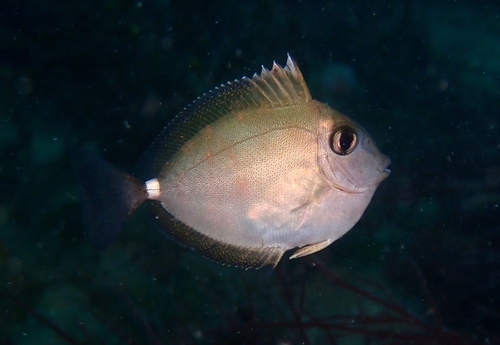
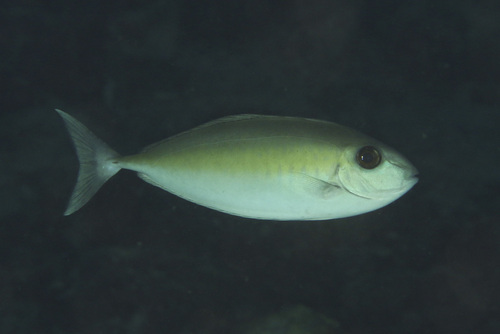
The Brown unicornfish (Naso brevirostris) is a saltwater fish of the family Acanthuridae that grows up to 60 cm.
Description
The spotted unicornfish is a surgeonfish (Acanthuridae) from the Indo-Pacific. Adults develop a conspicuous horn-like projection on the forehead. The species grows to about 60 cm and has two pairs of sharp, fixed bony keels on the tail base. Adults live in midwater along steep outer reef and lagoon slopes and eat zooplankton; younger fish graze algae from the reef. The sharp tail keels can give a deep cut if handled; otherwise the fish is harmless to humans.
Frequently asked questions
How do you recognise the Brown unicornfish?
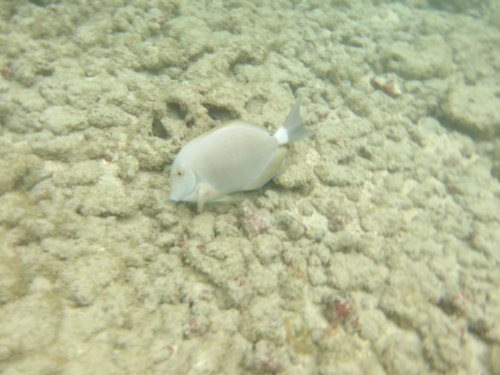
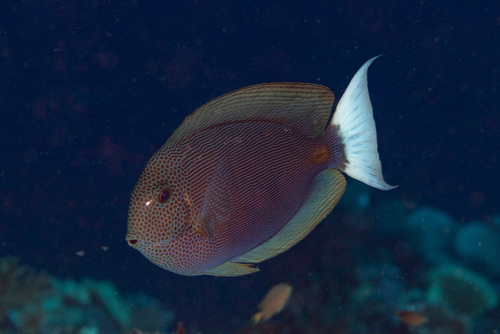
The Brown unicornfish has a torpedo-shaped body, is mainly brown and shows a spots pattern.
Where does the Brown unicornfish live?
The Brown unicornfish lives in the sea (marine waters) and is mostly found around stony or rocky ground.
How big does the Brown unicornfish get?
The Brown unicornfish grows to a maximum of about 60 cm.
Is the Brown unicornfish dangerous to humans?
The Brown unicornfish is venomous — handle spines with care and seek medical help after a sting if needed.
Is the Brown unicornfish edible?
Yes, the Brown unicornfish is commonly eaten.
Download Fin's Fish Guide
Identify fish in seconds, log your catches and dives. Join the TestFlight beta.
All data
Identification
Appearance
Habitat & distribution
Behaviour & biology
For anglers
Safety
Status & sources
Same genus Naso
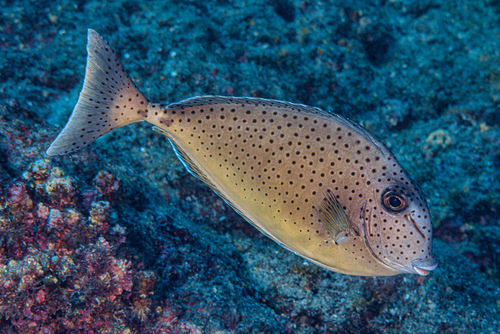
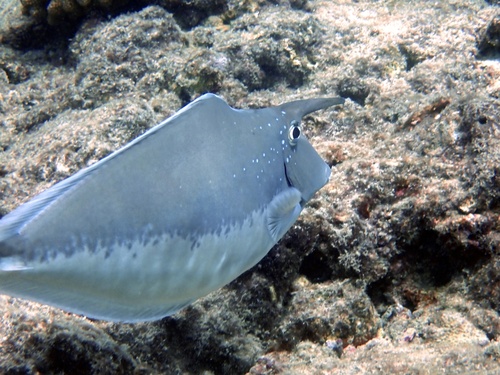
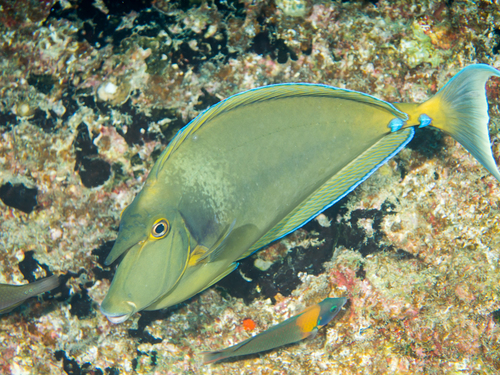

More from the family Acanthuridae
Download Fin's Fish Guide
Identify fish in seconds, log your catches and dives. Join the TestFlight beta.