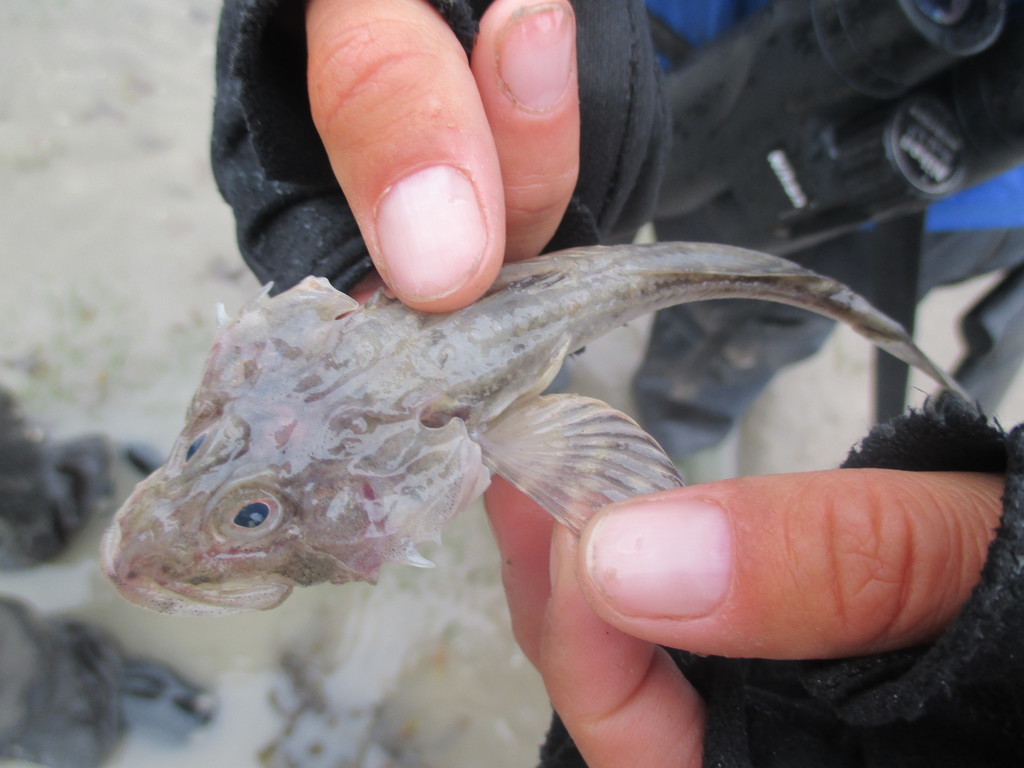
The Fourhorn sculpin (Myoxocephalus quadricornis) is a fish that lives in both fresh and salt water of the family Cottidae that grows up to 60 cm.
Description
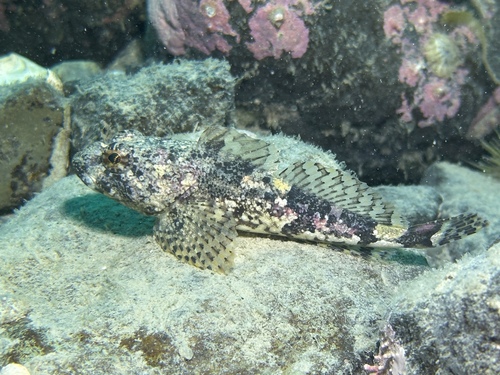
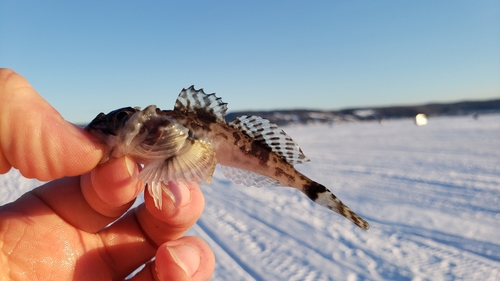
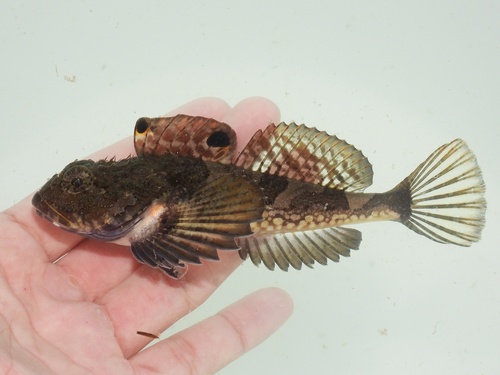
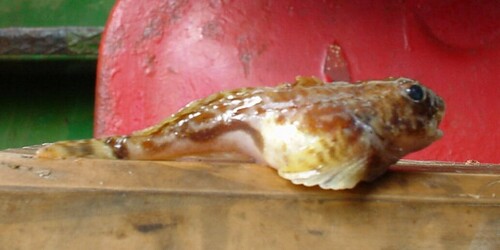
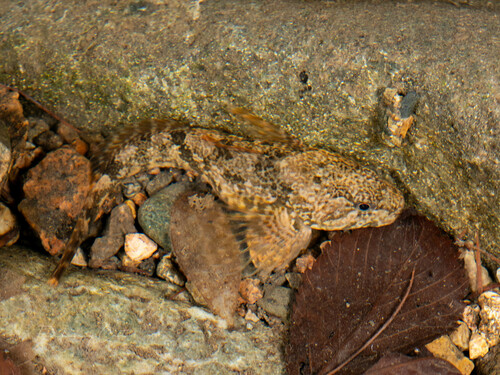
The fourhorn sculpin is a cold-water sculpin of the family Cottidae reaching about 60 cm but usually smaller. The scaleless, brownish mottled body has a large head with broad pectoral fins and, very characteristically, four conspicuous bony bumps or 'horns' on top of the head, from which the species takes its name. The species is euryhaline and lives on sand and mud bottoms of the Arctic Ocean, the Baltic and adjacent cold waters; some populations are landlocked as an Ice Age relict in cold lakes, living there in fresh water. As a bottom-dweller it hunts small crustaceans, worms and small fish. In winter it spawns; the male guards the eggs. Locally it is eaten in Arctic regions.
Frequently asked questions
How do you recognise the Fourhorn sculpin?
The Fourhorn sculpin has a torpedo-shaped body, is mainly brown and shows a marbled pattern.
Where does the Fourhorn sculpin live?
The Fourhorn sculpin lives in both fresh and salt water and is mostly found around sand or mud bottom.
How big does the Fourhorn sculpin get?
The Fourhorn sculpin grows to a maximum of about 60 cm. On average the species is around 30 cm.
Is the Fourhorn sculpin dangerous to humans?
No, the Fourhorn sculpin is harmless to humans.
Is the Fourhorn sculpin edible?
The Fourhorn sculpin is rarely eaten.
Download Fin's Fish Guide
Identify fish in seconds, log your catches and dives. Join the TestFlight beta.
All data
Identification
Appearance
Habitat & distribution
Behaviour & biology
For anglers
Safety
Status & sources
Same genus Myoxocephalus
More from the family Cottidae

Download Fin's Fish Guide
Identify fish in seconds, log your catches and dives. Join the TestFlight beta.