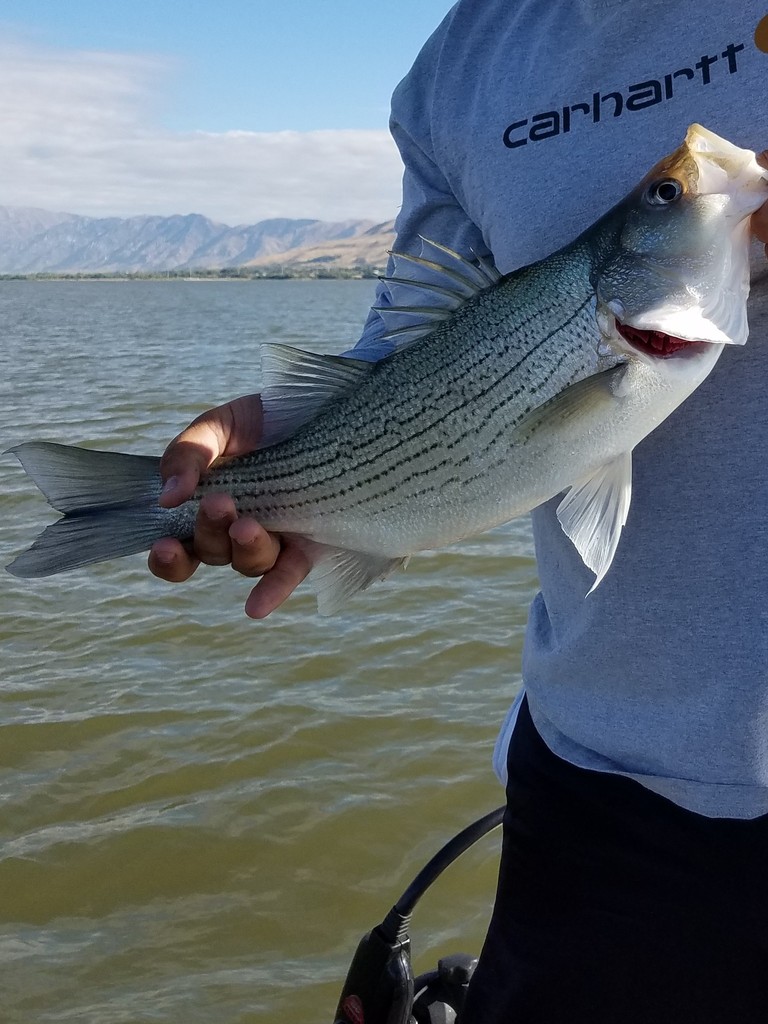
The Bass (Morone chrysops) is a freshwater fish of the family Moronidae that grows up to 45 cm.
Description
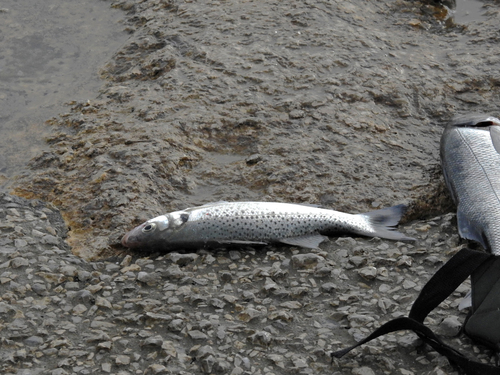
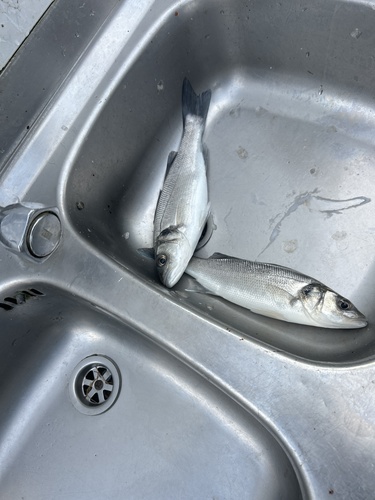
The white bass (Morone chrysops) is a North American bass of the family Moronidae. The species has a deep, silvery-white body with several narrow, dark lengthwise stripes and spiny fins, and reaches about 45 cm. It inhabits lakes, ponds and pools of small to large rivers, usually shallower than 14 metres, and often forms large, active schools. Juveniles eat small zooplankton such as cladocerans, copepods and midge larvae; adults are predators that hunt small fishes. The white bass is a popular sport fish that is also bred into the well-known hybrid 'wiper' (a cross with the striped bass).
Frequently asked questions
How do you recognise the Bass?
The Bass has a torpedo-shaped body, is mainly silver-grey and shows a horizontal stripes pattern.
Where does the Bass live?
The Bass lives in fresh water and is mostly found around mixed bottom.
How big does the Bass get?
The Bass grows to a maximum of about 45 cm. On average the species is around 32 cm.
Is the Bass dangerous to humans?
No, the Bass is harmless to humans.
Is the Bass edible?
Yes, the Bass is commonly eaten.
Download Fin's Fish Guide
Identify fish in seconds, log your catches and dives. Join the TestFlight beta.
All data
Identification
Appearance
Habitat & distribution
Behaviour & biology
For anglers
Safety
Status & sources
Same genus Morone
More from the family Moronidae
Download Fin's Fish Guide
Identify fish in seconds, log your catches and dives. Join the TestFlight beta.