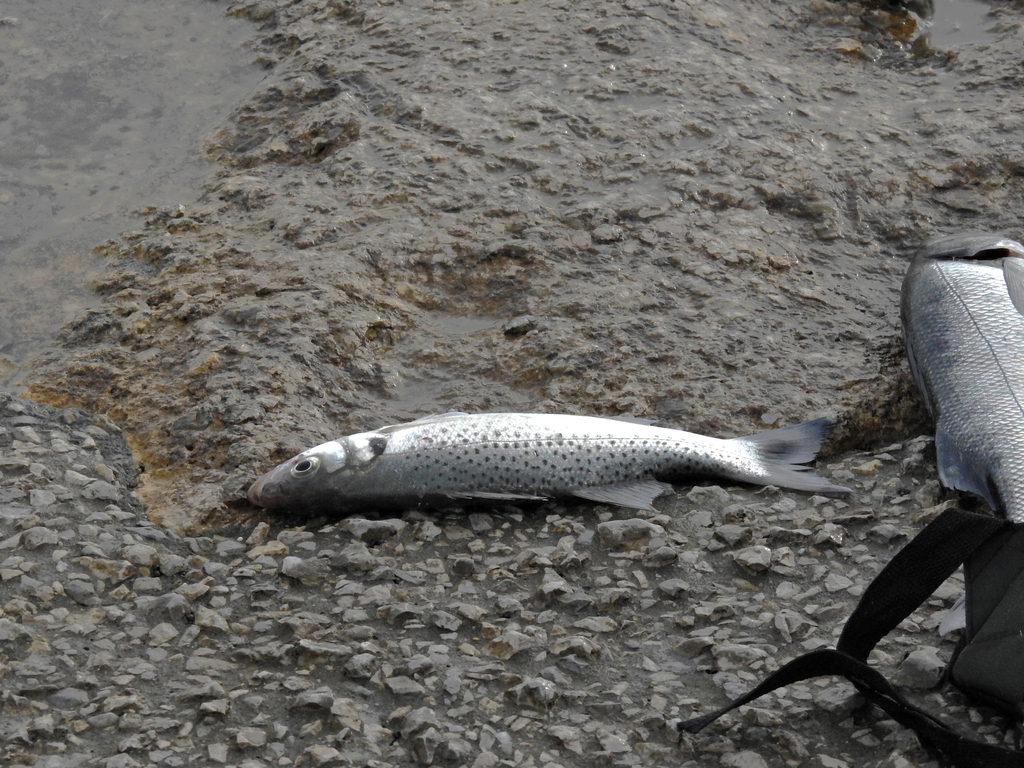
The Spotted seabass (Dicentrarchus punctatus) is a fish that lives in both fresh and salt water of the family Moronidae that grows up to 70 cm.
Description
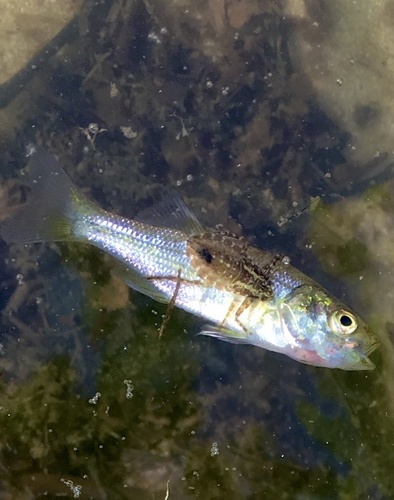
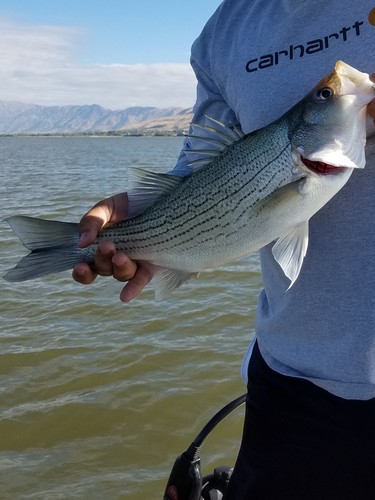
The spotted seabass is a slender, powerful predator of the family Moronidae reaching about 70 cm. It closely resembles the European seabass but can be told apart by the numerous small black spots scattered over the silvery-grey body; it also has two separate dorsal fins, the first of which is spiny. The species is euryhaline: it tolerates salt and brackish water and enters estuaries and lagoons. It lives along the eastern Atlantic coast, in West Africa and the western Mediterranean, often in the surf and in tidal channels, where it hunts small fish, shrimps and crabs in schools. Like the seabass it is a highly valued sport and food fish.
Frequently asked questions
How do you recognise the Spotted seabass?
The Spotted seabass has a torpedo-shaped body, is mainly silver-grey and shows a spots pattern.
Where does the Spotted seabass live?
The Spotted seabass lives in both fresh and salt water and is mostly found around open water.
How big does the Spotted seabass get?
The Spotted seabass grows to a maximum of about 70 cm. On average the species is around 30 cm.
Is the Spotted seabass dangerous to humans?
No, the Spotted seabass is harmless to humans.
Is the Spotted seabass edible?
Yes, the Spotted seabass is a highly prized food fish.
Download Fin's Fish Guide
Identify fish in seconds, log your catches and dives. Join the TestFlight beta.
All data
Identification
Appearance
Habitat & distribution
Behaviour & biology
For anglers
Safety
Status & sources
Same genus Dicentrarchus
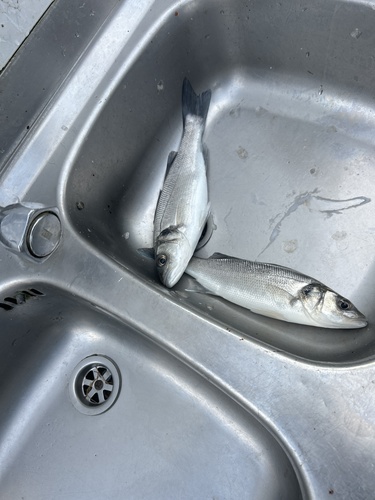
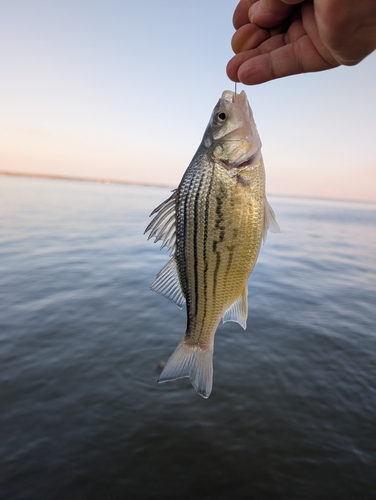
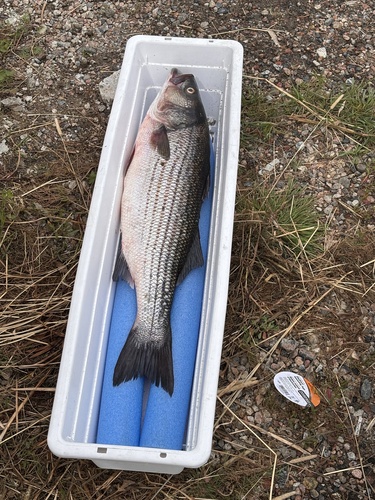
More from the family Moronidae
Download Fin's Fish Guide
Identify fish in seconds, log your catches and dives. Join the TestFlight beta.